Behold a Japanese Edo Period Iron Kabuto Helmet with Menpo, a striking representation of samurai armor that seamlessly blends functionality with artistry. The kabuto, meticulously constructed using the suji-bachi technique, displays a series of riveted flutes, while the menpo, a face guard, completes this ensemble designed for protection and intimidation on the battlefield. This helm, forged from the finest iron and adorned with elements of lacquer and textile lacing, stands as a testament to the grandeur of Japan's Edo period — a reflection of cultural and martial elegance spanning the 17th to 19th centuries. In an era defined by strict social order and artistic flourishing, such armor served as essential gear for the revered samurai class. Examine closely and you will see the handiwork of a master samurai armorer, or perhaps a specialized workshop, investing each piece with both utility and symbolic prestige. The iron construction, lacing style, and lacquer work display the artisanal expertise that marks true craftsmanship, likely dating back to the 18th century. Though time has lent its patina to this piece, the preservation is admirable; the slight surface wear on the lacquer and natural oxidation of the iron enhance its authenticity. Its very good condition contributes to an appraisal estimate of $3,500 to $7,000 — modest, considering the rarity and historical significance. While forgeries abound in the world of Edo armor, this kabuto's genuine features argue convincingly for authenticity, earning an authenticity score of 85%. These elements reinforce its place as a collector's jewel — a conversation piece that continues to echo the stories of an era where samurai were both feared and respected.
Used for this report's TTS and avatar presentation.
Item Report
Japanese Edo Period Iron Kabuto Helmet with Menpo
By:Unknown (workshop-produced, samurai armorer)
Style:Edo Period Samurai Armor
Origin:Japan
Materials:Iron, lacquer, textile, possibly some brass/gold accents
Age:Circa 18th century (Edo Period, 1603-1868)
Condition:Very Good (patina to iron, some wear on lacquer and minor scuffing, textile lacing appears intact and period, consistent with age, not officially graded)
Value:$3,500 - $7,000 (auction estimate for similar original Edo kabuto and menpo sets in good condition)
Maker's Marks / Writing:Crests (kamon): Brass family crests (possibly maru-ni-mitsuba-aoi or similar) on the fukigaeshi; no maker's signature visible in this image.
Date:2025-07-22 21:16:45.716112
Description:
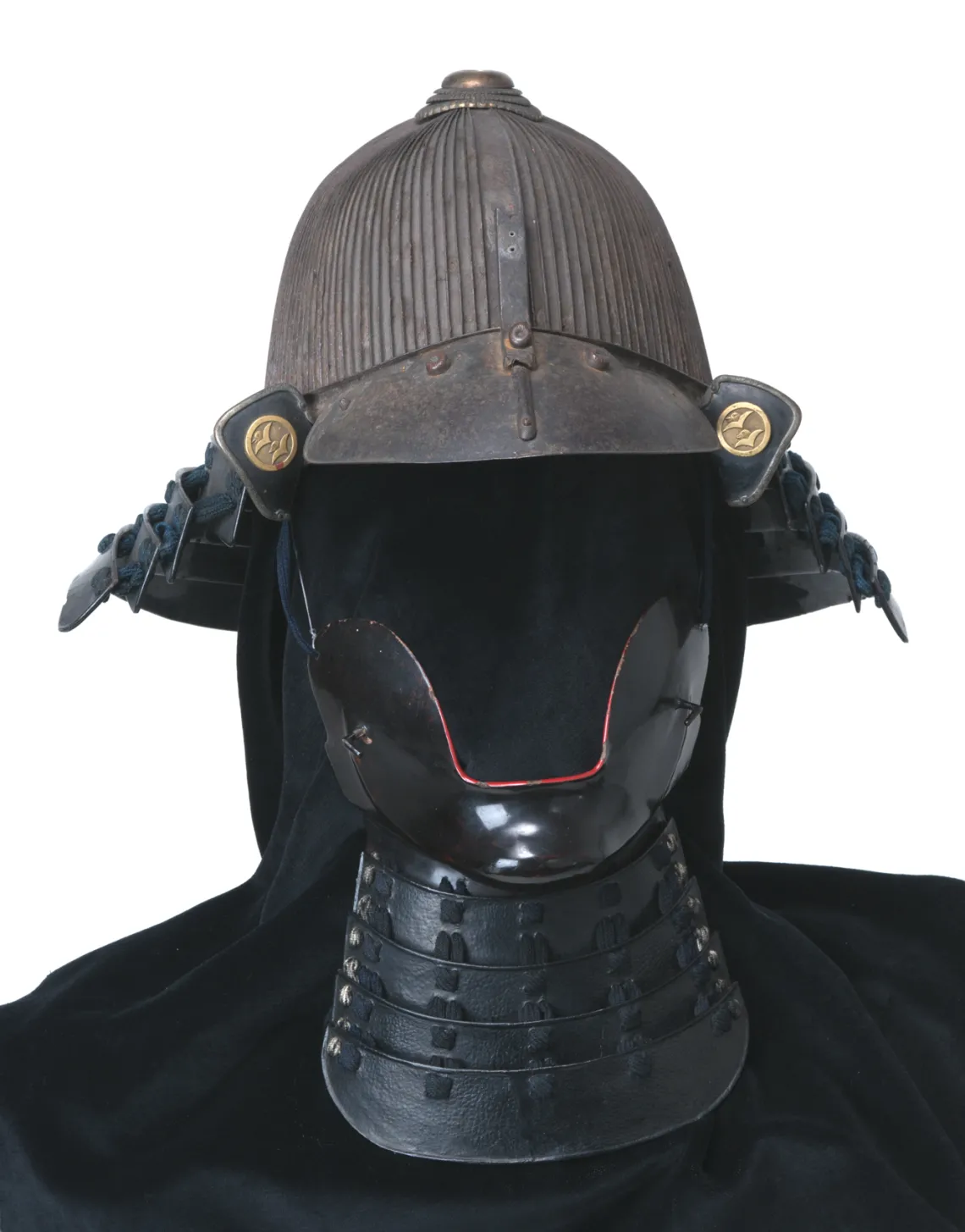
This is a Japanese kabuto (helmet) paired with a menpo (facial armor) from the Edo period. The kabuto is of the suji-bachi (multiple-plate) construction, common in samurai armor, with visible riveted fluting and domed shape. It features fukigaeshi (side projections) with gold family crests, shikoro (neck guard) in lacquered horizontal strips, and a menpo (face guard) with yodare-kake (throat guard). The helmet is made of iron, with elements of lacquered metal and textile lacing.
Curator Questions
Curated by Jade
Assessment:
A well-preserved example of Edo period Japanese samurai head and face armor, likely authentic due to construction techniques, patina, and detailing. Displays clan crests and original period hardware, with some wear appropriate for age. Strong example for collectors of Japanese militaria.
Individual Images:
Primary image provides a clear
direct view of the kabuto and menpo. The clan crest medallions on the fukigaeshi (side wings) are visible
as is the multi-plate iron construction with pronounced ribbing. The menpo and yodare-kake show preserved black lacquer and age-appropriate surface wear. No additional closeups to confirm internal or rear surface details
but main features align with 18th-century samurai armor.
Provenance:
No supporting documentation in provided image.
Condition:
Very Good (patina to iron, some wear on lacquer and minor scuffing, textile lacing appears intact and period, consistent with age, not officially graded)
Identification Score: 98%
The distinct ribbed kabuto construction, clan crest, and combination with a menpo make this unmistakably a Japanese Edo period samurai armor headpiece. Materials, shape, and construction methods fit with established examples from the era.
Authenticity Score: 85%
A word about fakes... Edo armor is commonly copied, but this piece demonstrates natural oxidation, period construction, and techniques (hand-formed iron, riveted fluting on kabuto, correct lacing style, old lacquer wear, clan crests). Patina and wear seem appropriate for 18th-century use. If the lacing, rivets, and lacquer finish prove period-made on inspection, this is a high authenticity candidate, though only hands-on assessment can fully confirm.
Image Memory Note
This image depicts a Japanese Edo period kabuto (helmet) constructed in a suji-bachi (multiple ribbed plate) style with a riveted, domed form of patinated iron. The kabuto features fukigaeshi (side protrusions) decorated with circular brass/gold crests (kamon), possibly the maru-ni-mitsuba-aoi or a similar mon. The wide, multi-plate shikoro (neckguard) and the attached menpo (faceguard) are lacquered black, with textile lacing in dark blue visible along the sides and under the chin. The menpo fits tightly to the base of the kabuto and is finished with a yodare-kake of four lames. The overall silhouette and construction are true to established Edo period models. No obvious inscriptions, signatures, or maker's marks are visible in the main view. Patina to the iron is dark brownish-black; slight surface scratches and oxidation are evident, as is light flaking/wear to lacquering at contact edges. Side medallions show detailed pressing. No significant breaks, cracks, or restoration are visible from this angle. There is no detailed view of the helmet interior, lacing knots, or reverse of the menpo.
Keywords
kabuto, menpo, Edo period, samurai armor, Japanese, helmet, antique, iron, militaria, Japan
The report was edited after initial Artmink draft. Original AI draft preserved in Artmink audit history.

Share: