Materials:Pewter (tin-based alloy, a.k.a. Britannia metal), turned hardwood handle, pinned/hinged lid
Age:circa 1860–1890
Condition:Good (scattered dings and pitting; hinge play; age wear and shrinkage/small split to wooden handle)
Value:$60–120 (auction/liquidation estimate)
Maker's Marks / Writing:Circular impressed mark on base (illegible in photos); hand-scratched inscription around the base edge; paper lot sticker ‘174’ on body.
Date:2025-10-14 20:29:58.095745
Description:
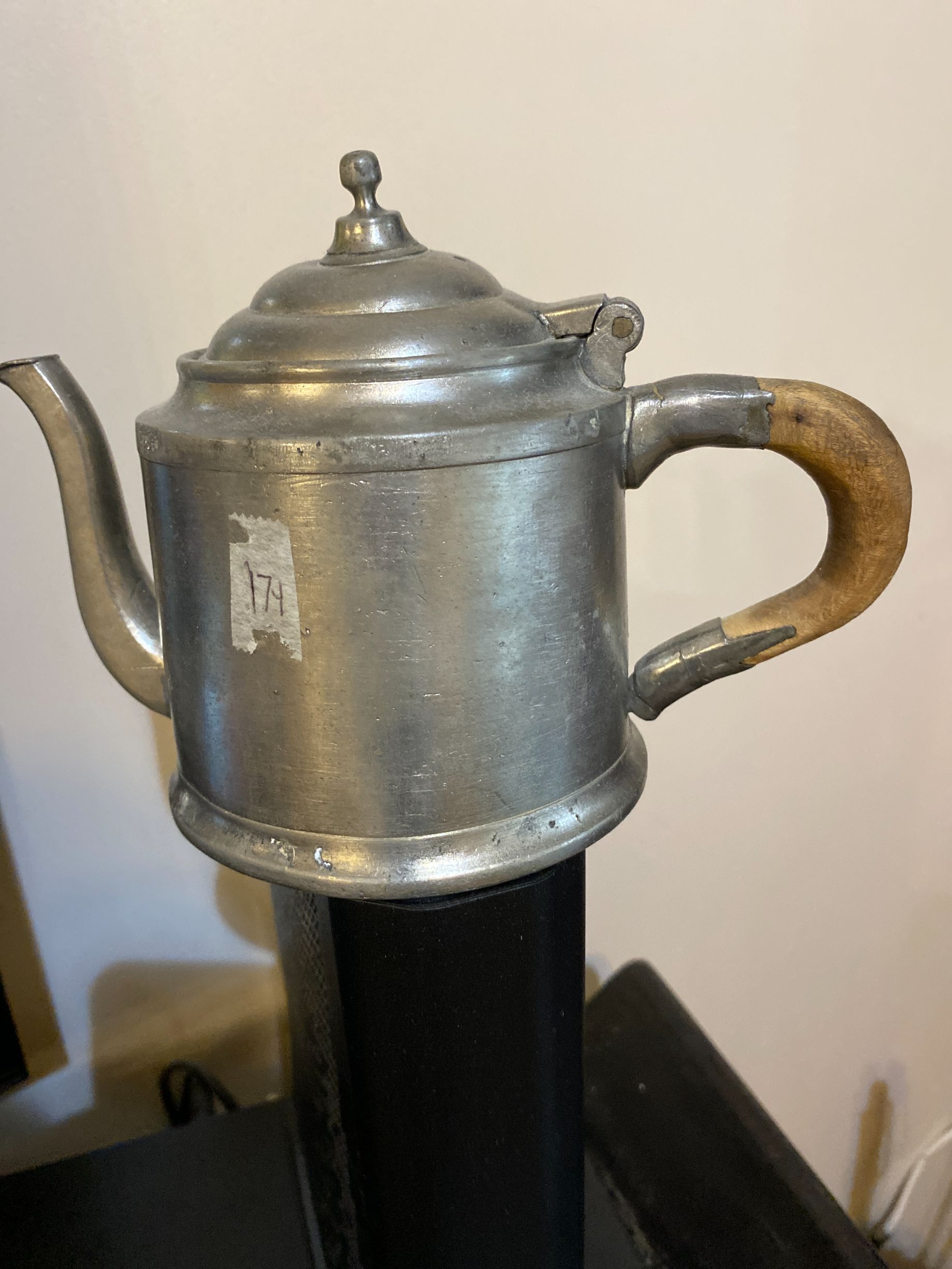
Small domed-lid teapot of spun/cast pewter with a hinged cover and turned ball finial, a short tapering spout, and a curved wooden side handle held in pewter ferrules. The underside shows an impressed circular maker’s stamp (illegible in the photo) and a hand-scratched inscription around the rim. Form and construction are consistent with late-19th-century British domestic pewter/‘Britannia metal’ wares made in Sheffield or the Midlands.
Curator Questions
Curated by Jade
Assessment:
This is a utilitarian Victorian pewter teapot with a wooden side handle and hinged lid. The gentle pitting, small edge dings, oxidation inside the lid, and wear to the handle all read as genuine age and use. The presence of a circular impressed factory mark suggests a commercial maker rather than a studio pewterer; clearer photos of the mark could refine attribution (James Dixon & Sons, Walker & Co., or another Sheffield maker are possibilities). A word about fakes.. pewter teapots are sometimes reproduced for the decorative market, but most have uniform casting seams, very shiny finishes, or modern screws; the riveted hinge, period proportions, and patinated wood on this example support 19th-century manufacture. Market value for unadorned Victorian pewter teapots is modest unless tied to a noted maker or unusually early form.
Individual Images:
Close-up images show: 1) ferruled wooden handle with age darkening
shrinkage and a small split at the lower ferrule; 2) riveted hinge assembly with period-style pin; 3) interior of lid with speckled oxidation typical of old pewter; 4) underside with a circular impressed maker’s stamp and a hand-etched inscription around the perimeter; 5) exterior with light abrasions and a small lot sticker marked ‘174’. These details support a 19th-century date and indicate honest use rather than recent manufacture.
Provenance:
No documented provenance provided.
Condition:
Good (scattered dings and pitting; hinge play; age wear and shrinkage/small split to wooden handle)
Identification Score: 75%
Form, hinge type, ferruled wooden handle, and surface patina strongly indicate a late-19th-century pewter teapot; however, the base stamp is not legible in the photos, so maker and exact origin (English vs. Continental) cannot be confirmed.
Authenticity Score: 80%
Wear and oxidation patterns, hand-pinned hinge, lathe/spun traces, and aged wood handle are consistent with period manufacture. Low likelihood of a recent reproduction, though full confirmation would benefit from a clear photo of the maker’s stamp.
Image Memory Note
None
None
Keywords
Victorian pewter teapot, Britannia metal, English, Sheffield, wooden handle, hinged lid, 19th century
The report was edited after initial Artmink draft. Original AI draft preserved in Artmink audit history.


Share: