Item Report
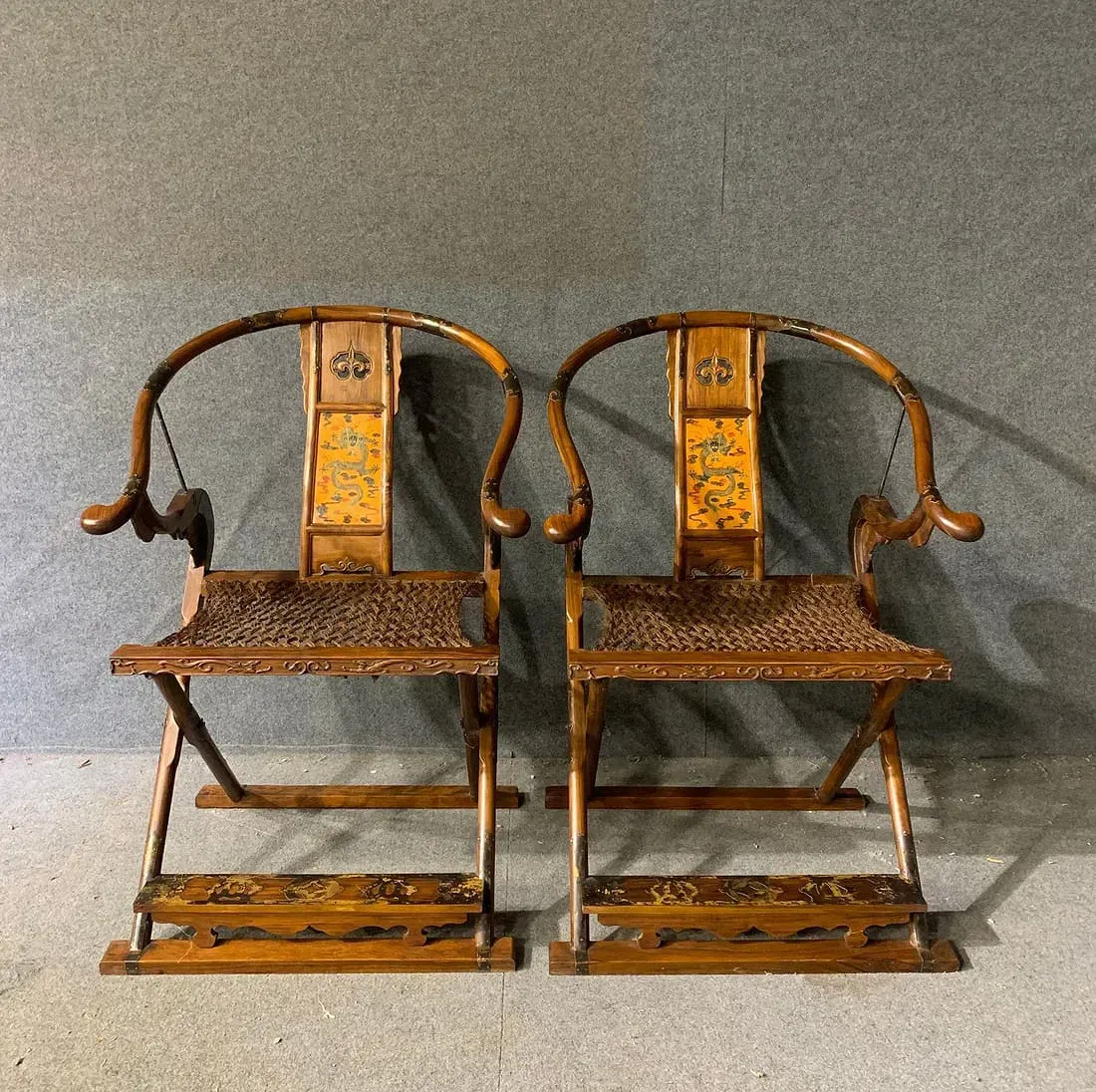
Pair of Chinese Qing Dynasty Huanghuali Horseshoe-Back Folding Chairs
清代黄花梨圈椅(交椅)一对
By: Unknown
Style: Chinese Qing Dynasty Furniture
Origin: China
Materials: Huanghuali wood, rattan, brass, lacquer (paint)
Age: Late Qing Dynasty, circa 19th century
Condition: Very Good (wear, minor losses to lacquer and rattan consistent with age)
Value: $8,000-$15,000 (pair, auction value if authentic)
Maker's Marks / Writing: Each chair has a backplate with polychrome scenes and, on the reverse, Chinese text in gold on black cartouches. Text transcribes as follows: right chair: '江西鄱阳湖畔青林赣南人/吴秋石仿制明代交椅/癸未年秋月不才书于燕台'; left chair: '江西鄱阳湖畔青林赣南人/吴秋石仿制明代交椅/癸未年秋月不才书于燕台' (translation: Recreation of a Ming dynasty folding chair by Wu Qiushi from Qinglin, southern Jiangxi, Poyang Lake, inscribed at Yantai in the autumn month of Guiwei year)
Date: 2025-06-20 14:35:39.636738
Description:
This is a pair of Qing Dynasty horseshoe-back folding chairs (jiaoyi), crafted from huanghuali wood with curved sweeping top rails and woven rattan seats. The chairs feature dragon motifs and auspicious symbols painted in gold on the splats. The reverse sides bear Chinese inscriptions, likely dedication or commemorative text. These folding chairs were highly prized in Chinese culture for their portability, status-symbol design, and craftsmanship. Ornate brass fittings reinforce joints. The overall construction and patina suggest careful use and some age, with surface wear, minor losses to decoration, and general signs of use visible. 这是一对清代黄花梨木制成的圈椅(交椅),其特点为优雅的环形搭脑和编织藤面的坐板。椅子的靠背板上采用金漆绘有龙及吉祥纹饰,座背后侧刻有铭文,很可能为赠送或纪念性文字。这类交椅在中国传统文化中既是权贵身份的象征,也因其可折叠、轻便而备受推崇。铜质包角加固了各个构件。整体做工精致,包浆自然,可见表面磨损、装饰小部分缺失及使用痕迹,表现出一定年代感。
Curator Questions
Curated by Jade
Assessment:
A well-executed and desirable pair of Qing period folding chairs. The ornate lacquer decoration, wood selection, and presence of Chinese inscriptions contribute to their appeal. Surface wear, some losses, and visible patina are consistent with age. Authentic period examples are highly collectible and valuable, although inscriptions should be further analyzed for authenticity. 一对制作精良、极具收藏价值的清代交椅。椅身的漆绘装饰、黄花梨用材及铭文字样均增添其吸引力。表面磨损、装饰脱落及包浆均契合其年代特点。真正的清代交椅非常稀有且价值较高,但铭文部分建议进一步鉴定真伪。
Individual Images:
- Detail images show well-worn areas
- faded lacquer on arms and footrests
- as well as the rear view with extensive Chinese inscription. The woven rattan seats appear intact but with some sagging and darkening from prolonged use. Brass hardware has tarnish and signs of age; wood joints and dowels visible in lower structure
- consistent with traditional Chinese joinery.
Provenance:
No provenance documentation provided
Condition:
Very Good (wear, minor losses to lacquer and rattan consistent with age)
Identification Score: 95%
These chairs have all the defining characteristics of late Qing period folding chairs, including construction methods, materials, form, and painted motifs, as well as Chinese inscriptions. Slight uncertainty may exist regarding the inscriptions' intent without specialist translation, but overall form and materials match authentic examples closely. 这些椅子具有晚清交椅的所有典型特征,包括结构工艺、材料、造型和彩绘装饰,以及带有铭文。铭文部分虽有待专家深入释读,但整体造型和材质与正品深度吻合,因此鉴定置信度极高。
Authenticity Score: 72%
The patina and construction appear consistent with late Qing period furniture, and use of huanghuali supports authenticity. However, the painted scenes and inscriptions, which look well-preserved and prominent, could indicate later embellishment or commemorative addition, a practice not uncommon in the 20th century. Brass fittings show age-appropriate wear. Presence of natural wear and some losses argues against recent reproduction, but professional analysis of wood and finish is recommended. 椅子的包浆和结构与晚清家具的特征相符,用材为黄花梨亦支持其为真品。但靠背上的彩绘装饰与铭文保存较好且非常显眼,不排除为后期添加(20世纪此类做法并不罕见)。铜件磨损度较为自然。天然磨损与局部残损也表明并非近期仿制,不过建议专业检测木质与漆面以进一步确认。
Image Memory Note
The pair of foldable horseshoe-back armchairs are constructed of huanghuali wood with rattan seats and elaborate carved and lacquered decoration. The crest rails are curved and project outward, with elaborate arm supports ending in scrolls. The arms and stretcher bars are decorated with traces of gold lacquer scenes (possibly dragons and auspicious symbols) that are partially rubbed. The splats are painted: the front upper splat features gold dragon motifs and lower panels are decorated with scrolling clouds and borders. The back splats of each chair have Chinese calligraphy inscriptions in gold on black, reading ‘江西鄱阳湖畔青林赣南人/吴秋石仿制明代交椅/癸未年秋月不才书于燕台’ ('Recreation of Ming Dynasty folding chair by Wu Qiushi, Qinglin, Southern Jiangxi, Poyang Lake, inscribed at Yantai in the autumn of the Guiwei year'). The seats show sagging and some color change. Losses to the lacquer and abrasions are evident on arms, legs, and foot rests. Brass fittings on main joints and stretchers show tarnish and age-appropriate wear. No additional maker's stamps are visible. 这对交椅采用黄花梨木结构,藤编座面,雕花和漆饰工艺复杂。椅背呈环形外展,扶手和下方横档饰有金色漆画(疑为龙及吉祥图案),部分产生磨损。椅背中间漆绘金色龙纹及卷云边饰。椅背后方各有黑底金字铭文:“江西鄱阳湖畔青林赣南人/吴秋石仿制明代交椅/癸未年秋月不才书于燕台”。藤面有自然下沉变深现象。漆面在扶手、腿部和脚踏等处有磨损和脱落。主要连接部位和横档带有铜质包角,铜件包浆均属自然老化。未见其他制造者印记。
Keywords
Qing Dynasty, Chinese folding chair, huanghuali, jiaoyi, lacquer decoration, inscription, China, antique furniture 清代, 中国交椅, 黄花梨, 交椅, 漆绘, 铭文, 中国, 古董家具
Comparables (Similar Items)
No archived comparables matched this report yet.
Share: