English William and Mary Period Oak and Cane High-Back Chairs
LANGUAGE UNLOCK
Glossary Roundup
Original Presentation Script
Introducing the English William and Mary Period Oak and Cane High-Back Chairs — A delightful pair of elegant seating artifacts from a historical epoch where craftsmanship thrived amidst artistic flourish. Their towering backs and structured frames evoke the grand interior spaces of 17th-century England, drawing the eye with their regal yet understated grace.
These chairs hail from the late 17th century, a time of transformative design evolution within the English William and Mary period. Their tall verticality, articulated through bold turned stretchers and scrolled ears, speaks of a period rich in ornamental artistry and refined taste.
Constructed from sturdy oak wood, these chairs showcase a delightful juxtaposition with handwoven cane. Each stroke of a craftsman’s tool tells a story — from the arches at the crest rail to the precise, elegant turnings, revealing their place among the elite artisanship of the era.
Exhibiting age-appropriate wear, these chairs reflect their long journey through time. Honest signs of abrasion at the feet and irregularities within the cane attest to their genuine passage across centuries. Though past repairs might occasionally whisper, they maintain a robust and dignified presence.
In today's discerning collectibles market, these chairs carry an authenticity score of 80%, underscoring their likely period originality, save for any subtle restorations. Auction estimates range between $2,000 and $4,000 for the pair, a testament to their scarcity and desirability. In a world teeming with reproductions, these chairs resonate with genuine historical allure, telling stories from an era of graceful opulence.
Used for this report's TTS and avatar presentation.
Item Report
English William and Mary Period Oak and Cane High-Back Chairs
By:Unknown
Style:William and Mary
Origin:England
Materials:Oak wood, cane
Age:Circa 1690–1710
Condition:Good (significant, honest wear and some probable restorations to cane and turnings; structurally sound, not officially graded)
Value:$2,000–$4,000 (for the pair, at auction)
Maker's Marks / Writing:None visible.
Date:2025-07-22 21:14:25.417221
Description:
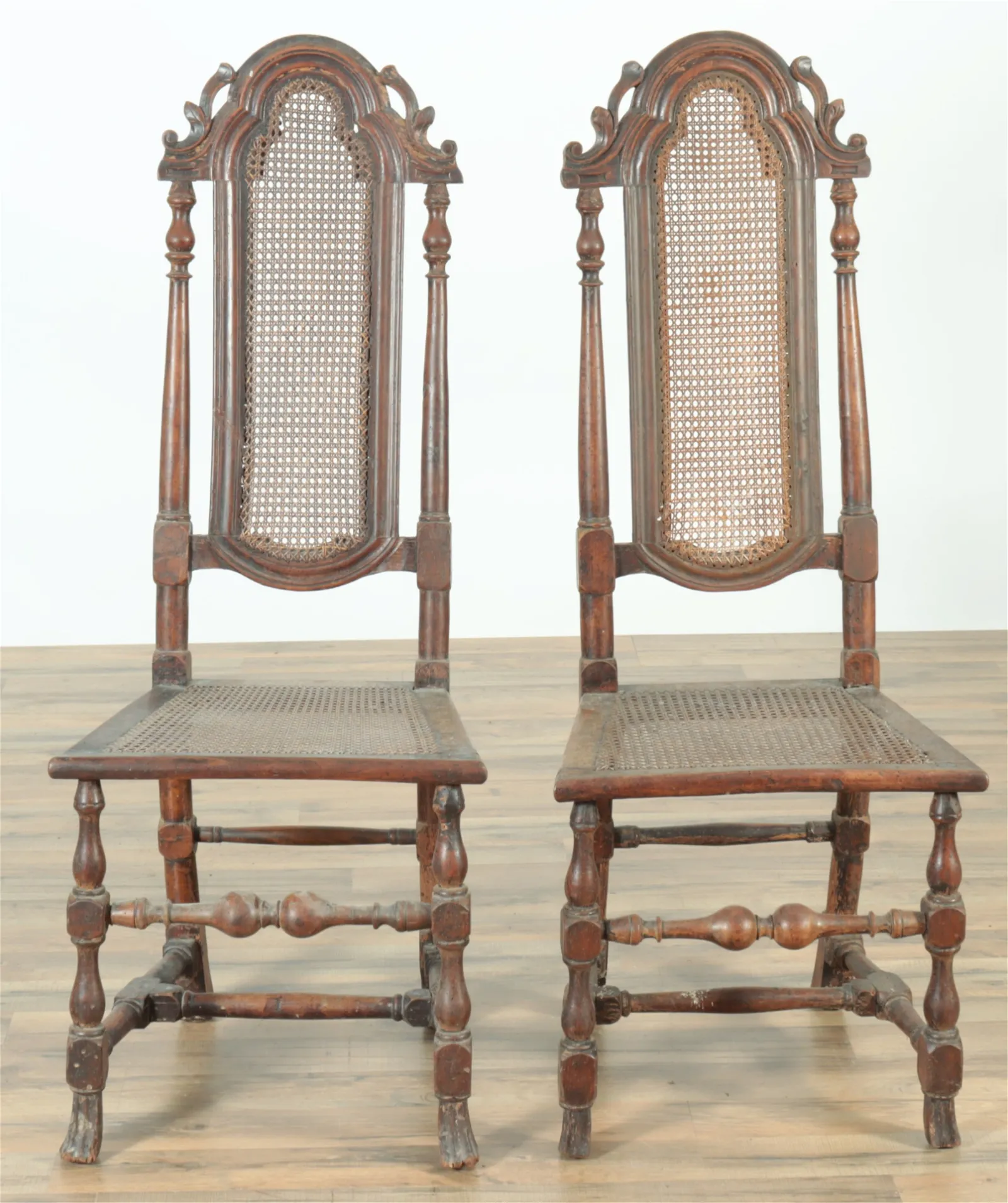
A matched pair of high-back side chairs, characteristic of the William and Mary period (late 17th century), featuring turned oak frames and original or period-appropriate caned seats and backs. The arched crest rails, scrolled ears, and bold turned stretchers on the legs are typical of late 17th-century English design. The caning is likely hand-woven, with wear commensurate to age. The form, manner of turning, and aged patina suggest genuine period craftsmanship.
Curator Questions
Curated by Jade
Assessment:
A fine and authentic example of late 17th-century English furniture, these high-back chairs display the tall verticality, turnings, and caned work quintessential to the William and Mary period. The moderate but genuine wear, pale to medium oak color, and hand-tooled joinery argue for authenticity. Such pairs of period chairs are increasingly scarce and sought-after at auction. A word about fakes: Late 17th-century English furniture is often reproduced, but the honest wear, hand-canework, patina, and construction here appear correct for the period.
Individual Images:
No additional images provided; cannot comment on undercarriage details
joinery
or cane repairs beyond what is visible from this single view. Both chairs show considerable wear at feet and stretchers and some irregularities in cane
typical for age.
Provenance:
None provided.
Condition:
Good (significant, honest wear and some probable restorations to cane and turnings; structurally sound, not officially graded)
Identification Score: 95%
The form, proportions, turned stretchers, crest rail design, and canework are all strongly characteristic of William and Mary period English side chairs. Overall proportions and period joinery are consistent with circa 1690-1710 originals.
Authenticity Score: 80%
Apparent age, hand-woven cane, pronounced wear, correct period details, and patinated oak all support authenticity. While restorations and partial replacements are always possible in furniture this old, the bulk of visible elements appear period. Careful inspection in person would be required to rule out any subtle later repairs.
Image Memory Note
The image shows a matched pair of tall, high-back English side chairs. Each chair has a pronounced arched crest rail with foliate/scroll details, a tall rectangular back with a panel of canework (small woven holes visible), prominent turned stiles and legs, baluster-turned stretchers, and squared block joints. The cane seat panels also show evidence of age and patchy wear. The feet are plain and turned, with uneven abrasion at corners, and there are visible areas of surface wear and patina throughout. No stamps, labels, or visible inscriptions. No visible repairs, though wear suggests possible historic reinforcement.
Keywords
William and Mary, English oak chair, caned highback, 17th century furniture, England, antique side chair
The report was edited after initial Artmink draft. Original AI draft preserved in Artmink audit history.

Share: