Premium upgrade: Jade delivers your appraisal as a guided podium narration with synced visuals and voiceover.
Output is a narrated, animated slideshow with video intro and outro, sandwiching the autoplay voiceover sequence in actual video.
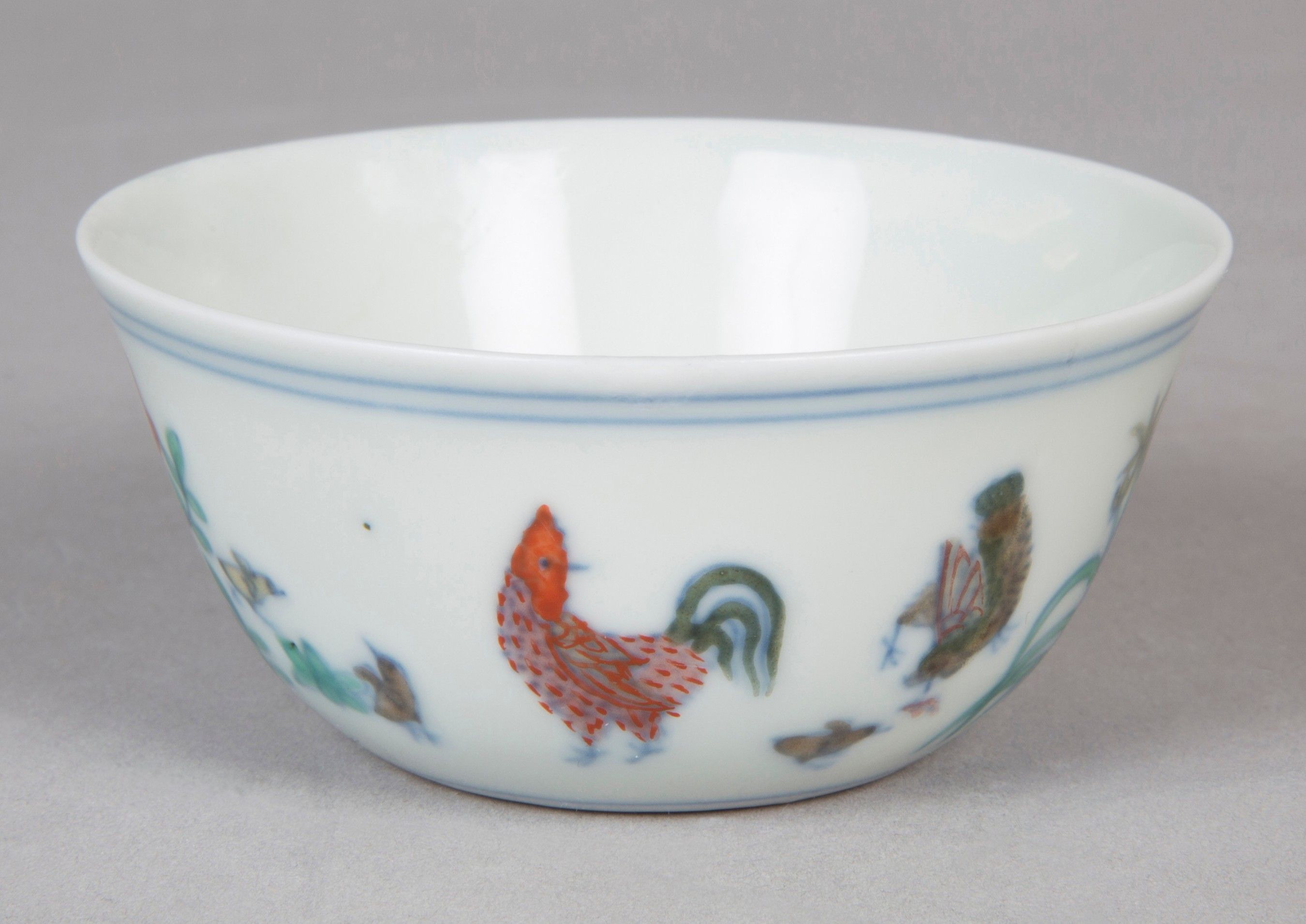
Chinese Doucai 'Chicken' Cup, Bearing Apocryphal Chenghua Mark中国斗彩鸡缸杯,带仿成化款
LANGUAGE UNLOCK
Glossary Roundup
Original Presentation Script
Hello, collectors! Today we're looking at a piece that immediately catches the eye of any Chinese porcelain enthusiast: a 'Chicken Cup' decorated in the famous doucai style. These cups, originally made during the Chenghua reign of the Ming Dynasty, are legendary in the art world, known for their delicate potting and charming depiction of a rooster, hen, and chicks.
This particular cup features that classic motif, with underglaze blue outlines filled with vibrant overglaze enamels. When we turn it over, we see a six-character mark reading 'Da Ming Chenghua Nian Zhi,' claiming it was made during that illustrious period.
However, in the world of Chinese ceramics, marks are often aspirational rather than factual. Genuine Chenghua chicken cups are among the rarest and most valuable ceramics in the world, often fetching tens of millions of dollars at auction. When we examine this piece closely, the enamels lack the soft, almost waxy texture of genuine Chenghua wares. The potting is a bit heavier, and the calligraphy of the mark is somewhat stiff, lacking the distinctive, slightly irregular charm of period marks.
Therefore, this is a later reproduction, likely dating to the late 19th or 20th century. It's a lovely decorative piece that pays homage to a masterpiece, but it is not a Ming Dynasty original. As a decorative copy, its auction value would be in the modest range of $200 to $500. It's a great reminder that in antiques, the story is often in the details, not just the label!
Used for this report's TTS and avatar presentation.
Item Report
Chinese Doucai 'Chicken' Cup, Bearing Apocryphal Chenghua Mark
Materials:Porcelain with underglaze blue and overglaze enamels
Age:Late 19th to 20th Century
Condition:Very Good (no obvious chips or cracks visible in photos)
Value:Authentic Chenghua period: $10,000,000 - $30,000,000+; Later reproduction/copy (as this appears to be): $200 - $500
Peer-Reviewed Market Values
Dating Range
Pending structured dating
Auction Liquidation
Pending structured market values
Fair Market Value
Pending structured market values
Replacement Value
Pending structured market values
Comparables Used
No saved comparables yet
Research Confidence
Insufficient Data
Peer review completed, but this run did not return structured market value ranges.
Maker's Marks / Writing:Six-character underglaze blue mark: 大明成化年製 (Da Ming Chenghua Nian Zhi - Made in the Great Ming Chenghua Period)
Date:2026-08-21 03:40:33.826301
Description:
A Chinese porcelain cup decorated in the doucai technique, featuring a continuous scene of a rooster, hen, and chicks amidst rocks and flowers. The base bears a six-character apocryphal Chenghua reign mark within a double square.
一件采用斗彩工艺装饰的中国瓷杯,图案为公鸡、母鸡和小鸡在岩石和花卉间的连续场景。底部有双框六字仿成化年制款。
Curator Questions
Curated by Jade
Assessment:
This is a later copy of the famous Ming Dynasty Chenghua 'chicken cup'. While it bears a Chenghua mark, the quality of the potting, the style of the enameling, and the calligraphy of the mark indicate it is a later reproduction, likely late 19th or 20th century, made for the decorative market.
这是著名的明代成化“鸡缸杯”的后仿品。虽然带有成化款,但从胎体质量、珐琅彩风格以及款识的书法来看,它是一件后期的仿制品,很可能是19世纪末或20世纪为装饰市场制作的。
Individual Images:
whole cup front view
detail of rooster and hen
detail of rim and rooster
detail of rooster and hen
whole cup reverse view
detail of floral motif
underside showing mark
detail of Chenghua mark
Provenance:
None provided
Condition:
Very Good (no obvious chips or cracks visible in photos)
Identification Score: 95%
The form, decoration (doucai chicken motif), and mark clearly identify what the object is intended to be.
器型、装饰(斗彩鸡纹)和款识清楚地表明了该物品的预期身份。
Authenticity Score: 5%
The piece is a known type of reproduction. Genuine Chenghua chicken cups are exceedingly rare museum-quality pieces. The enamels here lack the depth and subtlety of period examples, the potting is heavier, and the mark's calligraphy is stiff and uncharacteristic of the period.
这件作品是已知的仿制品类型。真正的成化鸡缸杯是极其罕见的博物馆级藏品。这里的珐琅彩缺乏同时期作品的深度和微妙之处,胎体较重,款识的书法生硬,不符合该时期的特征。
Image Memory Note
None
None
Keywords
Chinese porcelain, doucai, chicken cup, Chenghua mark, reproduction, decorative arts, Asian antiques
中国瓷器, 斗彩, 鸡缸杯, 成化款, 仿制品, 装饰艺术, 亚洲古董
The report was edited after initial Artmink draft. Original AI draft preserved in Artmink audit history.
Fair Market Value
Pending structured market values
Replacement Value
Pending structured market values
Archived Matches
No archive matches yet
Research Confidence
Insufficient Data
Peer Review
Key Visible Evidence
Images 7 and 8 confirm the presence of a six-character underglaze blue mark reading 大明成化年製 (Da Ming Chenghua Nian Zhi) enclosed in a double square. Images 1 and 2 display the doucai technique with underglaze blue outlines and overglaze enamels depicting the classic chicken motif. The relatively stiff calligraphy of the mark and the somewhat flat, rigid application of the enamels support the report's conclusion that this is not a 15th-century original.
Market and Source Support
Reference materials confirm that genuine Chenghua (1465–1487) chicken cups are exceptionally rare, characterized by highly refined, thin potting, soft cobalt tones, and specific idiosyncratic mark calligraphy. The visual characteristics of the subject item align with known later reproductions, which have been produced extensively from the Qing dynasty through the 20th century.
Needs Verification
['Precise dating (e.g., distinguishing a late 19th-century Qing copy from a mid-20th-century Republic-era or later reproduction) requires physical examination of the porcelain paste, glaze texture, and foot rim wear.']
Audit Conclusion
The report is supported. The identification of the piece as a later decorative reproduction bearing an apocryphal Chenghua mark is consistent with the visible evidence and established reference standards for this heavily copied form.

Share: