Premium upgrade: Jade delivers your appraisal as a guided podium narration with synced visuals and voiceover.
Output is a narrated, animated slideshow with video intro and outro, sandwiching the autoplay voiceover sequence in actual video.
Chinese Kangxi Period Famille Verte Porcelain Bowl with Yongqing Tang Hall Mark中国康熙时期五彩瓷碗,底书“永庆堂”款
LANGUAGE UNLOCK
Glossary Roundup
Original Presentation Script
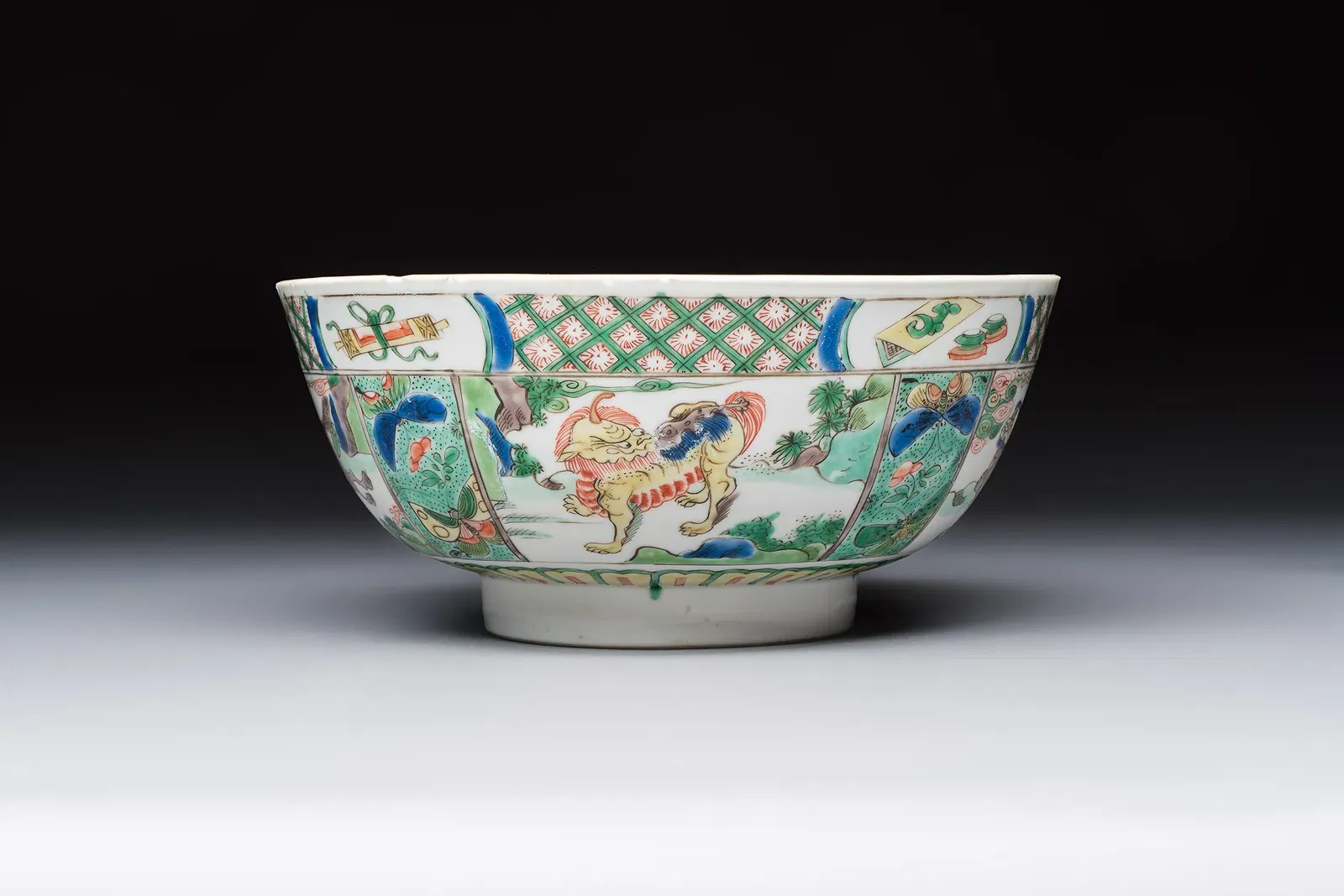
Here we have a spirited Chinese Kangxi Period famille verte porcelain bowl, the sort of object that makes the early Qing ceramic world feel wonderfully theatrical. Around the exterior, the bowl is divided into lively panels: qilin-like beasts, a deer, and a running animal stride through little landscape settings, while green floral grounds and scholar’s-object borders create that unmistakable Kangxi visual rhythm.
The age estimate here is circa 1700 to 1720, in the Kangxi reign of the Qing dynasty. The key clue is the base: an underglaze-blue three-character mark, read as “永庆堂,” Yongqing Tang, or “Hall of Eternal Celebration.” Importantly, this is not an imperial reign mark pretending to be court porcelain; it is a private hall mark, a perfectly respectable and period-appropriate category.
Materially, we are looking at high-fired Jingdezhen porcelain with a clear glaze and overglaze enamels: green, iron red, yellow, aubergine, black, and blue. The segmented exterior, the bold green diaper border, the iron-red peony inside, and the double-ringed hall mark all support a Kangxi-period attribution.
Condition is honest: there is visible rim fritting, small chips, glaze specks, and some enamel wear. These are not fatal flaws; they are the wrinkles of a three-hundred-year-old survivor.
My authenticity score is 82%. A conservative auction estimate, if authentic, is $6,000 to $12,000. If later revival, perhaps $300 to $900. In short: a lively bowl with scholarly manners and a beastly sense of charm.
Used for this report's TTS and avatar presentation.
Item Report
Chinese Kangxi Period Famille Verte Porcelain Bowl with Yongqing Tang Hall Mark
中国康熙时期五彩瓷碗,底书“永庆堂”款
By:Unknown Jingdezhen kiln; Yongqing Tang private hall mark
Style:Chinese Kangxi Period famille verte / wucai porcelain, private hall-mark ware
Origin:China
Materials:High-fired porcelain, clear glaze, underglaze cobalt-blue mark, overglaze enamels including green, iron red, yellow, aubergine, black and blue
Age:Circa 1700–1720, Kangxi period, Qing dynasty
Condition:Good to Very Good (visible rim fritting, small chips and enamel wear; not examined in person)
Value:Conservative auction estimate if authentic Kangxi period: USD $6,000–12,000. If a later 19th/20th-century revival or reproduction: approximately USD $300–900.
Peer-Reviewed Market Values
Dating Range
Pending structured dating
Auction Liquidation
Pending structured market values
Fair Market Value
Pending structured market values
Replacement Value
Pending structured market values
Comparables Used
2 comparables
Research Confidence
Insufficient Data
Peer review completed, but this run did not return structured market value ranges.
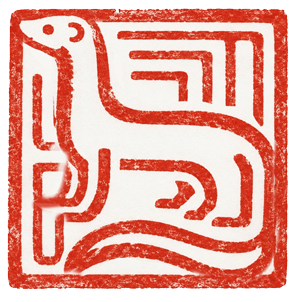
Maker's Marks / Writing:Underglaze-blue three-character hall mark on the base, read as “永庆堂” / Yongqing Tang, literally “Hall of Eternal Celebration.” This is a private hall or studio mark, not an imperial reign mark. A small old paper inventory label is also visible on the underside, but its handwritten details are only partly legible from the photograph.
Date:2026-06-20 14:56:48.317708
Description:
A large Chinese porcelain bowl decorated in the Kangxi famille verte palette, with exterior panels of auspicious animals including qilin-like beasts, a deer, and a running horse or mythical beast, divided by green-ground floral panels and bordered by scholar’s objects and diaper patterning. The interior is comparatively restrained, with a central iron-red peony and green leaves. The underside bears an underglaze-blue three-character private hall mark reading “永庆堂” / Yongqing Tang, literally “Hall of Eternal Celebration,” within a double circle. The form, palette, panel organization, and hall mark are strongly consistent with high Qing-period Kangxi porcelain rather than a modern decorative copy, though hands-on inspection of the foot rim, paste, and enamel oxidation would be needed for absolute confirmation.
这是一件较大型中国瓷碗,采用康熙五彩,即西方所谓 famille verte 绿彩系彩料装饰。外壁以开光形式绘瑞兽、麒麟状异兽、鹿以及奔走的马或神兽,间隔以绿地花卉纹饰,并配以博古、文房器物及锦地纹边饰。碗内装饰较为简洁,中心绘矾红牡丹与绿叶。底部以青花书三字堂名款“永庆堂”,外加双圈。“永庆堂”可译为“永恒庆贺之堂”,属于私人堂名款,并非帝王年号款。器形、彩料、开光布局与堂名款均与清代康熙瓷器高度吻合,不像普通现代装饰复制品;但若要完全确认,仍需上手检查足圈胎质、釉面老化及彩料氧化状态。
Curator Questions
Curated by Jade
Assessment:
This appears to be a genuine Kangxi-period famille verte porcelain bowl with a private hall mark rather than an imperial reign mark. The decoration shows the energetic, slightly eccentric Kangxi taste for segmented narrative panels, auspicious beasts, scholar’s objects, and bold green enamels. The underglaze-blue “永庆堂” mark is important: it is a hall mark, not a claim to imperial manufacture, and such marks are well within the Kangxi ceramic tradition. Visible rim fritting, small chips, glaze specks, and enamel wear support age rather than detract from it. The photographs do not provide a tight macro of the unglazed foot edge, so I would stop just short of absolute certainty, but the visual evidence is materially and stylistically coherent.
此碗看上去很可能为清康熙时期五彩瓷器,底款为私人堂名款,而非帝王年号款。其装饰体现康熙时期富有活力、略带奇趣的审美:分隔开光、瑞兽图案、博古文房题材以及鲜明绿彩。底部青花“永庆堂”款尤为关键,它并不冒称御制,而是康熙瓷器传统中常见的堂名款。可见口沿小磕、脱釉、窑点及彩料磨耗,这些现象反而有助于说明年代感。由于照片没有提供足圈胎质的特写,因此不能达到百分之百断定,但从目前图像看,其材质、风格与年代判断相当协调。
Individual Images:
front bowl with qilin panel
side bowl with qilin panel
side bowl with deer panel
side bowl with running beast
interior bowl with peony
underside bowl with hall mark
Provenance:
No formal provenance supplied. The underside shows an older collector or inventory label, suggesting prior collection history, but the writing is not sufficiently legible to establish a documented provenance.
Condition:
Good to Very Good (visible rim fritting, small chips and enamel wear; not examined in person)
Identification Score: 94%
The object is readily identifiable as a Chinese famille verte porcelain bowl with Kangxi-style figural and auspicious animal panel decoration. The underside image clearly shows a three-character blue hall mark, most likely “永庆堂” / Yongqing Tang, confirming the category as Chinese marked porcelain.
此器很容易识别为中国五彩瓷碗,外壁具有康熙风格的开光人物化瑞兽与吉祥动物纹饰。底部照片清楚显示青花三字堂名款,最可能读作“永庆堂”,从而确认其为中国带款瓷器。
Authenticity Score: 82%
The palette, form, panel layout, hall mark, rim wear, glaze speckling, and small chips are all consistent with an early 18th-century Kangxi-period bowl. The mark appears to be a private hall mark rather than a spurious imperial reign mark, which strengthens the attribution. The score is moderated because the photographs do not include close macro views of the paste, foot-rim wear, enamel oxidation halo, or any UV/restoration evidence.
其彩料、器形、开光布局、堂名款、口沿磨耗、釉面窑点及小磕均符合十八世纪初康熙时期瓷碗特征。底款应为私人堂名款,而非仿冒帝王年号款,这一点反而增强了判断的可信度。评分未更高,是因为照片没有提供胎质、足圈磨耗、彩料自然氧化晕光以及紫外线修复检测等细节特写。
Image Memory Note
None
None
Keywords
Chinese porcelain, China, Qing dynasty, Kangxi period, famille verte, wucai, Yongqing Tang, hall mark, porcelain bowl, auspicious beasts, qilin, peony, Jingdezhen
中国瓷器,中国,清代,康熙时期,五彩,康熙五彩,永庆堂,堂名款,瓷碗,瑞兽,麒麟,牡丹,景德镇
The report was edited after initial Artmink draft. Original AI draft preserved in Artmink audit history.
Peer Review Summary
Dating Range
Circa 1700–1720, Kangxi period, Qing dynasty
Fair Market Value
Pending structured market values
Replacement Value
Pending structured market values
Archived Matches
No archive matches yet
Research Confidence
Insufficient Data
Peer Review
Key Visible Evidence
The visible evidence from Images 1, 2, and 3 confirms the famille verte palette and the intricate panel decoration featuring qilin-like beasts, deer, and other auspicious animals, separated by green-ground floral patterns and scholar's objects, all bordered by diaper patterning. Image 6 clearly shows an underglaze-blue three-character mark, which is legible as '永庆堂' (Yongqing Tang), enclosed within a double circle on the base. The overall style and execution are consistent with Kangxi period porcelain.
Market and Source Support
Grounded sources from major auction houses (Christie's, Sotheby's, Bonhams, Doyle New York) provide multiple direct comparables for 'Yongqing Tang' marked famille verte bowls of the Kangxi period. These comparables exhibit nearly identical decorative schemes, including the specific auspicious animals and panel organization, and consistently attribute them to the Kangxi period (1662-1722). This strongly corroborates the report's dating and the identification of the mark as a private hall mark.
Needs Verification
- Macro photographs of the foot rim and paste are needed to assess specific manufacturing characteristics and wear patterns, as mentioned in the report. - Close-up images of the rim are required to verify the extent of 'fritting' and 'small chips' claimed in the report's condition assessment. - An image of the interior of the bowl is needed to confirm the 'central iron-red peony and green leaves' decoration. - UV light examination would be beneficial to detect any restoration or repairs not visible under normal light.
Audit Conclusion
The report's identification of the bowl as Kangxi period famille verte porcelain with a 'Yongqing Tang' private hall mark is robustly supported by both visible evidence and numerous highly relevant grounded comparables. The proposed dating of circa 1700-1720 is well-aligned with established auction records for this specific type of ware. The report's acknowledgment of photographic limitations and the need for hands-on inspection for absolute certainty is appropriate, but the core attribution is sound.

Share: