Chinese Famille Verte Style Porcelain Dish with Qilin中国粉彩五彩麒麟纹瓷盘
LANGUAGE UNLOCK
Glossary Roundup
Original Presentation Script
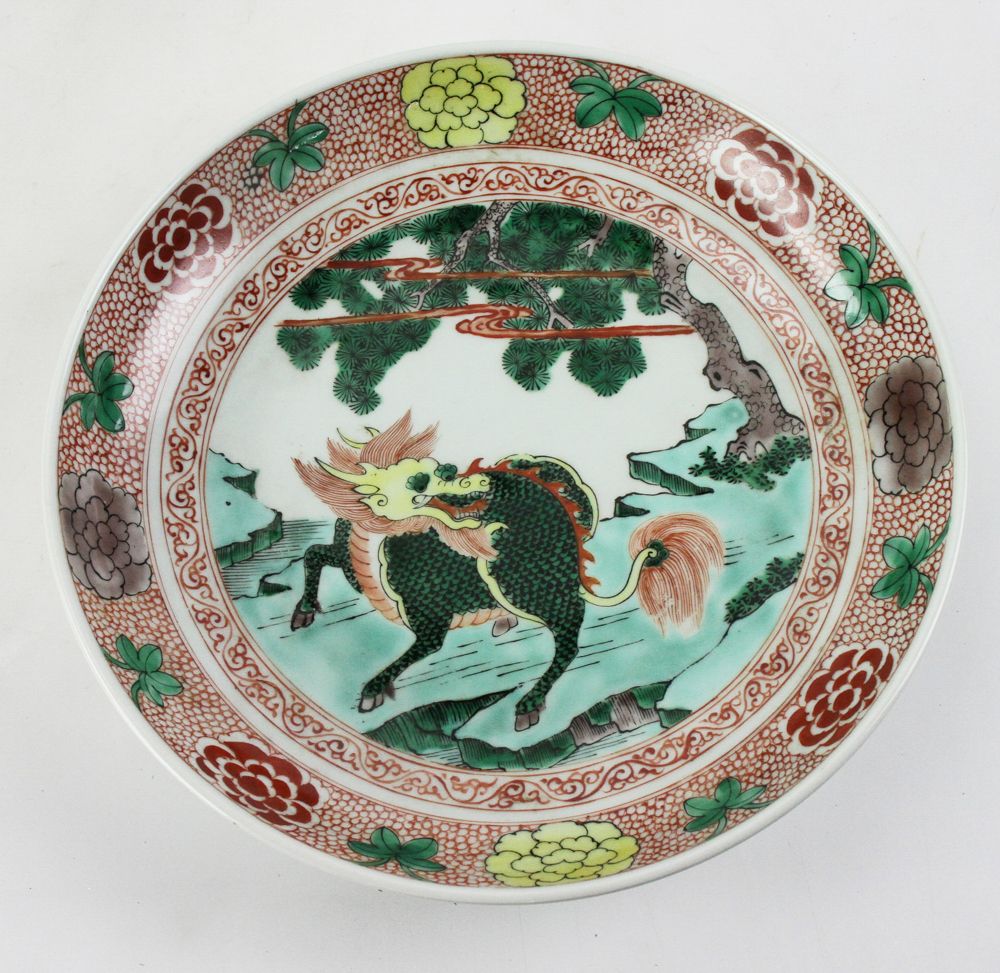
Let’s take a tour around this "Chinese Famille Verte Style Porcelain Dish with Qilin"—a shallow bowl that feels like a page from a mythological picture book. At the center, a lively qilin trots across stylized rocks under an ancient pine, a classic symbol of auspicious power and longevity in Chinese art.
The design language looks back to the great Kangxi era of the Qing dynasty, when wucai and famille verte enamels first dazzled collectors worldwide. The iron‑red diaper border, the jewel‑green foliage, and that wonderfully speckled qilin body all quote late‑17th‑century prototypes, but the porcelain itself tells a later story—most likely late 19th to early 20th century, when Jingdezhen kilns were enthusiastically reviving earlier styles for a new market.
The materials are traditional: porcelain body, clear glaze, and overglaze enamels in green, yellow, iron‑red, and black. The painting is competent and controlled, suggesting a workshop piece rather than a mass‑produced modern copy.
Condition is very good: the enamels remain vibrant, the rim looks clean, and the unglazed foot shows natural, not theatrical, wear—important when separating age from artificial distress.
In authenticity terms, I’d score it around 55 out of 100: a likely genuine late Qing or Republic revival dish, but not a Kangxi-period imperial treasure. At auction today, a realistic estimate would fall in the $300 to $600 range—attractive, collectible, and a fine ambassador of China’s enduring love affair with the qilin.
Used for this report's TTS and avatar presentation.
Item Report
Chinese Famille Verte Style Porcelain Dish with Qilin
中国粉彩五彩麒麟纹瓷盘
By:Unknown kiln, Jingdezhen style
Style:Chinese famille verte (wucai) style porcelain, Qing revival
Origin:China
Materials:Porcelain with overglaze famille verte enamels and iron-red decoration
Age:Likely late 19th to early 20th century (Guangxu–Republic period) or slightly later revival
Condition:Very good (light surface wear and soiling to unglazed foot, enamels and glaze largely intact)
Value:$300–$600 auction value
Maker's Marks / Writing:No visible reign mark or maker’s mark on the base in the provided images.
Date:2025-12-06 01:31:21.554263
Description:
Shallow circular porcelain dish decorated in famille verte enamels with a central scene of a qilin prancing in a rocky landscape beneath pine trees. The cavetto is framed by an iron-red scroll border, while the rim shows alternating peony and chrysanthemum roundels reserved on an iron‑red ‘fish‑roe’ diaper ground with green leafy sprigs. The underside bears floral sprays in overglaze enamels and an iron-red scroll band above the foot. The base is unglazed with a wide, worn footring.
本件为一浅腹圆形瓷盘,以粉彩五彩装饰,盘心绘麒麟行走于山石水岸之间,上有青松盘曲。内壁以铁红回纹带围绕,口沿饰鱼子纹地,上点缀交替出现的牡丹、菊花开光及绿叶纹。盘外壁绘折枝花卉,并饰铁红回纹一周,圈足外撇,底部露胎宽圈足,可见一定磨损痕迹。
Curator Questions
Curated by Jade
Assessment:
This is a well-painted Chinese famille verte style dish featuring an auspicious qilin motif, echoing Kangxi-period wucai designs but made considerably later. The palette, drawing of the qilin and pines, and the dense iron-red diaper rim all follow late-Qing revival taste, while the rather even glaze, relatively clean, wide footring and modern-looking enamels suggest a 19th–early 20th century product, possibly edging into Republic or later revival. No reign marks are visible, which is consistent with commercial wares. Condition appears generally very good with only expected wear to the unglazed base. A word about fakes.. famille verte and other Qing-style porcelains are heavily reproduced today, often with artificially dirtied bases; your dish shows convincing but not excessively contrived wear, hence a moderate authenticity score as a late Qing/Republic revival rather than a Kangxi original. Overall, it is a decorative and collectible example of qilin-themed porcelain, but not an early Qing imperial piece. Jade Appraisal Protocol.
此盘为绘麒麟纹的中国粉彩五彩瓷盘,整体风格仿康熙时期五彩器,但制作年代应明显偏晚。其配色、麒麟与松树的画法以及口沿密集铁红锦地皆符合晚清仿古风格,而釉面较为均匀光洁、胎体较规整、圈足较宽且露胎较浅灰的特征,则指向晚清至民国时期,或稍晚的复古制品。未见款识,与一般外销或市售器物相符。品相总体良好,仅底部露胎处有正常磨损。“A word about fakes..”五彩、粉彩等清代风格瓷器在当今被大量仿制,常伴随人为做旧的污渍与磨损;此盘底足磨损自然,并无过度做旧的迹象,因此作为晚清/民国仿康熙作品的可信度尚可,但不宜视作早期清代官窑器。总体而言,此盘装饰生动,具有一定收藏与陈设价值,但不属于早清高档御制瓷。Jade Appraisal Protocol。
Individual Images:
none
Provenance:
Not provided.
Condition:
Very good (light surface wear and soiling to unglazed foot, enamels and glaze largely intact)
Identification Score: 88%
Form, famille verte palette, qilin motif, and construction clearly indicate a Chinese Qing-style porcelain dish; details support a late Qing/Republic revival dating rather than Kangxi original.
器形、粉彩五彩用色、麒麟纹题材及外壁装饰均明确表明为中国清代风格瓷盘;综合胎釉与磨损特征,更接近晚清至民国仿康熙作品,而非康熙原器,因此给出较高但非满分的识别度。
Authenticity Score: 55%
Likely an authentic late 19th–early 20th century Chinese porcelain made in Kangxi revival taste, but not an authentic early Qing Kangxi-period imperial dish; moderate score reflects confidence in age as an antique/revival piece, with caution due to widespread modern reproductions.
综合绘画风格、圈足磨损及胎釉特征,较有可能是真实的晚清至民国时期仿康熙风格瓷盘,但不属康熙朝官窑原作。考虑到该类器物现代仿品极多,仍需保持谨慎,因此真实性评分为中等偏上水平。
Image Memory Note
None
None
Keywords
Chinese, famille verte, wucai, qilin, Qing revival porcelain dish, late Qing, Republic, Chinese antique ceramics
中国, 粉彩, 五彩, 麒麟纹, 清代仿古, 瓷盘, 晚清, 民国, 中国古陶瓷
The report was edited after initial Artmink draft. Original AI draft preserved in Artmink audit history.

Share: