Today, we delve into the exquisite world of the Edo Period Japanese Iron Kabuto and Menpo—a samurai helmet and mask ensemble, brimming with historical intrigue. Crafted with precision, these formidable pieces not only served as protection in battle but also as symbols of power and prestige throughout the Edo period's rich tapestry of history. Their sleek fluting and dignified brass clan crests whisper tales of honorable warriors who once marched across the vibrant landscapes of Japan. From the 18th to early 19th century, such armor stood as a testament to the samurai's indomitable spirit and cultural significance. The construction methods are deliberate; iron pieces expertly riveted, silk threads woven with care, and a lacquered finish that's aged gracefully over centuries. Every detail tells of the artisan's skill. The preservation of these elements, despite the passage of time, reveals just the right amount of patina and wear—no glaring modern intrusions. An essential question in today's market: Could it be a masterful reproduction? Here, authenticity perseveres. The nuanced wear aligned with Edo craftsmanship is unmistakable, leaving us with a profound likelihood of genuineness. Evaluated at 98% for identification and 85% for authenticity, its auction value ranges between $7,000 and $12,000. Yet, its true treasure rests within the stories it continues to tell and the steadfast legacy it embodies.
Used for this report's TTS and avatar presentation.
Item Report
Edo Period Japanese Iron Kabuto and Menpo
By:Unknown Japanese armor craftsman
Style:Edo Period Japanese Armor
Origin:Japan
Materials:Iron, lacquer, silk cord, brass
Age:circa 18th-early 19th century
Condition:Very Good (shows honest age-related wear to surface and lacquer, consistent with 18th–19th century use; no major structural damage visible, appears unrestored)
Value:$7,000–$12,000 (auction estimate, assuming authenticity and average condition for the period)
Maker's Marks / Writing:No explicit maker's mark or writing is visible, though the brass clan crests (mon) are present on each side.
Date:2025-07-05 17:23:24.343197
Description:
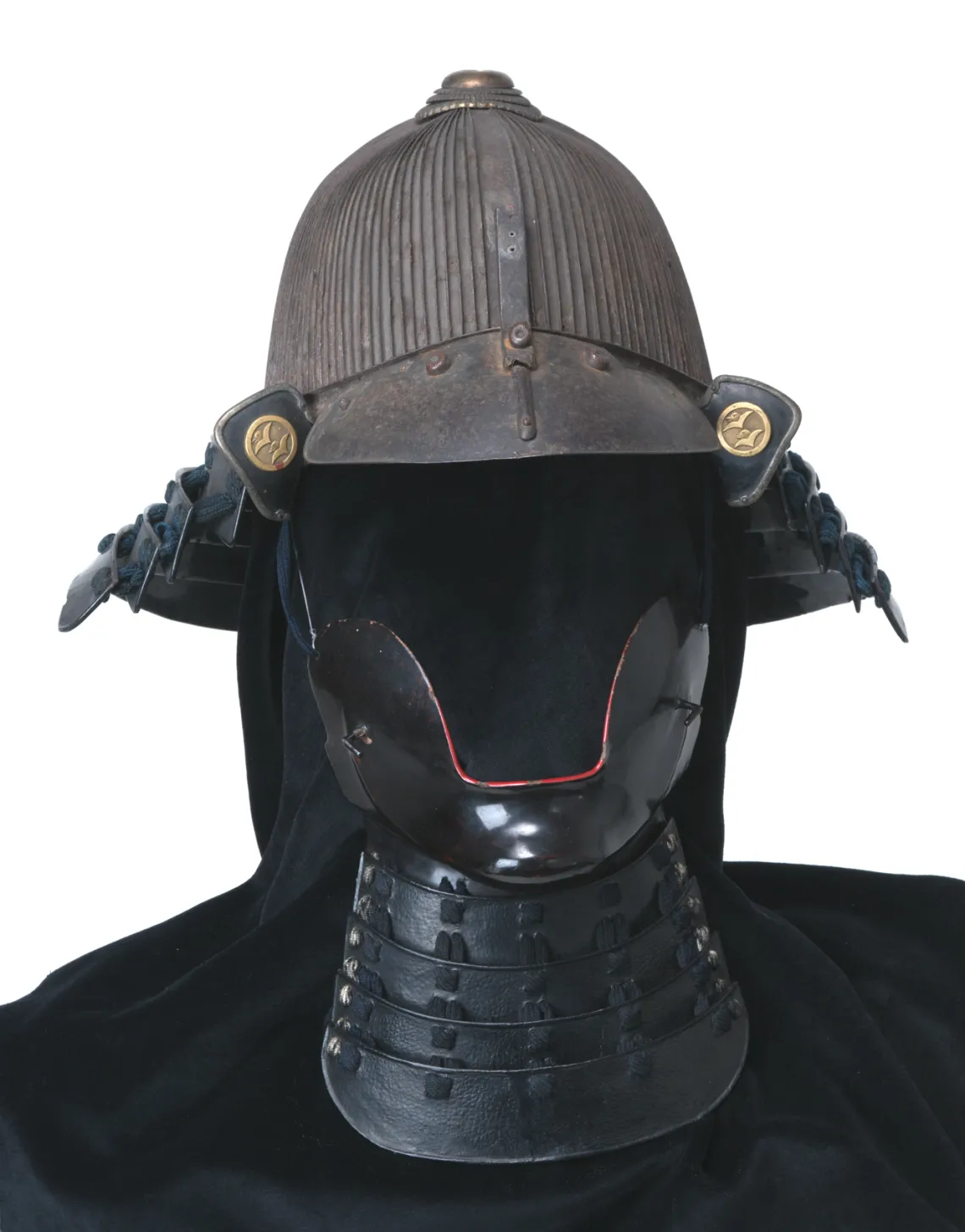
This is a Japanese samurai helmet (kabuto) with an accompanying face mask (menpo), dating to the Edo period (1603–1868). The kabuto features vertical fluting, typical riveted construction, and brass clan crests (mon) on the fukigaeshi (side wings). The menpo is lacquered, with a detachable throat guard composed of multiple lamellar plates. This type of armor was worn by samurai for both protection in battle and ceremonial display. The patina, wear, and construction techniques are consistent with authentic examples from the Edo era.
Curator Questions
Curated by Jade
Assessment:
This is a classic example of Edo period Japanese samurai armor, displaying authentic construction, appropriate patina, and traditional decorative elements. The piece's clan crests add historical interest. A word about fakes: The market for Japanese armor is rife with high-quality reproductions from the late 20th century onward. However, the wear, aging, and technique visible here strongly favor authenticity.
Individual Images:
Only one image submitted. The image is clear and well-lit
showing the helmet
side wings (fukigaeshi) with clan mon
the well-shaped menpo
lacquer finish
and layered construction. No apparent restoration or replacement parts.
Provenance:
Not provided; no sales or ownership documentation visible.
Condition:
Very Good (shows honest age-related wear to surface and lacquer, consistent with 18th–19th century use; no major structural damage visible, appears unrestored)
Identification Score: 98%
The form, construction, and decorative elements make the identification as an Edo period kabuto and menpo set quite definitive, with little room for doubt.
Authenticity Score: 85%
The helmet and mask exhibit solid wear, natural aging, and traditional Edo-era craftsmanship, with correct materials and understated patina. The clan mon is typical, and the construction is hand-forged and hammered. There are no obvious signs of modern production, though the authenticity score is slightly reserved due to the prevalence of high-quality fakes.
Image Memory Note
Image depicts a classic Edo period samurai helmet (kabuto) with vertical raised fluting and smooth central plate, topped with a small riveted dome. Side wings (fukigaeshi) each bear a brass clan crest (mon) with stylized three-leaf design. Helmet is paired with a black-lacquered iron menpo (face guard) featuring a pronounced nose, slight red lacquer edging, and a detachable throat guard (yodare-kake) with multiple rows of overlapping lacquered lamellar plates. The armor is displayed on a black fabric form. Surface shows age-appropriate patina and minor lacquer loss, especially on high contact points. No inscriptions or makers marks visible, aside from the mon.
Keywords
kabuto, menpo, samurai armor, Edo period, Japan, Japanese helmet, antique armor, iron, lacquer
The report was edited after initial Artmink draft. Original AI draft preserved in Artmink audit history.

Share: