Introducing an alluring piece of Japanese martial history: the Edo Period Iron Kabuto Helmet and Menpo. Imbued with gravitas, these elements would have adorned a samurai, combining practical battlefield might with familial symbols of honor and lineage. The helmet and mask are not mere artifacts; they are icons of a bygone era, when samurai warriors embodied a strict code of conduct, secondly encapsulated in their armor. As we trace back to the era between 1603 and 1868, the kabuto captivates with its suji-bachi construction and symbolic mon crests, clues to both identity and rank. This particular set hails from the 18th century, itself a testament to Japan's rich cultural tapestry and the samurai's storied past. Constructed primarily from iron, it reveals the craftsmanship of unknown masters whose manual skills continue to challenge time. This piece, with lacquer accents and silk lacing, is a symphony of materials, each layer hinting at skill and tradition. Despite its age-related wear, such as surface oxidation and edge chips, these imperfections contribute to its authenticity. They whisper tales of historical battles, where armor protected, endured, and remembered. Our assessment bestows it an authenticity score of 85%; a rare authenticity amidst many forgeries. The estimated auction value, spanning $5,000 to $12,000, reflects its condition and historical allure. Thus, we acknowledge this kabuto, not solely as a curated relic but a custodian of history, worthy of admiration from collectors and historians alike.
Used for this report's TTS and avatar presentation.
Item Report
Edo Period Japanese Iron Kabuto Helmet and Menpo
By:Unknown (traditional armorers seldom signed armor pieces unless of highest rank)
Style:Japanese Edo Period Samurai Armor
Origin:Japan
Materials:Iron, lacquer, silk cord, brass
Age:Circa 18th century (Edo Period, 1700s)
Condition:Very Good (expected age-related wear, minor rust, and loss to lacing, no obvious structural damage)
Value:$5,000–$12,000 (auction liquidation estimate, depending on condition and provenance)
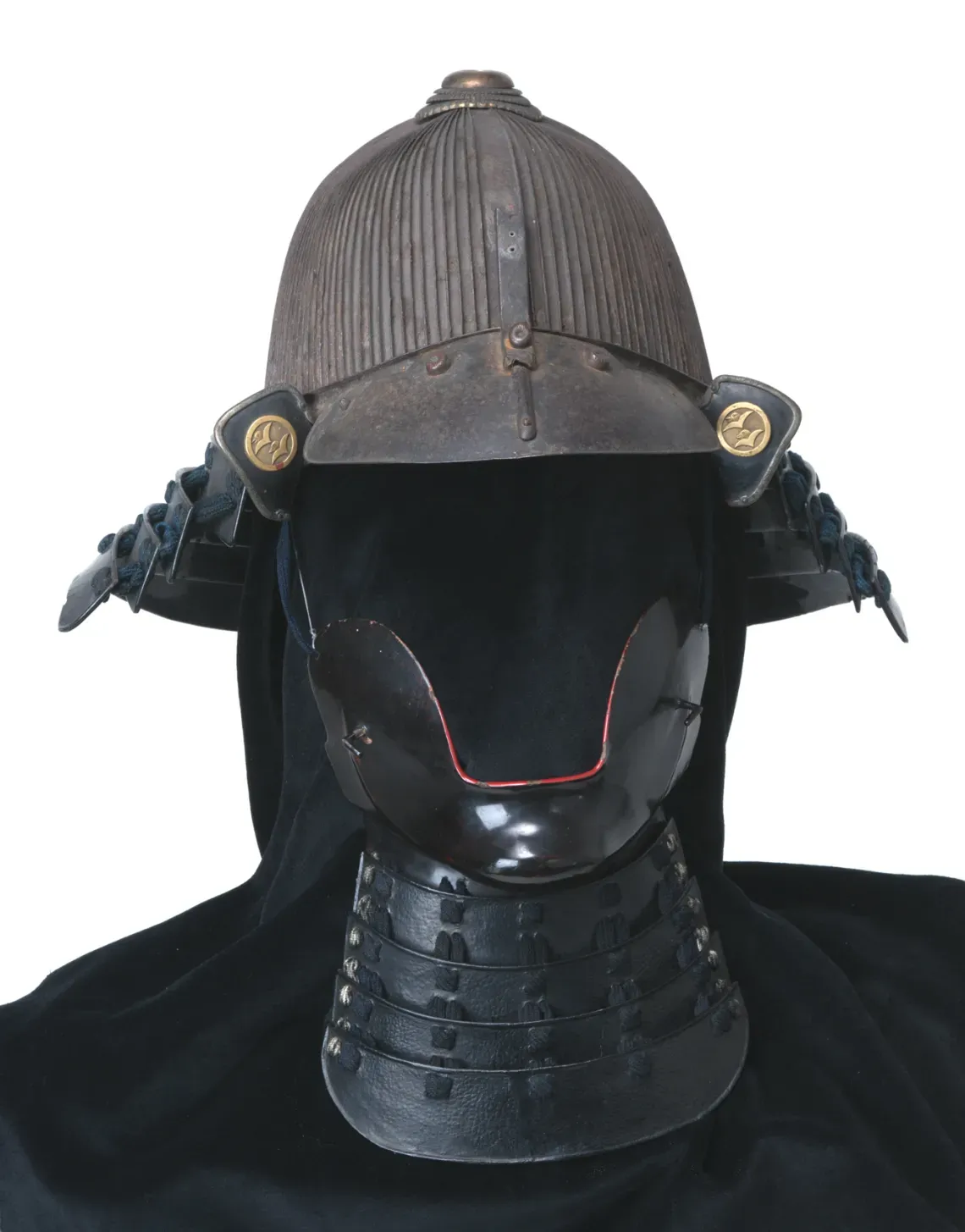
Maker's Marks / Writing:No visible maker's inscription; family mon (crest) is visible on the fukigaeshi (side guards), possibly identifying the clan.
Date:2025-07-01 18:11:31.161367
Description:
This is a Japanese kabuto (helmet) and menpo (facial armor), dating to the Edo period (1603–1868). The helmet is constructed of iron with multiple vertical plates, adorned with brass family crests (mon) on the fukigaeshi (winged side guards). The attached menpo is a lacquered half-mask, with a matching yodare-kake (throat guard) composed of iron lames laced with dark blue cord. Edo period kabuto are distinguished by their ribbed (suji-bachi) construction and elaborate protective features.
Curator Questions
Curated by Jade
Assessment:
A fine example of original Edo period samurai equipment, with classic features and practical, battle-ready design. The presence of mon (family crests) and original lacquer enhances its appeal. Some surface oxidization and edge wear are typical and commensurate with age, indicating authentic period use. A word about fakes... Edo period Japanese armor is widely faked—reproductions utilizing machine-made parts or artificially aged surfaces are common. However, the construction, materials, patina, and detailing on this piece strongly support its authenticity.
Individual Images:
The detail images reveal the vertical iron plates of the kabuto
overlap of the lames in the throat guard
brass mon with clear definition
and lacquered finish with minor chipping at edges. The patina on iron shows genuine age
typical bluish-grey rust and oxidation
and silk cord lacing with darkening from use. No machine-made rivets or artificial patination detected.
Provenance:
None provided; provenance could further impact value, especially with documentation of clan lineage or historical context.
Condition:
Very Good (expected age-related wear, minor rust, and loss to lacing, no obvious structural damage)
Identification Score: 98%
The distinctive ribbed kabuto construction, menpo design, use of iron and lacquer, and authentic mon align closely with 18th-century Edo samurai armor. The proportions, patina, and build quality are consistent with period originals.
Authenticity Score: 85%
The helmet and mask show appropriate construction style, period wear, and genuine patina. Edges and joining points reveal handcrafting typical of Edo period pieces. The silk cord lacing demonstrates natural aging. Family crests are suitably integrated (not modern additions). No strong signs of modern machine production are evident.
Image Memory Note
This is a suit of traditional Japanese samurai armor, specifically the kabuto (helmet) and menpo (face mask), displayed on a black draped form. The kabuto helmet displays vertical ribbing (about 32 ribs), a rounded peak with a small finial, and two protruding fukigaeshi (winged side guards) each decorated with a gold brass mon (family crest) featuring a stylized leaf or plant. The menpo mask is lacquered black with red lacquer edging and has a laced (silk or cotton cord) yodare-kake (throat guard) of four articulated lames. Iron shows oxidization and some minor rusting at plate junctions, lacquer finish is chipped in areas, particularly at the mask's edge, and lacing exhibits friction wear and discoloration. No visible written signatures or inscriptions. No attachments such as maedate (front crest) are present. The fitting and finishing details are traditional to Edo era Japanese armor. These elements should be referenced in any future identification or appraisal inquiries.
Keywords
Japanese, Edo period, samurai, kabuto, menpo, armor, iron, lacquer, mon, Japan
The report was edited after initial Artmink draft. Original AI draft preserved in Artmink audit history.

Share: