
Monique : French Fine and Decorative Arts
Monique Presents

Original Presentation Script
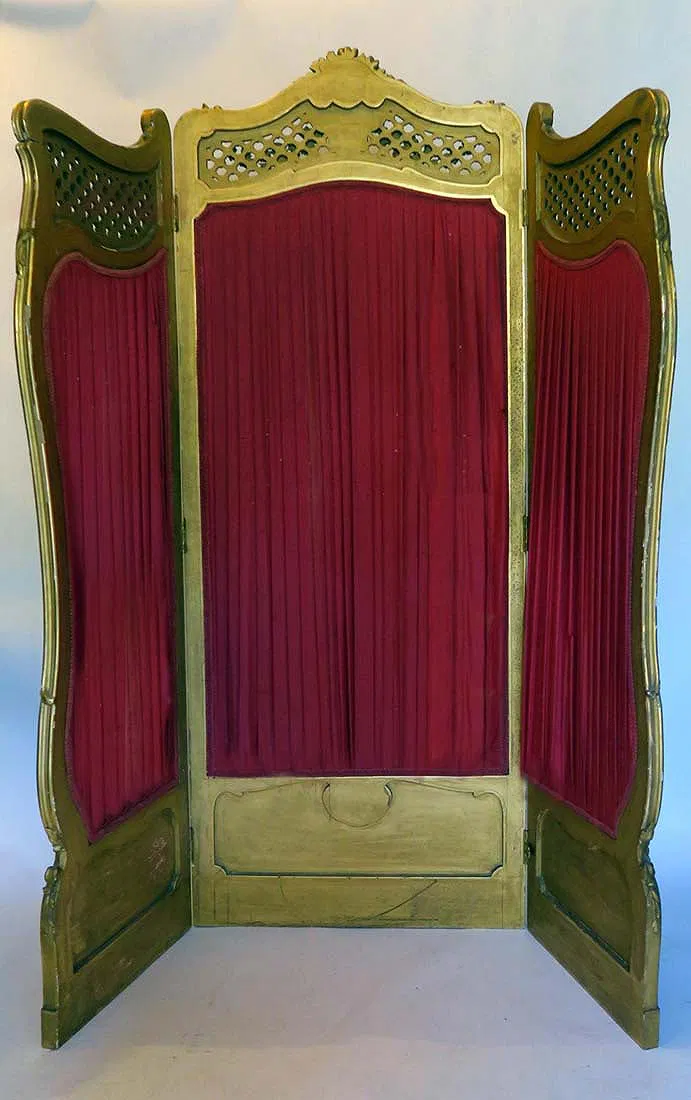
Here we have a French Louis XV Style Giltwood Three-Fold Painted Rococo Screen, crafted circa 1880–1920 during the height of the Rococo Revival. It is a wonderfully theatrical interior furnishing—designed to divide space while adding a dash of aristocratic fantasy. With its serpentine silhouette, pierced cresting, and gilded carved frame, it belongs to that deliciously decorative world of boudoirs, salons, and Belle Époque stagecraft. Its ornament borrows freely from 18th century French Rococo: shells, C-scrolls, floral swags, scrolling cartouches, and those fluttering cherubs who seem never to have had a serious obligation in their lives. The central pastoral scene and flanking cherub panels reinforce the romantic program. Yet the consistently applied gilding and cohesive decorative execution point toward late 19th- or early 20th-century revival craftsmanship rather than a true Louis XV period survival. The materials appear to be carved wood built up with gesso and finished in gilt, fitted with painted inset panels. The paintings display softening, varnish darkening, and minor abrasions consistent with age. The reverse shows red fabric infill and metal hinges between panels, typical of decorative screens of this era. Condition is good overall, with visible rubbing to the gilding and wear to the painted surfaces, but the structure appears sound. Closer examination of joinery and hinge attachment would provide additional confirmation of construction techniques. As a Rococo Revival furnishing, it fits comfortably within the current market range of approximately $1,200–$2,500 at auction. Were it a documented mid-18th century Louis XV example, the value would rise significantly into the $6,000–$12,000 range. As it stands, it remains a charming and evocative antique—an elegant reminder of how enthusiastically French taste has been revived across generations.
Used for this report's TTS and avatar presentation.
Item Report
French Louis XV Style Giltwood Three-Fold Painted Rococo Screen
法国路易十五风格镀金木雕三折洛可可屏风
Merge Reports: Yes (reconciled). Approval remains manual.
By: Unknown
Style: Louis XV Rococo Revival
Origin: France, or possibly Continental Europe
Materials: carved wood, gesso, gilt finish, painted panels, red fabric backing, metal hinges
Age: circa 1880–1920
Condition: Good (visible surface wear, rubbing to gilding, darkening and abrasions to painted panels; structurally intact based on images)
Value: Auction estimate: as a late 19th/early 20th century Louis XV style decorative screen, approximately $1,200–$2,500; if an authentic 18th century period example, approximately $6,000–$12,000
Peer-Reviewed Market Values
- Dating Range
- Pending structured dating
- Auction Liquidation
- Pending structured market values
- Fair Market Value
- Pending structured market values
- Replacement Value
- Pending structured market values
- Comparables Used
- No saved comparables yet
- Research Confidence
- Not Run
Peer review completed, but this run did not return structured market value ranges.
Maker's Marks / Writing: No maker's mark, signature, or inscription visible in the provided images.
Date: 2026-03-24 01:39:22.469418
Description:
A three-panel folding room screen with sinuous Rococo outlines, pierced cresting, gilded carved wooden frames, and inset painted decorative panels. The central panel depicts a romantic pastoral scene with figures and cherubs, flanked by side panels featuring individual cherubs and floral swags. The overall presentation, including the uniformly applied gilding and decorative program, indicates a late 19th to early 20th century Rococo Revival furnishing rather than an 18th century period screen. 这是一件三折式屏风,造型呈洛可可风格的曲线轮廓,顶部为镂空雕花装饰,木质框架通体鎏金,内嵌手绘装饰画板。中央画板描绘浪漫田园人物与小天使场景,两侧为单独的小天使与花卉花环图案。整体风格与鎏金效果显示其为19世纪末至20世纪初的洛可可复兴时期装饰性家具,而非18世纪路易十五时期原作。
Curator Questions
Curated by Jade
Assessment:
This is a handsome French Louis XV style folding screen created during the Rococo Revival period, circa 1880–1920. The asymmetrical cartouches, pierced lattice cresting, shell motifs, C-scrolls, floral garlands, and painted romantic panels all draw directly from 18th century French taste. However, the consistently applied gilding, cohesive decorative scheme, and overall finish align more closely with late 19th- to early 20th-century revival production than with a mid-18th century original. The painted panels show surface wear, darkening, and some abrasions consistent with age and use. The reverse reveals red fabric infill within the panels and visible metal hinges between sections, typical of decorative folding screens of the period. No maker’s marks or inscriptions are visible. Rococo furniture and decorative screens were widely revived in the Belle Époque era, and examples such as this were intended to evoke aristocratic French interiors rather than to reproduce period construction methods exactly. As such, this piece should be appreciated as an antique Rococo Revival furnishing rather than a Louis XV period survival. 这是一件制作于约1880–1920年的法国路易十五风格洛可可复兴时期三折屏风。其不对称纹章式构图、镂空顶部、贝壳纹、C形卷草、花卉花环及浪漫题材绘画均直接借鉴18世纪法国洛可可美学。然而,其整体均匀的鎏金效果、统一的装饰布局及完成度,更符合19世纪末至20世纪初复兴时期作品的特征,而非18世纪中期原作。 画面可见老化痕迹,包括色泽变暗、轻微磨损与擦痕。背面可见红色织物衬里与金属合页结构,符合当时装饰性屏风的制作方式。未见制造者标记或题款。 洛可可家具在美好年代时期被广泛复兴,此类作品旨在营造法式贵族氛围,而非严格复制18世纪工艺结构。因此,本件应作为一件古董级洛可可复兴时期家具加以欣赏,而非路易十五时期原作。
Individual Images:
- Reverse view showing red fabric infill and metal hinges; front full view; detailed views of center pastoral painting; detailed views of left and right cherub panels; close-ups of carved cresting and gilded framework would further assist with construction analysis.
Provenance:
No provenance documentation provided.
Condition:
Good (visible surface wear, rubbing to gilding, darkening and abrasions to painted panels; structurally intact based on images)
Identification Score: 94%
The object is clearly identifiable as a French or Continental Rococo Revival three-fold folding screen based on its hinged panel construction, gilt carved framework, pierced cresting, and Louis XV ornamental vocabulary. 根据其三折合页结构、镀金雕刻框架、镂空顶部及典型路易十五装饰元素,可明确判断为法国或欧洲大陆地区的洛可可复兴风格三折屏风。
Authenticity Score: 85% (as a late 19th–early 20th century Rococo Revival piece); 28% (as an 18th century Louis XV period object)
The screen presents consistent age, materials, and design characteristics typical of circa 1880–1920 Rococo Revival production. The uniform gilding and overall decorative treatment do not display the nuanced wear and construction features generally associated with 18th century Louis XV period examples. Without detailed joinery and construction analysis, attribution to the 18th century is unlikely. 该屏风在材质、风格与整体状态上均符合约1880–1920年洛可可复兴时期作品特征。其鎏金效果较为均匀,未见18世纪路易十五时期家具常见的细腻包浆与结构工艺特征。在缺乏榫卯及结构细节分析的情况下,不支持其为18世纪原作的判断。
Image Memory Note
Three-panel Rococo Revival giltwood folding screen with painted cherub and pastoral panels, red fabric backing visible on reverse. 三折洛可可复兴风格镀金木雕屏风,正面为小天使与田园人物绘画,背面可见红色织物衬里。
Keywords
French screen, Louis XV style, Rococo revival, giltwood, folding screen, painted panels, cherubs, Belle Époque, three-fold screen, decorative furnishing 法国屏风, 路易十五风格, 洛可可复兴, 镀金木雕, 三折屏风, 手绘画板, 小天使, 美好年代, 装饰家具
Peer Review Summary
Peer Review
Key Visible Evidence
The object is a three-panel folding screen with a gilded, carved wooden frame (Images 2, 3). The front panels are inset with paintings depicting a central pastoral scene with figures and cherubs, flanked by side panels featuring individual cherubs and floral swags (Images 2-6). The carving displays characteristic Rococo elements such as sinuous outlines, C-scrolls, shell motifs, and pierced cresting (Images 2, 3). The gilding appears uniformly applied, suggesting a later revival finish rather than the nuanced patination often found on original 18th-century pieces (Images 2, 3). The painted panels exhibit signs of age, including darkening, some abrasions, and a softened appearance (Images 4-6). The reverse of the screen (Image 1) shows red fabric infill within the panels, and the frame, while gilded, is simpler in design. Metal hinges are visible between the panels on the reverse (Image 1). No maker's marks, signatures, or inscriptions are discernible in any of the provided images.
Market and Source Support
The report's identification of the object as a 'French Louis XV Style Giltwood Three-Fold Painted Rococo Screen' is well-supported by the visible evidence and aligns with the descriptions of numerous comparable items in the market. The dating of 'circa 1880-1920' for a 'Rococo Revival' piece is consistent with auction records for similar screens, which are frequently described as 'Louis XV Style' or explicitly dated to the 'late 19th/early 20th century'. The estimated auction value of '$1,200-$2,500' for a late 19th/early 20th century Louis XV style decorative screen is corroborated by the identified comparables, which realized prices ranging from approximately $1,000 to $1,290 USD. The report's distinction in value for an authentic 18th-century period example ($6,000-$12,000) is also generally accurate, reflecting the higher market value of true period pieces.
Needs Verification
While the overall assessment of the screen as a Rococo Revival piece is robust, more definitive evidence regarding its construction would strengthen the dating. Specifically, close-up images of joinery (e.g., mortise and tenon, dovetails), detailed views of hinge attachments, and the underside/feet construction would provide crucial insights into manufacturing techniques characteristic of the late 19th or early 20th century. Further, a technical examination (e.g., macro photography or UV/blacklight analysis) of the gilding could help identify the specific method used (e.g., water gilding, oil gilding, bronzing), which could offer additional dating cues. Similarly, a more in-depth analysis of the painted panel medium and technique could confirm the artistic practices of the suggested period and help assess any potential restorations or overpainting.
Audit Conclusion
The report presents a sound and largely accurate assessment of the French Louis XV Style Giltwood Three-Fold Painted Rococo Screen. The identification of its style as Rococo Revival and its dating to circa 1880-1920 is well-supported by both visible evidence and a strong array of comparable market examples. The critical distinction between a revival piece and an 18th-century period original, both in terms of stylistic attributes and valuation, is a correct and essential aspect of the appraisal. The condition assessment is fair and consistent with the visual evidence. While the report's conclusions are well-founded, additional detailed photographic documentation of construction elements, gilding techniques, and painting methods would provide further granular evidence to solidify the material and dating claims.
Comparables (Similar Items)
No archived comparables matched this report yet.
Share: