Edo Period Japanese Samurai Iron and Lacquer Yoroi Armor
LANGUAGE UNLOCK
Glossary Roundup
Original Presentation Script
What a privilege it is to examine this exquisite set of Edo Period Japanese Samurai Iron and Lacquer Yoroi Armor. A testament to both the martial prowess and the artistic sophistication of Japan's samurai class, this ensemble serves as both protective gear and a status symbol. Each component, from the stately kabuto helmet to the intricate menpo face mask, sings the song of bygone eras steeped in discipline and aesthetic brilliance.
These pieces hail from the Edo Period, a historical canvas rich with samurai lore and feudal ritual, dating back to between 1603 and 1868. In this period, armor like ours was not only a necessity of battle but a proclamation of its wearer's esteemed position. Its presence in a collection today harbors rich tales of warrior legacies and the opulence that encapsulated their ranks.
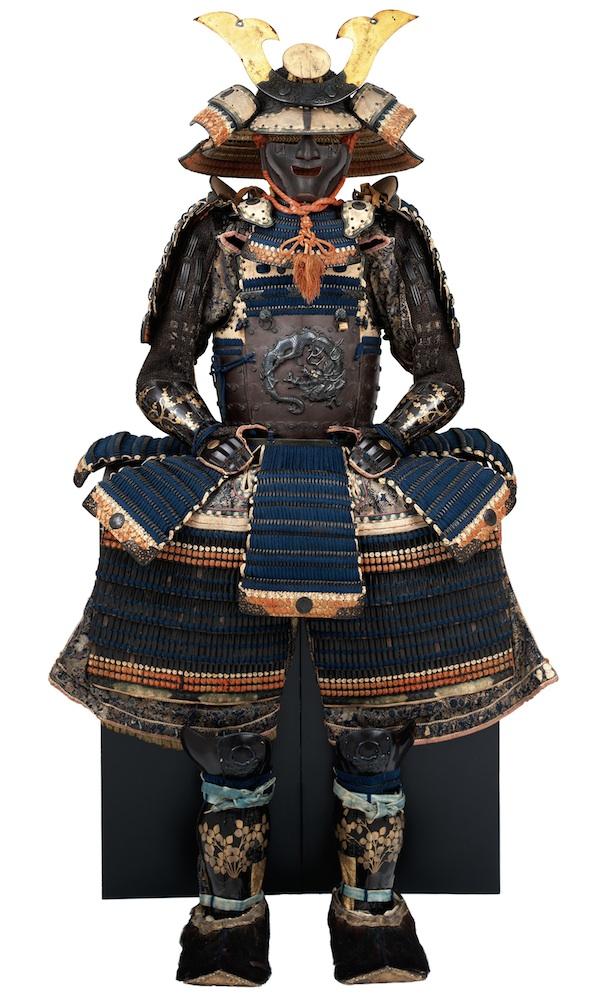
Crafted predominantly from iron and lacquer, this set flaunts the artistry of Japanese armorers. The lamellae construction is bound by the deep-blue and cream hues of silk cording, a feature that speaks to artisan skills passed down through generations. The gilt accents add a ceremonial brightness, while the dragon medallion boldly embellishing the breastplate signifies strength and power.
While honest wear whispers tales of history, it remains in outstanding condition for its age, displaying original parts with silk lacing showing fraying. Such signs of aging, seen in the patina and wear on the lacquer, serve as badges of authenticity rather than blemishes. However, the absence of provenance documentation lightly tempers its appraisal.
Graded with an impressive authenticity score of 85%, this armor stands confidently as a genuine artifact of the Edo era. It is valued between $25,000 and $60,000 at auction, contingent upon its condition and completeness. Remember, as these old warriors age, they draw deeper into the mystique of their stories — historically irreplaceable and ever-desirable for the discerning collector.
Used for this report's TTS and avatar presentation.
Item Report
Edo Period Japanese Samurai Iron and Lacquer Yoroi Armor
By:Unknown (workshops of samurai armorers)
Style:Edo Period Samurai Armor
Origin:Japan
Materials:Iron, lacquer, silk cord, leather, gilt accents
Age:circa 1700–1850
Condition:Very Good (intact, visible honest wear, original lacing with some fraying, lacquer and iron with signs of age)
Value:$25,000–$60,000 (auction, depending on condition, provenance, and completeness)
Maker's Marks / Writing:None visible on photographed surfaces, but inspection of interior kabuto or armor plates may reveal stamped marks or inscriptions.
Date:2025-07-03 15:46:19.438648
Description:
This is a complete set of traditional Japanese samurai armor, known as yoroi, likely from the Edo Period (1603–1868). The set includes a kabuto (helmet) with distinctive gold ornamentation, a menpo (face mask), do (cuirass or breastplate), kote (armored sleeves), sode (shoulder guards), kusazuri (thigh guards), haidate (hip/upper leg guards), and suneate (shin guards). The lacquered iron scales are laced together with deep blue and cream silk cords; decorative crests are visible, including the dragon medallion on the breastplate. The detailing and elaborate construction are characteristic of samurai armor designed for both display and protection, signifying the status and wealth of its owner.
Curator Questions
Curated by Jade
Assessment:
A fine and representative example of Edo period samurai armor, this set demonstrates expert craftsmanship and the sophisticated aesthetic sense characteristic of the period's warrior elite. Presence of original lacing, decorative elements, and completeness add to its desirability for collectors and institutions. Authentic, complete Edo armor sets are increasingly rare and highly valued; condition and provenance can have a substantial effect on value.
Individual Images:
whole item
Provenance:
Not provided; documentation or historic record would increase value.
Condition:
Very Good (intact, visible honest wear, original lacing with some fraying, lacquer and iron with signs of age)
Identification Score: 98%
The elements and construction—iron and lacquer lamellae, lacing style, kabuto form, and detailing—all indicate this is an authentic Japanese samurai armor set from the Edo Period. Nearly complete suit with distinctive Japanese features.
Authenticity Score: 85%
The style, materials, aging, and details all suggest this is a genuine Edo period suit. The natural wear, patina, and original silk lacing support authenticity. However, as with many samurai armors, some components could be married or restored, and confirmation by hands-on inspection and provenance are warranted.
Image Memory Note
The primary image displays a full suit of samurai armor seated on a mount. Components include a black-lacquer kabuto with twin gold maedate (crest), a menpo (half-face mask) with red interior, blue and cream silk lacing throughout, and dragon medallion on the central breastplate. Sode (shoulder guards) and kusazuri (skirt) present, with intricate textile patterning on haidate and suneate (shin guards). Lacquer exhibits age and honest wear; silk lacing shows fraying, especially at exposed edges. No visible inscriptions or stamps on exterior; crest forms traditional. No visible modern fasteners or repairs. No display of provenance documentation.
Keywords
Edo Period, Samurai Armor, Japanese Yoroi, Kabuto, Iron, Lacquer, Japan
The report was edited after initial Artmink draft. Original AI draft preserved in Artmink audit history.

Share: