Early 20th-Century American EAPG Amber Pressed Glass Compote
LANGUAGE UNLOCK
Glossary Roundup
Original Presentation Script
No narration for this appraisal report
Used for this report's TTS and avatar presentation.
Item Report
Early 20th-Century American EAPG Amber Pressed Glass Compote
By:Unknown American factory (possibly Indiana Glass, Imperial Glass, or Westmoreland; unmarked)
Style:Early American Pattern Glass (EAPG) / Pressed Glass
Origin:United States
Materials:Amber-colored pressed soda-lime glass
Age:Circa 1910–1930 (with possibility of a 1960s–1970s revival production)
Condition:Very good (no chips or cracks visible in photo; minor wear possible, not officially graded)
Value:$20–$50 at auction
Maker's Marks / Writing:No maker’s mark or molding signature visible on bowl, stem, or foot.
Date:2025-09-21 18:26:47.819655
Description:
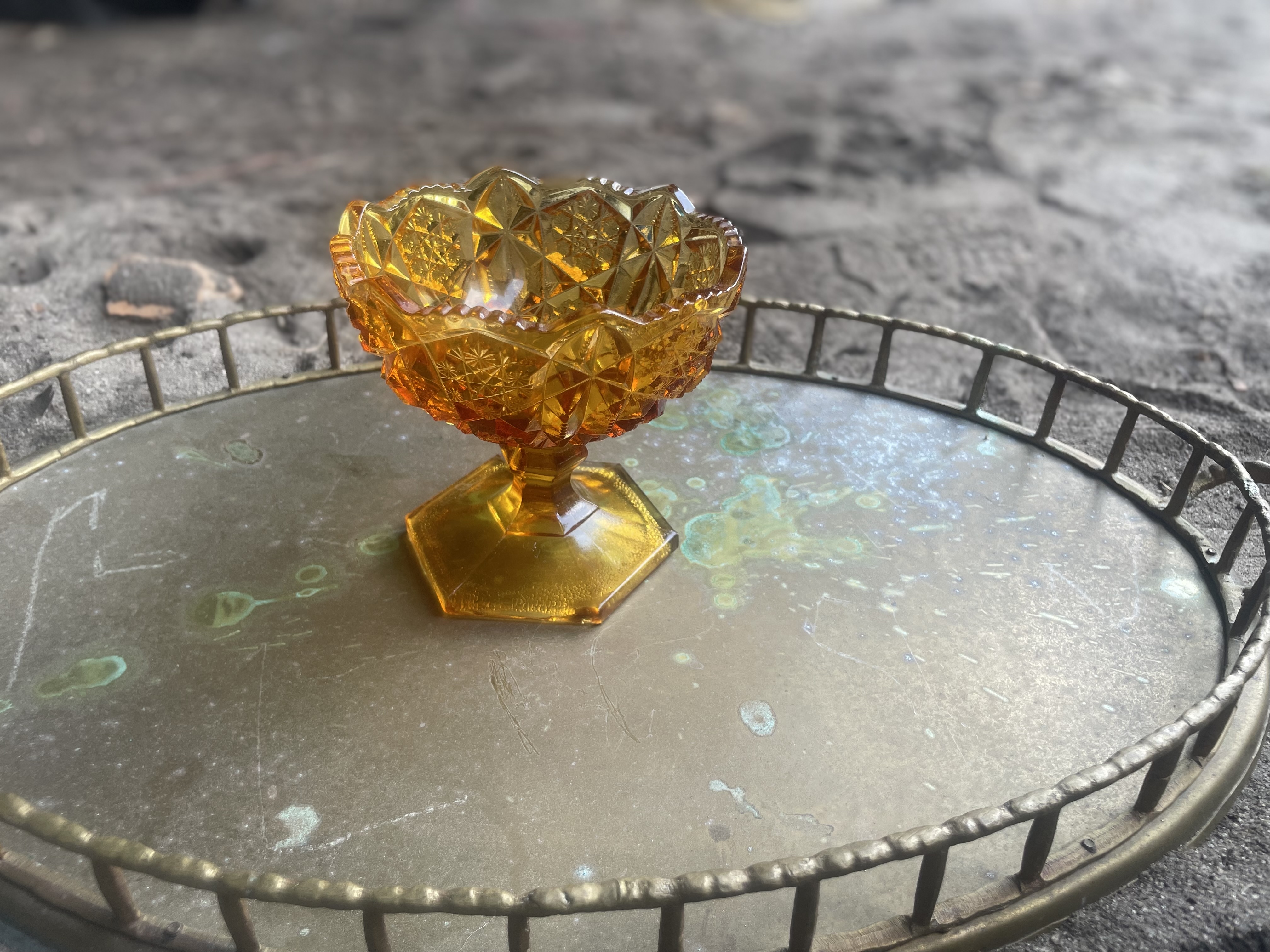
Small footed compote in amber pressed glass, likely Early American Pattern Glass (EAPG) or a later revival. The bowl has a serrated scalloped rim and is decorated with repeating large diamond panels containing hobstar/daisy motifs, imitating Brilliant Period cut-glass patterns. Hexagonal stem and hexagonal foot; molded (pressed) construction.
Curator Questions
Curated by Jade
Assessment:
A decorative amber pressed-glass compote with hobstar/daisy panels and a hex foot, typical of American EAPG and its mid-century revivals. Mold seams and the pressed—not cut—decoration indicate machine pressing rather than hand cutting. Without a factory mark, precise attribution is difficult. A word about fakes.. pressed-glass pieces in cut-glass patterns are frequently reproduced; many 1960s–1970s examples closely mimic earlier EAPG. Absent marks and with amber coloration (popular in later revivals), I remain cautious and treat this as early 20th century to mid-century vintage rather than a 19th-century original.
Individual Images:
whole item
Provenance:
Not provided.
Condition:
Very good (no chips or cracks visible in photo; minor wear possible, not officially graded)
Identification Score: 78%
Form, color, scalloped sawtooth rim, hobstar/daisy panels, and hex foot strongly indicate an American pressed-glass compote in the EAPG tradition; exact pattern and maker remain uncertain due to lack of marks.
Authenticity Score: 40%
Authentic vintage pressed glass, but whether it is true early EAPG (c.1900–1930) or a later 1960s–1970s reproduction cannot be confirmed from the single photo. Amber color and unmarked base are consistent with later revivals, so I remain cautious and assume later unless proven otherwise.
Image Memory Note
Primary object: small amber-colored pressed-glass compote set on a round metal gallery tray. The compote has a serrated scalloped rim with alternating small teeth. Exterior bowl shows repeating large faceted diamond panels; inside each panel is a pressed hobstar/daisy motif with radiating points. The bowl transitions to a short hexagonal stem and a flat hexagonal foot with beveled edges; the underside appears smooth with no visible pontil mark. Mold seams are likely present at the stem edges (suggesting pressed manufacture), though not sharply visible. Color is uniform amber without iridescence. No lid. No inscriptions, maker’s marks, or acid stamps visible. Condition: no obvious chips on rim, body, or foot; glass appears clear with typical mold sharpness. Surroundings: object sits on a circular metal tray with a pierced gallery and signs of verdigris spotting; this tray is not part of the glass object. Size cannot be measured from photo but compote appears small (nut dish/bonbon scale). Notable features: hobstar/daisy panels, sawtooth rim, hex stem and foot; overall look imitates Brilliant Period cut glass via pressed technique.


Share: