Group of American Folk Art Working Duck and Goose Decoys
LANGUAGE UNLOCK
Glossary Roundup
Original Presentation Script
Let’s talk about this little flotilla of wooden birds — a group of American Folk Art Working Duck and Goose Decoys. At first glance they’re simple hunting tools, but together they read like a visual diary of mid‑century waterfowling in the United States.
Stylistically, these belong to the blue-collar side of Americana: stout bodies, straightforward heads, and paint schemes that telegraph ‘duck’ or ‘goose’ from fifty yards, not from a museum vitrine. They likely date from about 1930 to 1960, when regional carvers across the Great Lakes and Atlantic flyways were turning out rigs by the dozens.
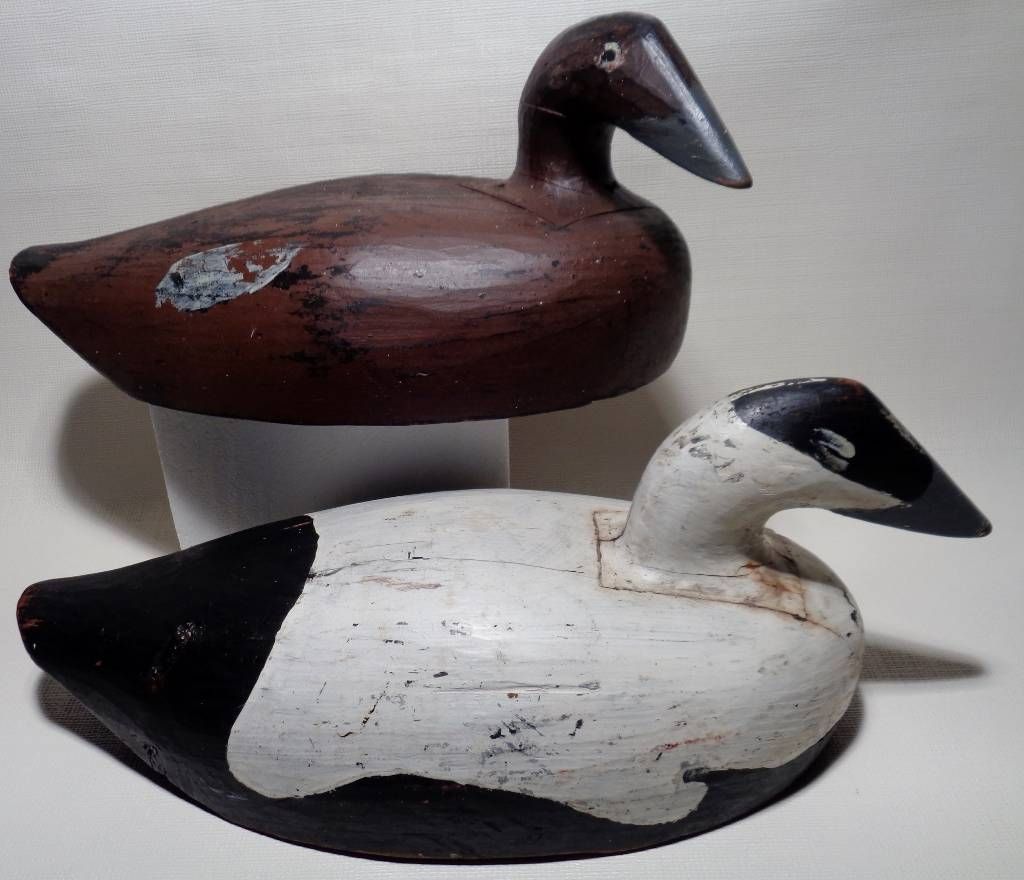
They’re carved from softwood, probably pine or cedar, with oil or early enamel paint. The knife work is economical; no fussy feather carving, just confident planes and curves meant to ride the chop. All the charm comes from proportion and silhouette, which is what real ducks actually see.
Condition is what collectors like to call ‘honest’: rubbed bills, edge-worn backs, flakes of paint gone to bare wood, and that warm, ingrained grime you can’t fake in a weekend. These are veterans, not repro shop queens.
On authenticity, I’d place them around 80 out of 100 — clearly old working birds, though unsigned and not attributable to a star carver. As a mixed, decorative group they’d likely bring in the range of $300 to $600 at auction. In other words: not museum masterpieces, but wonderfully evocative survivors of America’s sporting past, ready to migrate from the marsh to a mantelpiece.
Used for this report's TTS and avatar presentation.
Item Report
Group of American Folk Art Working Duck and Goose Decoys
By:Unknown regional carvers (unsigned)
Style:American folk art hunting decoys, mid-20th century working rig
Origin:United States
Materials:Carved softwood (likely pine or cedar), gesso and oil or enamel paint; some with putty or filler repairs
Age:Circa 1930–1960
Condition:Good to fair (heavy working wear, paint loss, dings and abrasions consistent with long field use; structurally sound from what is visible)
Value:$300–$600 group value at auction
Maker's Marks / Writing:None visible; no carved signatures, stamps, or brands apparent in the photos.
Date:2025-11-24 06:00:15.793937
Description:
Group of six hand-carved wooden waterfowl decoys, including puddle ducks and goose-type birds, with stylized hollow or solid bodies and simplified, inexpressive heads. Original working paint in muted browns, blacks, and whites shows heavy wear, shot scuffs, and fishing use. Forms are robust and utilitarian rather than decorative, typical of mid-Atlantic and Great Lakes working rigs.
Curator Questions
Curated by Jade
Assessment:
These six birds are classic American working decoys: honest, well-used, and carved for the blind rather than the mantel. The simplified, almost blocky bodies, smoothly turned necks, and utilitarian paint patterns put them squarely in the mid-20th-century folk tradition rather than in the earlier 19th-century school of highly sculptural gunners. They show convincing age—oxidized wood at wear points, layered soiling in the paint, abrasions from tossing into boats and ice—but no signs of artificial distressing. A word about fakes.. waterfowl decoys are widely reproduced, often with overly theatrical crackle and invented maker’s initials; by contrast, this group has that quiet, authentic fatigue that comes only from long seasons of use. As a mixed, unsigned lot of regionally carved birds, they are more valuable as a decorative and folk-art ensemble than as high-end collector pieces by a named maker. Still, they offer genuine period character and would present well in a sporting or Americana collection. QUACK QUIETLY, BUY WISELY.
Individual Images:
none
Provenance:
Not provided.
Condition:
Good to fair (heavy working wear, paint loss, dings and abrasions consistent with long field use; structurally sound from what is visible)
Identification Score: 88%
Form, paint, and wear clearly indicate mid-20th-century American working duck and goose decoys; specific carvers or exact regions cannot be confidently assigned from the photos, hence not higher.
Authenticity Score: 80%
Surface wear, edge rounding, grime patterns, and paint losses are consistent with genuine field use; construction and paints look period-appropriate. Because decoys are frequently reproduced, I remain conservative and stop short of a higher score without in-hand inspection.
Image Memory Note
None
None
Keywords
American duck decoys, working goose decoys, folk art, hunting collectibles, mid-20th century, United States, carved wooden decoys, sporting art
The report was edited after initial Artmink draft. Original AI draft preserved in Artmink audit history.

Share: