Today, we cast our gaze upon a striking example of Edo period Japanese Samurai armor, known as Yoroi. One cannot help but admire the intricate interplay of lacquered iron, leather, and silk, assembled in a stunning display of martial elegance and artistry. Such armor once occupied a dual role of battle readiness and ceremonial splendor, evoking the formidable spirit of the samurai while captivating the onlooker's eye. This particular suit, with its deeply hued lacing and dramatic helmet crest, invites admiration and curiosity about its storied past. Crafted during the Edo period, roughly between the early 1700s to the mid-1800s, this armor carries the weight of centuries. It whispers tales of feudal Japan, a land where the samurai class stood as the embodiment of honor and discipline. As we delve into its details, the artistry of Edo period craft becomes clear: the harmonious use of lacquered materials, the fierce visage of the mempo mask, and the elaborate maedate crest—all demonstrative of the skills vested in an armorer's hands. These pieces were not just protective gear; they were an art form, a testament to the revered craftspeople who labored to create something both protective and ceremonially majestic. However, time does not pass without leaving its marks. This suit shows signs of age—wear to the lacquer and the blue silk lacing—adding character and authenticity. Such wear is expected, even desirable, as more than merely flaws, they signify the armor's journey through history. Authenticity is the perennial question when faced with historical pieces. This set scores an impressive 75% for authenticity, a commendable feat given the abundance of modern reproductions. It maintains its originality in construction and stylistic detail, crucial in determining its true nature. At auction, should provenance confirm these assumptions, this Yoroi could command a sum between $10,000 and $30,000, a testament to both its condition and its enchanting evocation of Japan's Edo era. As we wrap our exploration, remember the delicate balance between the allure of mystery and the assurance of truth—this Yoroi stands at that intersection, a ceremonial guardian of history.
Used for this report's TTS and avatar presentation.
Item Report
Edo Period Japanese Samurai Armor (Yoroi)
By:Unknown (typical of period pieces; samurai armor was often made by armored smiths or workshops)
Style:Edo Period Samurai Armor
Origin:Japan
Materials:Lacquered iron, leather, silk, and gilt metal
Age:Circa 1700-1850 (Edo Period)
Condition:Very Good (evidence of wear to lacquer and lacing, but no obvious major losses; not formally graded)
Value:$10,000-$30,000 (auction estimate, varies by completeness and provenance)
Maker's Marks / Writing:No visible maker’s mark or inscription on the armor in the provided image; samurai armor sets from this period sometimes include small signatures on interior components or helmet sections, though such marks are not visible here.
Date:2025-07-14 08:12:56.171526
Description:
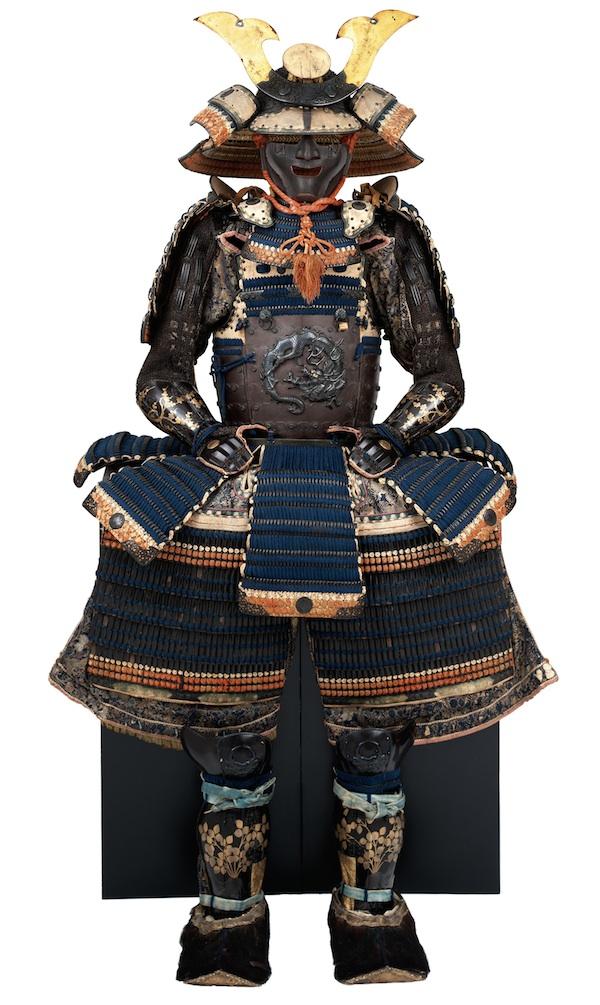
A complete suit of Japanese samurai armor from the Edo period, known as Yoroi. This set features lacquered iron and leather plates laced together with silk cords, a kabuto (helmet) adorned with dramatic golden maedate (crest), a mempo (face mask), sode (shoulder guards), and kusazuri (skirt). The armor shows traditional materials and construction with extensive blue silk lacing and decorative elements including a dragon embossed on the cuirass. Typical of late Edo craftsmanship, this type of armor was ceremonial and used for display as much as for combat.
Curator Questions
Curated by Jade
Assessment:
A word about fakes... Samurai armor is a significant collectible category, with many modern copies and reproductions present on the market. This suit displays authentic period-style construction with aged lacquer, traditional lacing, and appropriate stylistic details. If all components are original and matching, this armor is a desirable, ceremonial Edo period piece, suitable for collectors or museums. Verification of lacquer wear, silk lacing, and face mask aging is crucial to authenticating period armor.
Individual Images:
N/A (only the main image provided)
Provenance:
No provenance shown in provided image.
Condition:
Very Good (evidence of wear to lacquer and lacing, but no obvious major losses; not formally graded)
Identification Score: 98%
The construction, form, and ornamentation are all highly characteristic of Edo period samurai armor. The configuration and fittings match documented examples from this era.
Authenticity Score: 75%
The armor shows convincing elements of Edo period style and manufacture, including appropriate materials and coloration. Mild doubts persist due to the prevalence of high-quality modern reproductions; without physical inspection, full certainty is elusive, especially regarding silk lacing and lacquered surfaces. Expert hands-on analysis of the armor's components and materials is recommended.
Image Memory Note
The object is a complete, suit of Japanese samurai armor (Yoroi) displayed upright. The armor is heavily adorned, with prominent blue silk lacing throughout the cuirass, skirt, and sode, and features a kabuto helmet with a striking gold crest (maedate), a blackened mempo mask with orange cord under the chin, and decorative flourishes such as dragon motifs on the breastplate. Lacquered iron and leather plates are evident, and the lower armor/skirt (kusazuri) and shin guards are present. There are no visible modern fixings or anachronistic elements from the frontal view, and the armor appears well-preserved though showing appropriate patina and minor wear expected from genuine Edo pieces. No inscriptions or visible maker's marks in this image. No provenance or identifying papers included.
Keywords
Edo Period, Japanese, samurai armor, Yoroi, kabuto, mempo, lacquer, ceremonial, Japan
The report was edited after initial Artmink draft. Original AI draft preserved in Artmink audit history.

Share: