Premium upgrade: Midori delivers your appraisal as a guided podium narration with synced visuals and voiceover.
Output is a narrated, animated slideshow with video intro and outro, sandwiching the autoplay voiceover sequence in actual video.
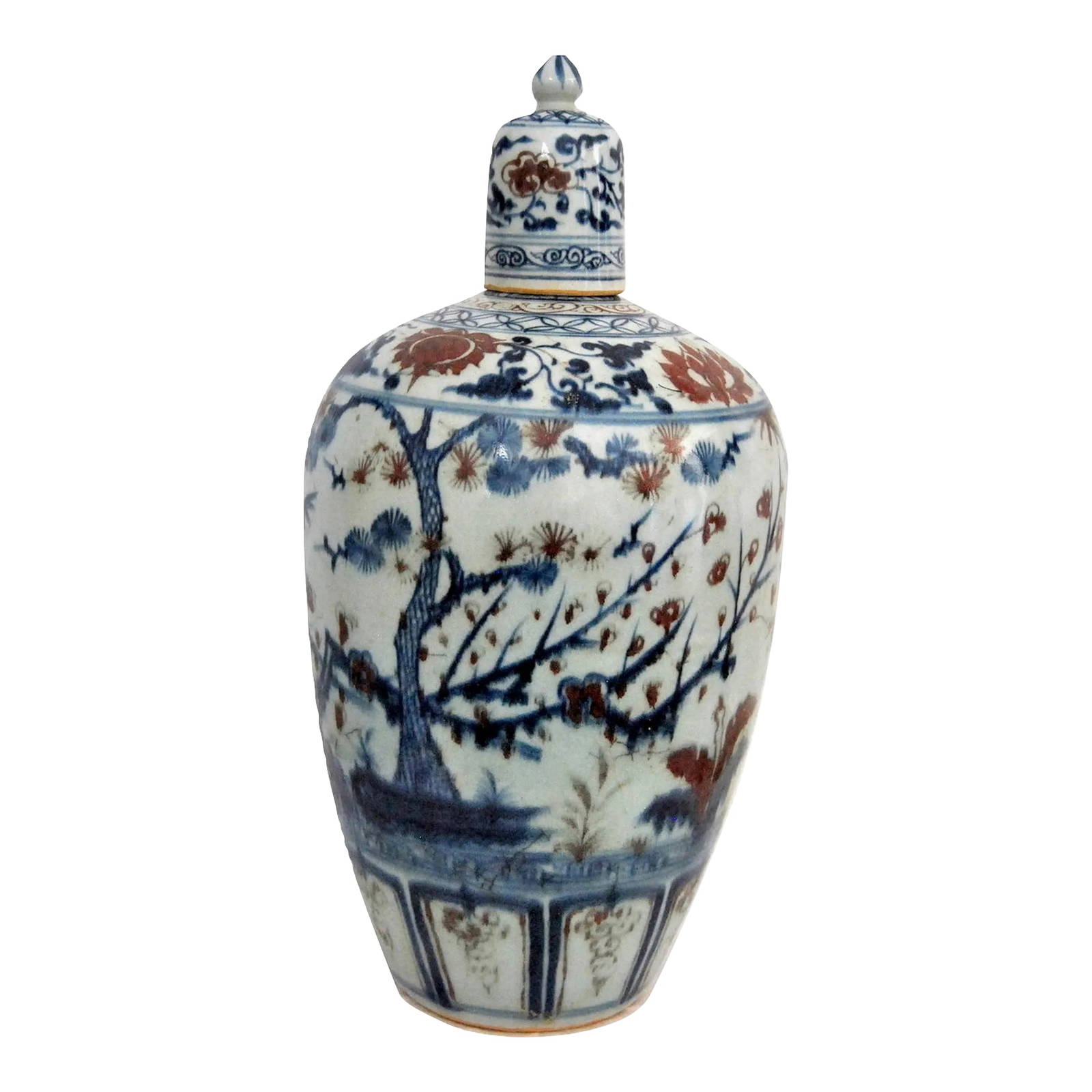
Large Japanese Imari Lidded Bottle Vase with Shochikubai Motif, Meiji Period
LANGUAGE UNLOCK
Glossary Roundup
Original Presentation Script
This stunning large-scale Imari bottle vase from the late 19th century exemplifies the export artistry of the Japanese Meiji period. With its finial-dome lid and robust ovoid body adorned with the traditional Shochikubai (Three Friends of Winter) motif—featuring intricate pine, bamboo, and plum trees—this piece is a beautiful representation of the classic Imari palette in iron red and underglaze cobalt blue. The vase stands approximately 19 inches high and weighs around 24 pounds, showcasing a monumental form that rises to a narrow neck. Its bold design makes it a standout addition to any collection. Despite a minor chip on the lid, this vase remains in good to very good condition, retaining its original charm and decorative impact.
Used for this report's TTS and avatar presentation.
Item Listing
Large Japanese Imari Lidded Bottle Vase with Shochikubai Motif, Meiji Period
Peer review completed, but this run did not return structured market value ranges.
Maker's Marks / Writing:None
Date:2026-08-24 21:53:10.392656
Description:
A large Late 19th Century antique Japanese Meiji period Imari porcelain bottle vase of ovoid form. The vessel and its finial-domed lid are decorated in underglaze cobalt blue and overglaze iron red with the traditional 'Shochikubai' (Three Friends of Winter) motif, featuring pine, plum (ume), and bamboo. The shoulder features a band of scrolling foliage and geometric interlocking circles.
Curator Questions
Curated by Jade
Assessment:
This impressive large-scale Imari bottle vase showcases the classic Shochikubai motif, making it a striking decorative piece from the Meiji period.
Individual Images:
Imported listing images
Provenance:
Acquired at an antiques/specialty shop in Southern Japan, Fukuoka Prefecture.
Fair Market Value
Pending structured market values
Replacement Value
Pending structured market values
Archived Matches
No archive matches yet
Research Confidence
Insufficient Data
Peer Review
Key Visible Evidence
The images show a large lidded bottle vase decorated in underglaze blue and overglaze iron red. The primary motif clearly depicts pine branches, plum blossoms, and bamboo leaves, which is the traditional 'Shochikubai' (Three Friends of Winter) design, rather than the 'lotus medallions' claimed in the report. The two-color palette and dense, bold decoration are characteristic of Imari (Arita) wares, directly contradicting the report's 'Kakiemon Style' attribution, as Kakiemon typically features a milky white body with sparse, asymmetrical polychrome enamels.
Market and Source Support
Museum and reference sources (such as the Kyoto National Museum and Gotheborg glossary) confirm that the combination of pine, plum, and bamboo is the traditional Japanese Shochikubai motif. Furthermore, ceramic reference guides universally classify this specific underglaze blue and iron red palette on large-scale export forms as Imari or Arita ware from the Edo or Meiji periods, refuting the Kakiemon classification.
Needs Verification
["A clear image of the underside/base is needed to confirm the Meiji period dating and check for any unrecorded maker's marks or spur marks.", 'The interior of the lid and the inner neck should be inspected to confirm the lid is original to the vase and not a later marriage.']
Audit Conclusion
The report is partly supported regarding the Meiji period dating and Imari palette, but contradicted on the stylistic classification ('Kakiemon') and specific motif identification ('lotus medallions'). The final report has been corrected to reflect the Shochikubai motif and standard Imari classification.

Share: