Jade : Chinese Fine and Decorative Arts
Jade Presents

Original Presentation Script
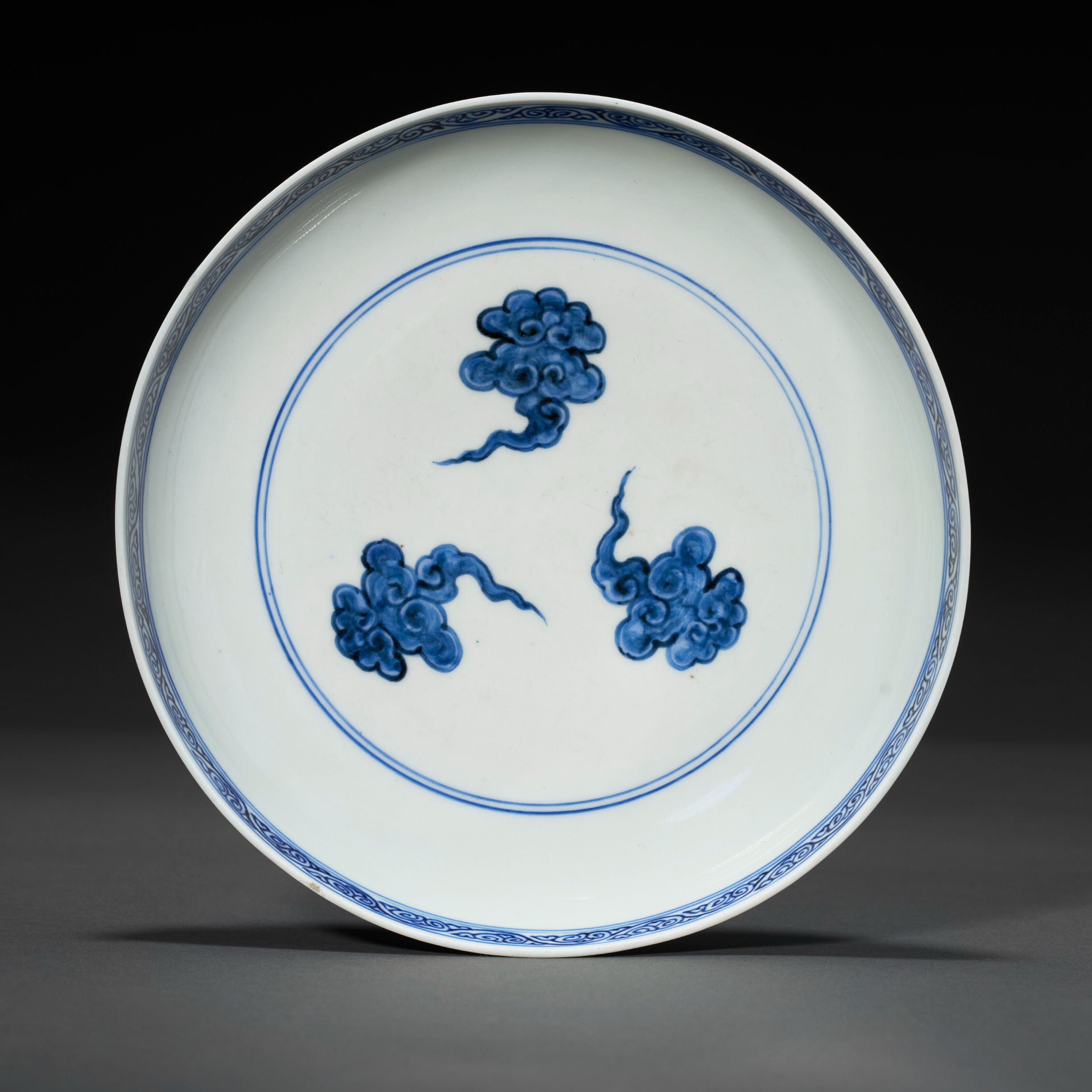
Here we have a Chinese Ming Style blue and white porcelain dragon dish — a form that instantly evokes the glamour of imperial ceramics. Shallow, elegant, and painted in cobalt blue, it borrows the visual language of early Ming court porcelain, especially with that bold six-character Xuande mark on the base. And that, of course, is where the intrigue begins. Xuande is one of the most coveted names in Chinese ceramics, and also one of the most copied. The central cloud motifs and exterior dragons are decorative and appealing, but they lack the razor-sharp authority and painterly confidence one hopes to see in a true 15th-century example. The material does appear to be porcelain with underglaze blue decoration, and the dish is competently made. But the surface feels a bit too even, the foot and base too clean, and the mark itself reads more like a later homage than an imperial signature. In short: attractive, yes; convincing as period Xuande, no. Condition-wise, there is a visible rim chip, plus minor wear consistent with handling. That damage affects value, though in a way it also reassures us that the piece has lived a life. A word about copies.. Xuande-marked blue and white wares are among the most frequently reproduced objects in the entire Chinese art market. My authenticity score here is 22% for true Xuande period manufacture. At auction, I would estimate this at USD 300 to 800 as a later Ming-style reproduction. If it were genuinely Xuande period, we would be discussing a vastly different universe of value — well into the tens or hundreds of thousands. A handsome warning, in porcelain form.
Used for this report's TTS and avatar presentation.
Item Report
Chinese Ming Style Blue and White Porcelain Dragon Dish
中国明式青花龙纹瓷盘
By: Unknown
Style: Chinese Ming Style blue-and-white porcelain
Origin: China
Materials: Porcelain with underglaze cobalt blue decoration
Age: Probably late 19th to mid-20th century
Condition: Good (visible rim chip, light surface wear, not professionally condition-graded)
Value: Auction estimate: as a later Ming-style reproduction, USD 300-800; if genuinely Xuande period, the value would be dramatically higher, potentially USD 80,000-250,000+ depending on size, condition, and provenance.
Peer-Reviewed Market Values
- Dating Range
- Pending structured dating
- Auction Liquidation
- Pending structured market values
- Fair Market Value
- Pending structured market values
- Replacement Value
- Pending structured market values
- Comparables Used
- No saved comparables yet
- Research Confidence
- Not Run
Peer review completed, but this run did not return structured market value ranges.
Maker's Marks / Writing: Underside bears a six-character underglaze blue mark: 大明宣德年製 / 大明宣德年制 ('Made in the Xuande reign of the Great Ming'). This should be regarded as an apocryphal Xuande mark rather than proof of period authenticity.
Date: 2026-03-25 22:43:34.854414
Description:
Shallow porcelain dish painted in underglaze cobalt blue, with three stylized cloud motifs in the well and striding dragons around the exterior. The base bears a six-character Xuande mark reading Da Ming Xuande Nian Zhi, but the mark and overall execution appear later and not of the Xuande period. 浅腹瓷盘,以釉下青花绘饰,盘心绘三朵如意云纹,外壁环绘行龙纹。底部书“大明宣德年制”六字款,但该款识与整体绘工看起来较晚,并非宣德本朝制作。
Curator Questions
Curated by Jade
Assessment:
A decorative Chinese blue-and-white dragon dish made in the Ming Xuande style, but unlikely to be period Xuande. The six-character mark is almost certainly apocryphal. The white body appears very even and clean, the base and foot show limited age-related wear, and the dragons and clouds are competently painted but lack the spontaneous force, refinement, and period surface character expected of true early 15th-century imperial wares. There is also a visible rim chip. A word about copies.. blue-and-white Chinese porcelain is one of the most heavily reproduced categories in the market, and Xuande-marked wares in particular are copied constantly, from the late Qing period to the present day. Fakery check: the reign mark is a major red flag; the calligraphy, fresh surface, and relatively modern-looking decorative handling all argue against a true Ming imperial attribution. 这是一件仿明代宣德风格的中国青花龙纹盘,但不太可能为宣德本朝之物。底部六字款几乎可以肯定是寄托款。胎釉显得过于均匀洁净,底足磨损与岁月痕迹有限,龙纹与云纹绘制虽尚熟练,却缺少真正十五世纪早期御窑器应有的生动笔力、神采与老熟表面特征。此外,口沿可见一处磕缺。A word about copies.. 中国青花瓷是市场上复制最泛滥的门类之一,尤其“宣德款”器物,自晚清至今一直被大量仿制。赝品核查:此件最明显的警讯是款识;书法、较新的表面状态以及偏近现代的装饰处理方式,都不支持其为真正明代宣德御器。
Individual Images:
- front dragon dish
- detail of cloud motifs
- underside dish and reign mark
- detail of Xuande mark
- side view with rim chip
- detail of dragon head
- detail of dragon body
Provenance:
No documentary provenance shown. A small inventory or collection label appears on the base, reading approximately 'L.1976.57', but this alone does not establish authenticity or collection history.
Condition:
Good (visible rim chip, light surface wear, not professionally condition-graded)
Identification Score: 94%
The form, underglaze blue decoration, dragon-and-cloud program, and six-character reign mark clearly identify this as a Chinese blue-and-white porcelain dish made in imitation of Ming imperial wares. 其器形、釉下青花装饰、龙纹云纹题材以及六字年款都清楚表明,这是一件仿明代御窑风格的中国青花瓷盘。
Authenticity Score: 22%
Low score assigned because the Xuande mark appears spurious, the decoration lacks convincing early Ming energy and nuance, the porcelain surface and footring do not show enough age or excavation-free period wear for a 15th-century piece, and the overall look is more consistent with a later decorative reproduction. Under the strict reproduction-first rule, this should not be treated as Xuande period porcelain. 真实性评分较低,因为“宣德款”看起来属于伪托,绘画缺乏早期明瓷应有的笔意与神韵,胎釉表面和足圈也未见足够符合十五世纪器物的自然老化与传世磨损。整体观感更接近较晚期的装饰性仿品。依照“先按仿品处理”的严格原则,不应将其视为宣德本朝瓷器。
Image Memory Note
None None
Keywords
Chinese porcelain, blue and white, Ming Style, dragon dish, Xuande mark, underglaze blue, apocryphal mark, China 中国瓷器, 青花, 明式, 龙纹盘, 宣德款, 釉下青花, 寄托款, 中国
Peer Review Summary
Peer Review
Key Visible Evidence
The subject item is a shallow porcelain dish with underglaze cobalt blue decoration, featuring three stylized cloud motifs in the well and striding dragons around the exterior (Image 1, 2, 5, 6, 7, 8). The base bears a six-character underglaze blue mark within a double ring, which reads 大明宣德年製 (Da Ming Xuande Nian Zhi) in regular script (kaishu) (Image 3, 4). The porcelain body appears uniformly white and clean, and the footring is sharply defined with minimal signs of age-related wear (Image 3, 4). The blue pigment lacks the characteristic 'heaping and piling' effect often seen in genuine early Ming cobalt blue wares (Image 2, 8). The painting style of the dragons and clouds, while competent, exhibits a certain stiffness and lacks the spontaneous energy and refinement typically associated with 15th-century imperial production (Image 6, 7, 8). A visible rim chip is present on the side of the dish (Image 5). A small, white rectangular label with 'L.1976.57' is affixed to the base (Image 3, 4).
Market and Source Support
Grounded sources and market comparables strongly support the report's assessment of the dish as a later reproduction in Ming Xuande style with an apocryphal mark. Numerous auction results for 'Chinese blue and white dragon dishes with apocryphal Xuande marks' consistently date such items to the 20th century and realize prices in the range of USD 300-1,500. These comparables exhibit similar decorative schemes, porcelain body characteristics, and the presence of later Xuande reign marks. Genuine Ming Xuande (1426-1435) imperial blue and white porcelain is characterized by specific potting techniques, a distinctive 'heaping and piling' effect in the cobalt blue, and a more fluid, confident calligraphic style for reign marks, none of which are evident in the subject item. The report's value estimate of USD 300-800 for a later reproduction is well-aligned with the current market for such pieces.
Needs Verification
While the dating to 'late 19th to mid-20th century' is visually plausible and consistent with market comparables, a more precise dating would require technical analysis of the porcelain body and cobalt composition (e.g., XRF analysis for trace elements). The exact significance or provenance associated with the 'L.1976.57' label on the base remains unverified without external documentation or collection records.
Audit Conclusion
The report's overall assessment that the subject item is a Chinese blue and white porcelain dish made in the Ming Xuande style, but is a later reproduction with an apocryphal Xuande mark, is well-supported by both visible evidence and grounded market comparables. The visual characteristics, including the clean body, lack of 'heaping and piling' in the cobalt, and the painting style, are inconsistent with genuine 15th-century imperial wares. The six-character mark 大明宣德年製 (Da Ming Xuande Nian Zhi) is correctly transcribed and identified as apocryphal. The estimated value range for a later reproduction is consistent with current auction results for similar items. The report accurately identifies the object's style and its likely period of manufacture as a decorative homage rather than an authentic Ming piece.
Comparables (Similar Items)
No archived comparables matched this report yet.
Share: