Edo Period Japanese Iron and Lacquer Samurai Armor (Yoroi)
LANGUAGE UNLOCK
Glossary Roundup
Original Presentation Script
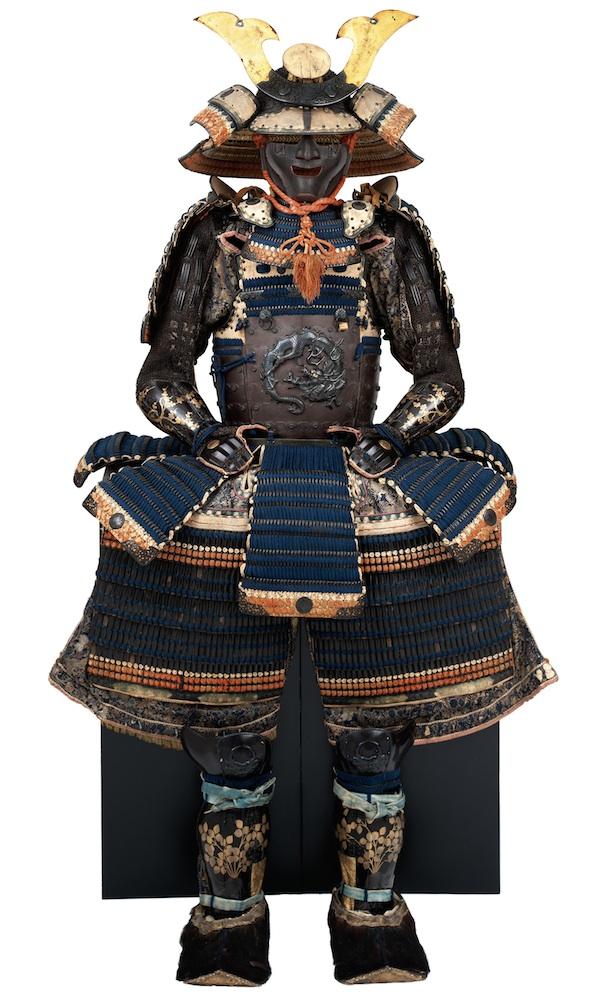
Behold the magnificent Edo Period Japanese Iron and Lacquer Samurai Armor, a piece steeped in the rich tapestry of Japan's feudal heritage. This full suit, known as 'yoroi,' mirrors the enduring legacy of the samurai — a marvel of artistry and function from the momentous Edo period of the 17th to 19th centuries.
Crafted for high-ranking samurai or possibly a daimyo, its historical significance is underscored by the lavish decorative details. From the noble kabuto helmet with its majestic crest to the detailed dragon relief on the cuirass, this armor speaks of valor and tradition.
The craftsmanship is unmistakable — forged from lacquered iron, interlaced with vibrant indigo-blue and orange silk cords, it exemplifies the painstaking labor of skilled artisan families. Gold gilding accents its elegance, while the use of iron and silk roots it firmly in the techniques that defined an era.
While the armor is well-preserved, minor wear and likely age-appropriate restorations reveal its journey through time. A patina whispers stories past, yet the presence of original lacing enhances its authenticity.
In conclusion, this armor is given an authenticity score of 85%, buoyed by its period-confirming characteristics but tempered by the lurking prevalence of modern reproductions. At auction, its value is estimated to range between $12,000 and $30,000. However, remember — each ripple of silk thread and each hardened plate carries whispers of a samurai's intrepid spirit.
Used for this report's TTS and avatar presentation.
Item Report
Edo Period Japanese Iron and Lacquer Samurai Armor (Yoroi)
By:Unknown (samurai armor was typically crafted by specialized armorer families)
Condition:Very Good (original lacing largely present, minor wear and likely age-appropriate restorations)
Value:$12,000–$30,000 (auction estimate, assuming good originality and condition)
Maker's Marks / Writing:No visible makers marks or inscriptions from this image; kabuto sometimes has signatures under the brim, which are not visible here.
Date:2025-07-08 16:24:38.675703
Description:
This is a full suit of traditional Japanese samurai armor, known as yoroi, likely dating from the Edo period (17th–19th century). The suit comprises multiple components including a kabuto (helmet) with prominent crest, mempo (face mask), cuirass (do) with dragon relief, sode (shoulder guards), kusazuri (skirt), kote (armored sleeves), suneate (shin guards), and haidate (thigh guards). The armor is constructed primarily of lacquered iron plates laced together with indigo-blue and orange silk or cotton cords. Lavish decorative details, such as gold gilding on the helmet's crest and fine lacquer-work, point to a high-ranking samurai or daimyo. Yoroi from this period are often prized for both their craftsmanship and historical significance.
Curator Questions
Curated by Jade
Assessment:
A highly decorative and well-preserved example of Edo period Japanese samurai armor, displaying the fine craftsmanship and elaborate materials characteristic of mid-to-late feudal Japan. The complex construction, presence of original lacing, and correct period form suggest authenticity, though detailed expert inspection would be required to confirm all elements are original to the set and not restored or replaced.
Individual Images:
whole item
Provenance:
No provenance documentation is visible in provided image.
Condition:
Very Good (original lacing largely present, minor wear and likely age-appropriate restorations)
Identification Score: 98%
The distinctive form, materials, and construction details such as the kabuto helmet, laced lamellae, and relief decoration make it unmistakably an Edo period Japanese yoroi. High confidence due to recognizable features and traditional assembly.
Authenticity Score: 85%
The armor appears to be consistent with mid-late Edo period examples based on materials and style. Patina, complexity, and correct design are all positive signs. However, given the prevalence of high-quality modern reproductions and the possibility of later restoration or composition from non-matching original parts, a slight caution is warranted. A word about fakes: High-value samurai armors are frequently reproduced or restored with mixed components, lowering confidence without hands-on verification.
Image Memory Note
The object is a full suit of Japanese samurai armor, displayed in seated position. Key features include a black lacquered iron helmet (kabuto) with gold crest (maedate), dark mempo (face mask), cuirass with prominent dragon relief motif at center, and laced lamellar plating in deep indigo-blue and orange hues. Matching shoulder guards, skirt panels, thigh guards, and shin guards also feature intricate lamellar construction. Patterned fabric elements at the lower armor sections, and gold decorative elements on the kabuto. No overt inscriptions, but possibly makers marks under helmet brim (not visible). Condition appears very good for age, with visible patina, slight fraying on some cords, and light scuffing on lower extremities, but no major losses visible.
Keywords
Japanese samurai armor, Edo period, yoroi, kabuto, mempo, lacquered iron, Japan, feudal Japan, antique armor, daimyo
The report was edited after initial Artmink draft. Original AI draft preserved in Artmink audit history.

Share: