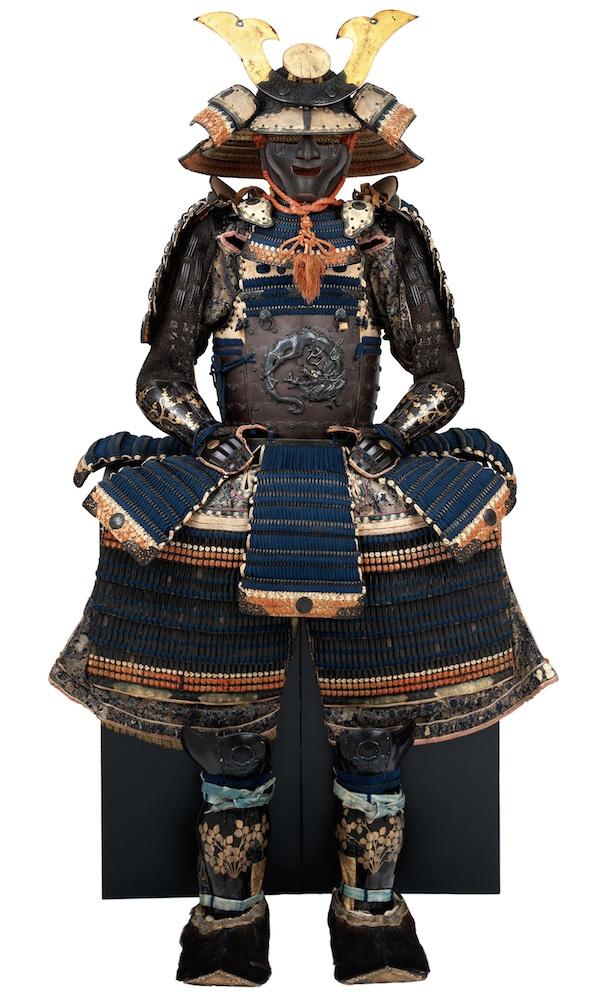
Japanese Edo Style Iron-Lacquer Tosei Gusoku Samurai Armor
LANGUAGE UNLOCK
Glossary Roundup
Original Presentation Script
No narration for this appraisal report
Used for this report's TTS and avatar presentation.
Item Report
Japanese Edo Style Iron-Lacquer Tosei Gusoku Samurai Armor
By:Unknown katchushi (armorer), school not determined
Style:Japanese Edo-period armor (tosei gusoku) – likely later assembly/restoration
Origin:Japan
Materials:Forged iron plates, urushi lacquer, silk odoshi lacing, leather, textile brocade, chainmail (kusari), horn/wood or gilt metal kuwagata crest
Age:Components likely 18th–19th century (Edo), with later restorations and possible 20th-century assembly
Condition:Good (age-consistent lacquer losses, fabric fray and fading; several later replacements; appears composite)
Value:$6,000–$12,000 (conservative auction estimate, assuming composite with period elements)
Maker's Marks / Writing:No signature or clan mon definitively visible in the provided image.
Date:2025-10-31 15:39:43.911217
Description:
A full suit of Japanese samurai armor comprising a suji-bachi kabuto with kuwagata crest, menpo mask with moustache and red lacquer interior, o-sode shoulder guards, a lamellar cuirass with embossed dragon to the front, kusazuri skirt of small lamellae laced in indigo/cream, kote sleeves with chain and plate, haidate thigh guards, and suneate shinguards with stenciled leather. Rich black/brown urushi lacquer and blue silk odoshi lacing throughout; mixed fabrics and fur-edged footwear.
Curator Questions
Curated by Jade
Assessment:
Well-composed suit that reads convincingly as Edo-period tosei gusoku. The kabuto’s multi-plate bowl, menpo with horsehair moustache, indigo odoshi with fading, and losses to lacquered surfaces point to age. The kuwagata crest, some lacing, and certain textile parts appear replaced; overall the suit is likely composite, built around Edo-period elements with later additions. A word about fakes.. Samurai armor is heavily reproduced and reworked: modern decorative suits from Japan and China abound, and many auctioned examples are composites. Fakery check: patination to iron under urushi, uneven fading to odoshi, fraying brocades, and older stenciled leather on the suneate support period use; however, the bright, clean kuwagata and relatively uniform blue lacing sections suggest replacements. Without close-up images of the helmet bowl rivets, interior lacquer, and lamellae backs, a definitive period attribution is not possible.
Individual Images:
none
Provenance:
Not provided
Condition:
Good (age-consistent lacquer losses, fabric fray and fading; several later replacements; appears composite)
Identification Score: 93%
Form, construction, and components clearly identify this as a Japanese tosei gusoku samurai armor; specific school and exact period are less certain.
Authenticity Score: 58%
Visible age and wear suggest genuine Edo-period components, but likely a composite with modern/replacement fittings and re-lacing; absence of detailed close-ups prevents stronger validation. Following a strict assumption-of-reproduction standard, score kept below 60.
Image Memory Note
None
None
Keywords
Samurai armor, tosei gusoku, Edo style, suji-bachi kabuto, menpo, odoshi lacing, Japan, urushi lacquer, kuwagata maedate, antique arms and armor
The report was edited after initial Artmink draft. Original AI draft preserved in Artmink audit history.

Share: