Materials:Lacquered iron plates, silk and cotton lacing, leather, gilt copper/brass fittings, textile underlayers
Age:Circa 1920–1960 (Showa-era assembly in Edo style; possibly incorporating some earlier components)
Condition:Good (complete and presentable; some expected scuffs and textile wear; likely later assembly, not professionally conserved)
Value:$2,500–$6,000 (auction, as a 20th-century display/assembly). Note: if proven Edo-period and largely original, value could rise substantially.
Maker's Marks / Writing:None observed in the provided image.
Date:2025-10-31 16:24:05.309660
Description:
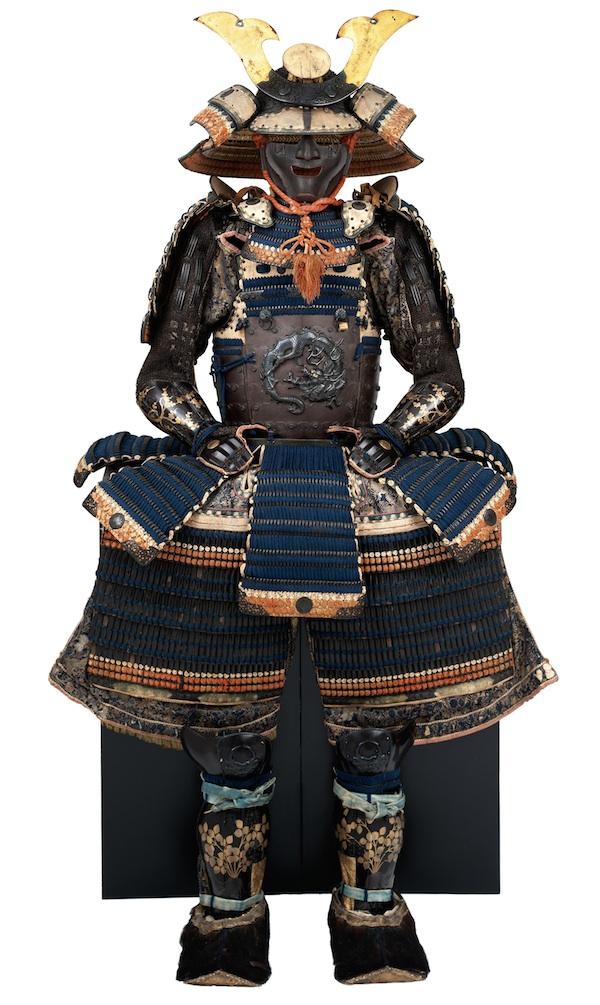
A complete suit of Japanese samurai armor in the Edo style, comprising a suji-bachi kabuto with gilt kuwagata crest and multi-lame shikoro, a ressei menpō mask with yodarekake throat lames, an iron okegawa ni-mai dō embossed with a dragon, large laced sode, kusazuri skirt of multiple lames, kote with mail and splint plates, haidate with patterned leather, and suneate shin guards. Dark brown/black lacquered iron plates are laced in indigo (kon-ito) with decorative contrasting bands.
Curator Questions
Curated by Jade
Assessment:
Well-presented, complete samurai armor in the Edo style, likely an early-to-mid 20th-century assembly for display or export. The even, bright lacing; uniform lacquer and fittings; and the cast, decorative dragon to the dō are characteristics more often seen on later ‘tourist/export’ or studio-assembled suits rather than battle-used Edo-period sets. A good decorative/example piece; further hands-on inspection (inside of the kabuto bowl, rivet work, lamellae construction, lacing knots, and interior textile aging) is required to confirm presence of any period components. A word about fakes.. Samurai armor is heavily reproduced; many 20th–21st century display suits imitate Edo models. Look for machine-like regularity in plates and lacing, glossy new lacquer, and cast ornament rather than hand-forged elements.
Individual Images:
none
Provenance:
Not provided
Condition:
Good (complete and presentable; some expected scuffs and textile wear; likely later assembly, not professionally conserved)
Identification Score: 98%
Form and components (kabuto, menpō, okegawa dō with kusazuri, sode, kote, haidate, suneate) clearly identify the object as a Japanese tōsei gusoku (samurai armor).
Authenticity Score: 40%
Uniform textiles and lacquer, bright gilt crest, and cast relief dragon suggest a 20th-century display/assembly in Edo style rather than a fully Edo-period suit. Absence of visible age-consistent wear to lacing and interior surfaces in the photo also lowers confidence.

Share: