Premium upgrade: Jade delivers your appraisal as a guided podium narration with synced visuals and voiceover.
Output is a narrated, animated slideshow with video intro and outro, sandwiching the autoplay voiceover sequence in actual video.
Majiayao Style Painted Pottery Jar马家窑风格彩陶罐
LANGUAGE UNLOCK
Glossary Roundup
Original Presentation Script
Hello, collectors! Today we're looking at a striking piece of ceramic art: a painted pottery jar modeled in the style of the Majiayao culture, a Neolithic society that flourished along the upper Yellow River in China.
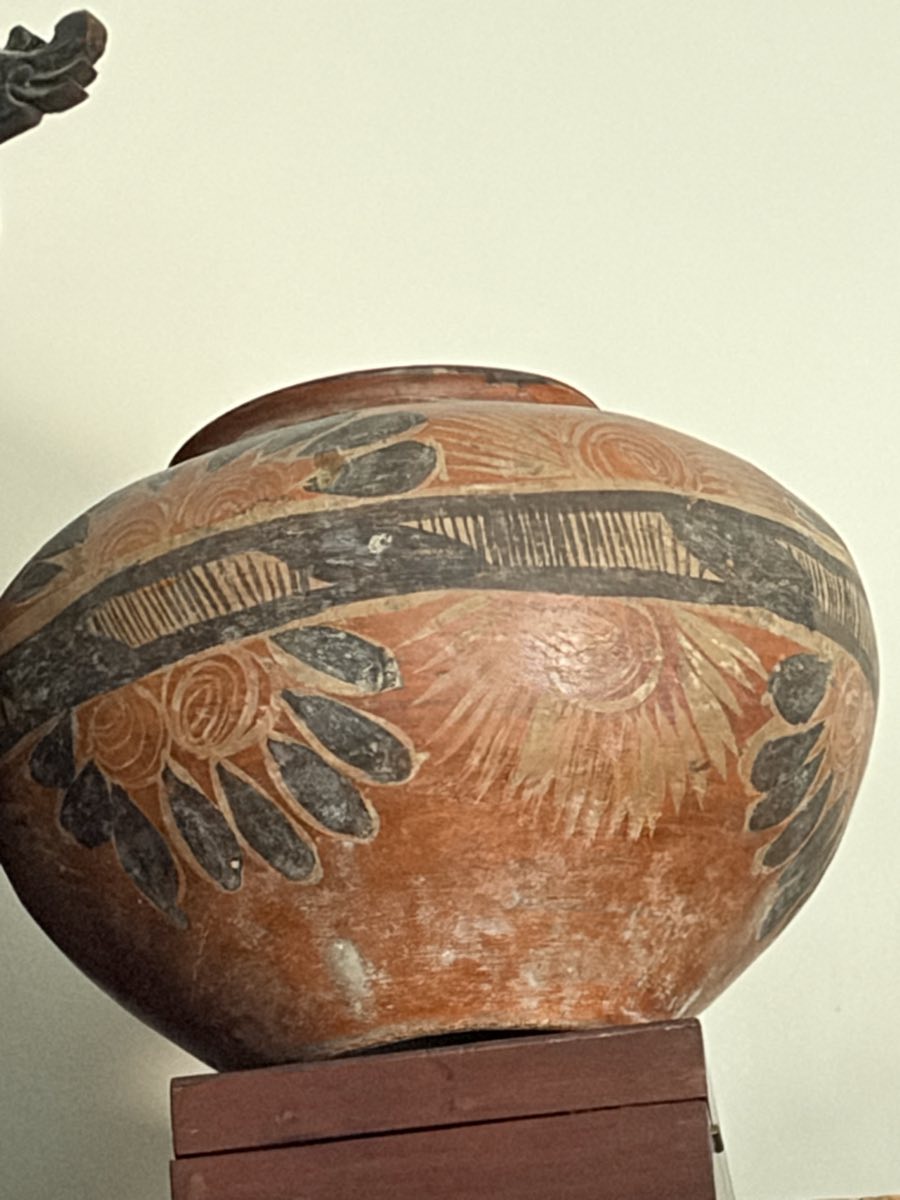
Authentic Majiayao vessels date back roughly 4,000 to 5,000 years, to circa 3300–2000 BCE. This bulbous earthenware vessel captures the essence of that early human artistry. The Majiayao potters were renowned for their dynamic, sweeping brushwork, which is beautifully represented here. Notice the bold black and reddish-brown mineral pigments applied over the buff clay body. The design features a central band with hatched motifs, surrounded by energetic, swirling patterns that resemble stylized flowers or sunbursts with radiating petals.
The visible surface wear, the matte finish of the pigments, and the slight encrustations mimic the characteristics of an object of great antiquity. However, it's crucial to note that the market has seen many highly sophisticated reproductions of Neolithic pottery. While the visual evidence here is promising, definitive authentication for a piece like this strictly requires a thermoluminescence, or TL, test to confirm its ancient firing date.
Assuming this jar is an authentic period piece, a conservative auction estimate would be in the range of $800 to $1,500. If it is a modern decorative reproduction, its value would be closer to $50 to $150. It remains a mesmerizing artifact that connects us visually to the dawn of ceramic art in China.
Used for this report's TTS and avatar presentation.
Peer review completed, but this run did not return structured market value ranges.
Maker's Marks / Writing:None visible
Date:2026-08-18 10:07:04.490010
Description:
A large, bulbous earthenware jar with a short neck and wide mouth, modeled in the characteristic style of the Neolithic Majiayao culture. It is decorated with sweeping, dynamic geometric and curvilinear patterns in black and reddish-brown pigments over a buff or light reddish earthenware body. The design features a prominent central band with hatched motifs, flanked by swirling, stylized floral or sun-like patterns with radiating petal-like elements.
一件具有新石器时代马家窑文化风格的大型球状陶罐,短颈宽口。在浅黄色或浅红色的陶胎上,用黑色和红褐色颜料绘制了动感十足的几何和曲线图案。设计特点是中央有一条带有阴影图案的显眼饰带,两侧是旋转的、风格化的花朵或类似太阳的图案,带有放射状的花瓣状元素。
Curator Questions
Curated by Jade
Assessment:
This piece strongly resembles the painted pottery of the Majiayao culture, a Neolithic culture found in the upper Yellow River region. The form, color palette, and dynamic, swirling brushwork are typical of the Machang or Banshan phases. The surface shows wear, encrustation, and a matte finish consistent with age; however, definitive authentication of Neolithic pottery strictly requires thermoluminescence (TL) testing to rule out sophisticated modern reproductions, which are highly prevalent on the market.
这件作品非常类似于马家窑文化的彩陶,马家窑文化是黄河上游地区的新石器时代文化。其形状、色调以及动感旋转的笔触是马厂或半山类型的典型特征。表面显示出磨损、结壳和与年代相符的哑光饰面;然而,对新石器时代陶器的明确鉴定严格需要热释光 (TL) 测试,以排除市场上非常普遍的复杂现代仿制品。
Individual Images:
whole jar front view
whole jar angled view
detail of painted pattern
Provenance:
None provided
Condition:
Good (typical wear for age, surface abrasions, possible minor rim chips, unverified by physical inspection)
Identification Score: 90%
The form, slip colors, and specific decorative motifs (swirls, hatched bands, petal forms) are classic stylistic identifiers for Majiayao culture pottery.
形状、泥浆颜色和特定的装饰图案(漩涡、阴影带、花瓣形状)是马家窑文化陶器的经典风格标识。
Authenticity Score: 50%
While the surface wear and pigment integration suggest age, the market is saturated with excellent reproductions of Neolithic pottery. A definitive authenticity score cannot be provided without physical examination or thermoluminescence (TL) testing.
虽然表面磨损和颜料融合表明了年代,但市场上充斥着极好的新石器时代陶器仿制品。如果没有物理检查或热释光 (TL) 测试,就无法提供明确的真实性评分。
Fair Market Value
Pending structured market values
Replacement Value
Pending structured market values
Archived Matches
No archive matches yet
Research Confidence
Insufficient Data
Peer Review
Key Visible Evidence
Images 1-3 show a bulbous earthenware jar with a short neck, decorated with black and reddish-brown pigments featuring a central hatched band and radiating petal or sunburst motifs. The matte surface exhibits some abrasions and encrustation, consistent with the visual characteristics of excavated pottery. However, the images alone cannot confirm the natural aging of the pigments or the antiquity of the clay body.
Market and Source Support
Reference literature on Chinese Neolithic ceramics confirms that the vessel's form and decorative vocabulary—specifically the sweeping curvilinear patterns and hatched bands—align stylistically with the Majiayao culture, particularly the Banshan (c. 2600–2300 BCE) or Machang (c. 2300–2000 BCE) phases. However, due to the proliferation of highly sophisticated modern reproductions from regions like Gansu, visual stylistic alignment does not guarantee authenticity.
Needs Verification
['Thermoluminescence (TL) testing is strictly required to confirm the firing date of the clay and rule out a modern reproduction.', 'Microscopic examination of the surface is needed to verify if the encrustations are natural mineral deposits or artificially applied.', 'Examination of the interior and base construction methods is needed to check for modern wheel or tool marks.']
Audit Conclusion
The report's stylistic attribution to the Majiayao culture is supported by visible evidence, but the definitive dating to c. 3300–2000 BCE is plausible but unproven. Without physical examination or TL testing, the piece must be evaluated as 'Majiayao style' rather than a confirmed antiquity.

Share: