English William and Mary Period Oak and Cane High-Back Chairs (Pair)
LANGUAGE UNLOCK
Glossary Roundup
Original Presentation Script
Presenting the elegant English William and Mary period high-back chairs—a quintessential example of late 17th to early 18th-century craftsmanship. Regal in posture, with their distinctly tall, arched silhouettes, these chairs invite us to wonder about their ornate, historical roots and timeless status among collectors.
Emerging from an age of transition, their Baroque sensibilities capture the ornate flourishes of English decorative arts from circa 1690 to 1720. During this time, such chairs symbolized affluence and a refined taste, often finding a place in the most distinguished homes of the day.
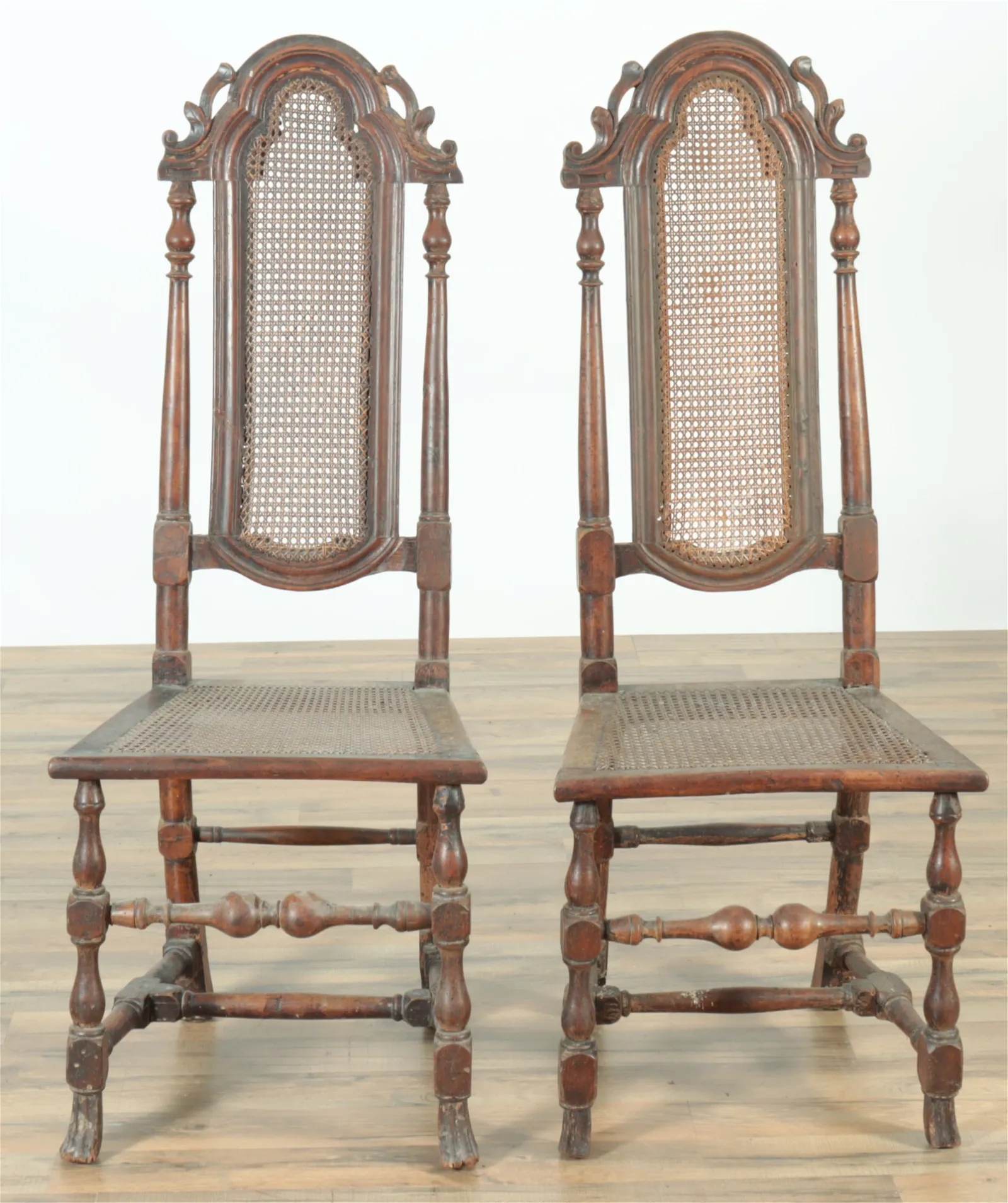
Constructed from robust oak, these chairs boast hand-caned panels—a nod to the era's artisanal focus and a technique that infused each piece with character and craft. The molded backs are masterfully woven, and the baluster legs and decorative cresting exude the period's elegance and stately grace.
Time, however, has left its mark. While the oak's patina speaks of centuries past, portions of the cane have been sympathetically replaced. This narrative of repair aligns with the natural wear expected in antiques of this heritage.
Conclusively, these chairs mirror the essence of their time with remarkable faithfulness. With a high identification score of 95%, their authenticity is compelling, though nuanced by the possibility of later artful reproductions. Expected to command between $1,200 and $2,500 at auction, these chairs remain a cherished find for the discerning collector—a portal to the past ensconced in present-day reverence.
Used for this report's TTS and avatar presentation.
Item Report
English William and Mary Period Oak and Cane High-Back Chairs (Pair)
By:Unknown
Style:William and Mary, English Baroque
Origin:England
Materials:Oak, cane (rattan or similar natural fiber)
Age:Circa 1690-1720
Condition:Good (evidence of age-related wear, patination, and likely seat/cane restoration; frames structurally stable, not officially graded)
Value:$1,200 - $2,500 (auction pair estimate, assuming period authenticity and stable condition)
Maker's Marks / Writing:None visible on the chairs in the image.
Date:2025-07-03 15:45:41.364697
Description:
This is a pair of high-back oak chairs dating to the William and Mary period (late 17th century to early 18th century, c. 1690-1720). They feature tall, arched and molded backs fitted with original hand-caned panels, matching caned seats, and turned baluster legs joined by decorative stretchers. The crest rails are elaborately scrolled, adding distinction. The wear, patina, and finish of the oak, along with some areas of re-caning and age wear, suggest authenticity and period craftsmanship.
Curator Questions
Curated by Jade
Assessment:
This pair of chairs exhibits classic attributes of William and Mary period furniture, including its distinctive tall and arched caned backs, baluster turnings, and formal decorative cresting. The visible patina, period-correct construction, and evidence of old re-caning are consistent with authentic late 17th or early 18th century English chairs. However, careful physical inspection would be needed to confirm the originality of some elements, as high-quality historic reproductions do exist. Overall, this is an appealing and potentially authentic pair for collectors.
Individual Images:
There appears to be uniform wear and patina on the legs and stretchers
indicative of significant age. The cane work in the seats and backs shows areas of old repair and replacement
typical for pieces of this date. Some surface abrasions
minor losses
and color variation consistent with three centuries of use are visible.
Provenance:
No provenance documentation shown in the provided image.
Condition:
Good (evidence of age-related wear, patination, and likely seat/cane restoration; frames structurally stable, not officially graded)
Identification Score: 95%
The lathe-turned oak frame, scrolled crest rail, and high caned backs are textbook features of William and Mary period English chairs. The proportions, stretcher shape, and overall form are consistent with late 17th to early 18th century production.
Authenticity Score: 70%
The materials and construction details strongly suggest period authenticity, including wear patterns, color, joinery, and patination. However, the cane is likely at least partially replaced, and there is always a risk of expertly-aged later copies in this style. Absence of visible modern screws or machine work also supports authenticity, but ultimate verification would require hands-on examination.
Image Memory Note
The image shows two wooden high-back chairs, side by side, with arched and molded crest rails featuring decorative scrolls and turning. The backs and seats are hand-caned, and both chairs have turned legs with baluster and block forms with decorative turned stretchers. Both chairs show uniform, deep brown patina with areas of darker wear and some lighter rubbing on high points and stretchers. There are visible small losses and some later repair to the cane seats and backs. There are no visible maker's marks or inscriptions. The floor is wood planed and the background plain, with even studio lighting.
Keywords
William and Mary, English Baroque, high-back chair, oak, cane, 17th century, antique furniture, England
The report was edited after initial Artmink draft. Original AI draft preserved in Artmink audit history.

Share: