

Maison Jansen, a name synonymous with the elegance of French design, masterfully bridges historical influences and modern luxury. One of the firm’s most striking embodiments of this synthesis is the Empire-Style Giltwood and Ebonized Commode, a piece that not only demands attention but also performs brilliantly in any interior setting. This commode is a quintessential example of the Empire Revival movement that flourished in the 20th century, showcasing the drama and opulence that defined an era.
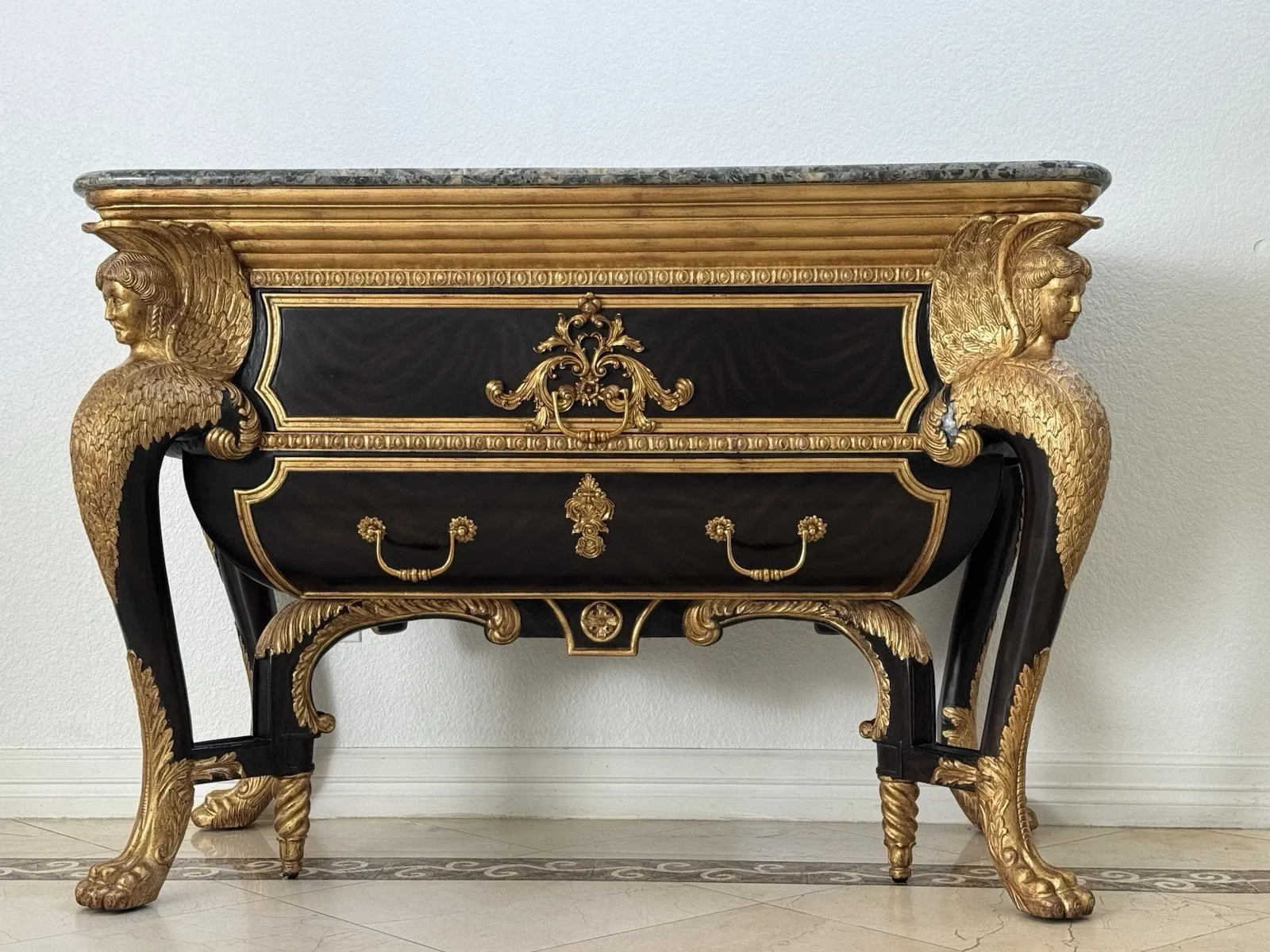
Crafted in France, this commode showcases a bold neoclassical aesthetic that captures the spirit of the Empire style. The black lacquered surface exudes regal sophistication, accentuated by gilt ormolu mounts and sculptural winged caryatid supports that rest elegantly on paw feet. Topped with a sumptuous gray marble surface, the visual spectacle created by the dramatic contrast between black and gold evokes the grandeur reminiscent of the French Empire while firmly establishing itself in a modern context.
Established in 1880, Maison Jansen gained acclaim for its ability to reinterpret historical design elements, making them accessible to contemporary tastes. Throughout the mid-20th century, the firm was pivotal in the revival movement, crafting pieces that encapsulated the essence of ancien régime glamour without the constraints of replicating 18th-century originals. The commode honors this legacy, serving as both a homage and a reimagining of classic motifs, seamlessly integrating them into modern aesthetic preferences.
Notably, this particular commode features a brass label reading 'MAITLAND-SMITH.' This label suggests a production dating back to the mid-20th century, likely during the 1950s to 1970s. Known for its high-quality reproductions, Maitland-Smith regularly drew inspiration from timeless styles, and this label indicates a piece inspired by, or closely associated with, the Maison Jansen aesthetic. This kind of provenance adds a layer of intrigue and authenticity for collectors who appreciate the negotiation between old and new.
For discerning collectors, this commode epitomizes the intersection of art history and modern craftsmanship. Assessing its value involves a nuanced understanding of the maker’s reputation, the richness of its materials, and its overall aesthetic appeal. The commode's alignment with Maison Jansen and Maitland-Smith elevates it within the mid-century decorative arts landscape, leaving little doubt as to its desirability.
As you contemplate the acquisition of such a piece, consider its compelling visual impact alongside the broader historical narrative it embodies. Although it does not fall within the category of 18th-century antiques, the commode's significance as a revival artifact enriches any collection, lending both aesthetic value and a fascinating conversation starter in both formal and casual settings.
Moreover, the synthesis of history and modernity in this commode makes it more than just a piece of furniture; it embodies a refined taste and a keen appreciation for the decorative arts. This balance is a hallmark of Maison Jansen pieces, which continue to captivate collectors and design enthusiasts alike.
The allure of the Maison Jansen Empire-Style Giltwood and Ebonized Commode is undeniable. As the decorative arts landscape expands, so too does the conversation around such pieces, inviting we collectors to delve deeper into their significance. This is not merely a piece to be displayed; it’s a statement, a treasure that reflects the passage of time, a reminder that the elegance of the past can find a home in the present.
French specialist Monique reporting!