In the splendid realm of Chinese fine and decorative arts, few pieces possess the power to command a room quite like a throne chair. The Chinese Style Hardwood Throne Chair isn't merely a seat; it is a narrative woven from threads of imperial heritage and cultural significance.
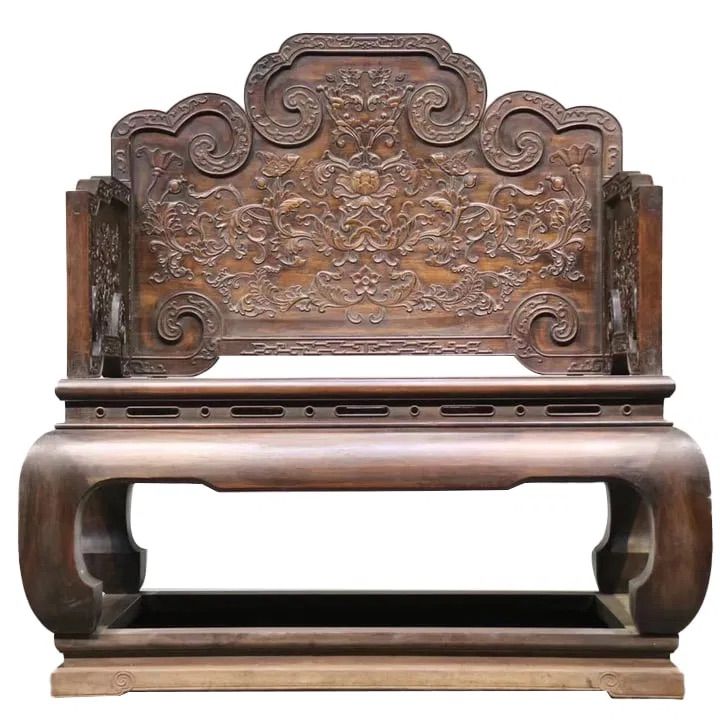
Today, let us explore this captivating chair, an imposing example that draws heavily from the rich traditions of ceremonial seating. While it may not originate from the famed halls of the Ming or Qing dynasties, its design resonates with the aesthetic values cherished during those illustrious periods. Most notably, we salute the grandeur reached under Emperor Qianlong (乾隆皇帝, Qiánlóng), the 'Heavenly Eminence of Lasting Prosperity.' His reign from 1735 to 1796 was marked not just by political power but also by artistic patronage, leaving an indelible mark that still fascinates us today.
Imagine the festivities of the Qing court, vibrant with splendid arts and culture—a world where furniture transcended functionality to become symbols of status and elegance. Qianlong was a connoisseur who commissioned exquisite artworks, from intricate jades to majestic textiles, transforming mere wood into masterpieces that spoke of luxury and power. Though our throne chair likely never cradled the actual Son of Heaven, it certainly echoes the lavish tastes of its imperial predecessors, making magic out of mundane materials.
However, our focus here dwells within a revival framework. This chair, likely crafted in the mid to late 20th century, embraces the visual drama typically associated with palace furniture but does so with a flamboyance that departs from the subtlety found in authentic Ming masterpieces. Its exuberant carvings and sturdy form draw from the hallmarks of traditional design, yet it captures a spirit synonymous with revival styles—celebrating the aesthetic without laying claim to the authenticity of ancient lineage.
Constructed from dense hardwood, possibly part of the esteemed huanghuali (黄花梨, huánghuālǐ) or the rosewood family, the appeal of this throne chair amplifies with its potential materials. Huanghuali, admired for its warm tones and durability, specifically beckons collectors, though it takes a keen eye and thorough examination to authenticate such woods. Characteristics like fine grain patterns and color depth are pivotal indicators of quality—each subtle detail revealing the artistry behind the creation.
Now, let's touch on a critical aspect: provenance. This term encapsulates an object's documented history, serving as a vital element in the world of antiques. Our throne chair's lineage, however, remains obscured, placing it at a disadvantage compared to pieces with well-established backstories. In the collector's market, such documentation enhances desirability, ensuring that what you're acquiring is genuine. Without this assurance, even the most visually striking of pieces can lose value against verified antiques that carry tales of their past.
Collecting revival pieces like this chair requires careful consideration. While its decorative qualities may dazzle, the lack of traditional craftsmanship usually diminishes its worth versus true antiques. This throne chair may shine in a contemporary context—an emblem of artistic admiration—but its place in the grand narrative of Chinese furniture is a more nuanced discussion.
Yet, let us not overlook the chair's majestic design, which pays tribute to an imperial legacy while enriching modern spaces with a touch of history. Objects like this chair narrate stories of ancient emperors and artistic endeavors, inviting us to bask in the luminous legacy of Chinese decorative arts. Each piece echoes the whispers of past eras, instilling resonance and beauty in our present-day lives.
In conclusion, as we examine this remarkable throne chair, we find ourselves at the intersection of admiration for its aesthetic charm and the respect we owe to the cultural narratives it represents. While the value of such pieces may not solely derive from financial metrics, their stories enrich our connection to the shared experience of art and history.
And that's etched in Jade..!