

In the illustrious world of English fine and decorative arts, few styles stand quite as revered as the Chippendale period. Named after the legendary cabinetmaker Thomas Chippendale, this era is synonymous with exceptional artistry, refined craftsmanship, and a flair for theatrical elegance. Nowhere is this more evident than in the English Chippendale Period mahogany tip-top tea table—a captivating piece that transforms the quotidian ritual of tea into an event worthy of admiration.
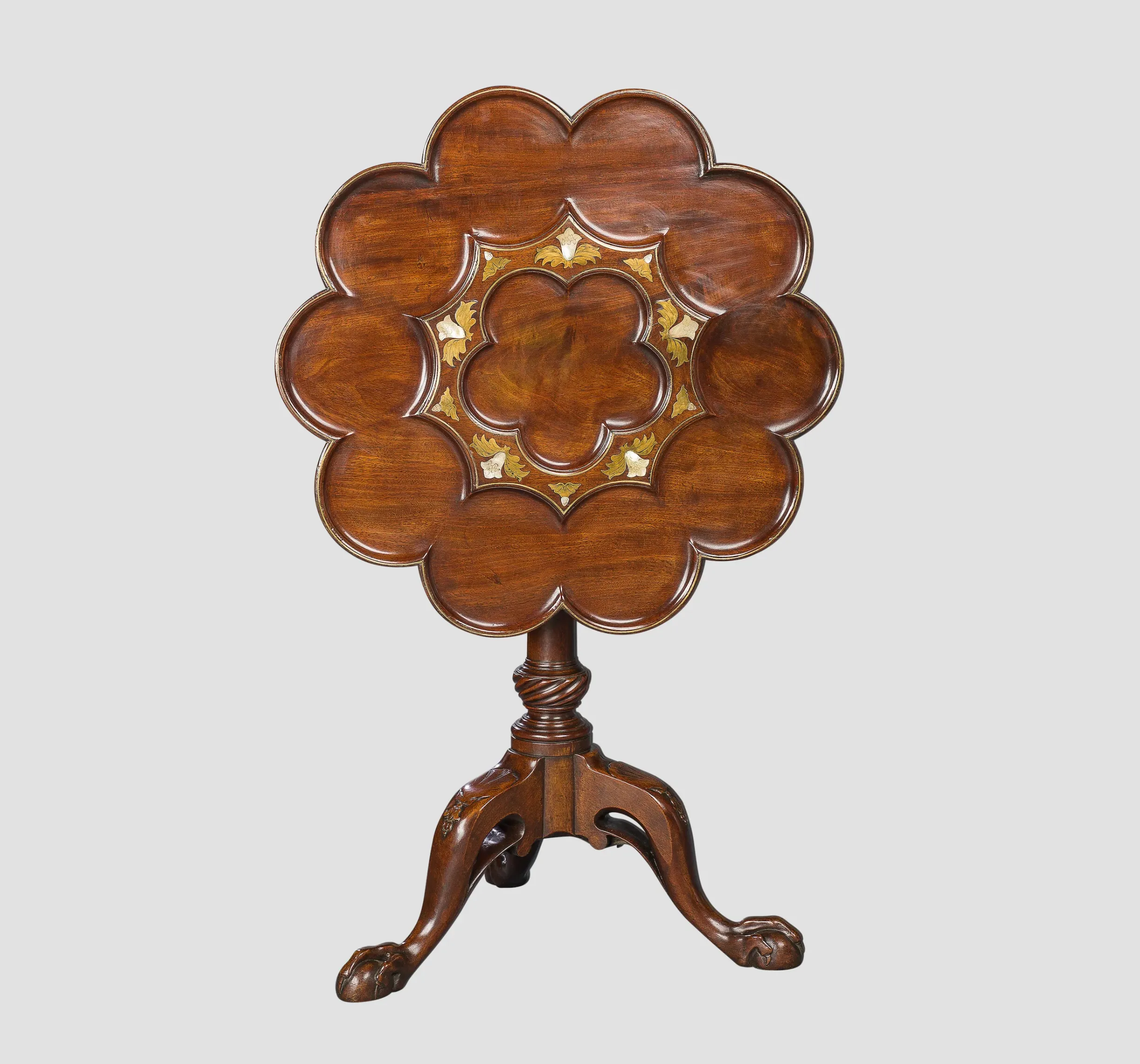
Crafted circa 1755 to 1770, this tea table emerges from the formative years of Chippendale design, a period marked by the daring of cabinetmakers who embraced ornate forms and the sumptuousness of mahogany. The uniquely shaped deca-lobed scalloped top of this table is a visual delight, mimicking the delicate symmetry of a flower while enhancing the presentation of tea wares—an embodiment of both beauty and practicality.
Central to the artistry of this piece is its intricate inlay, featuring brass stringing alongside motifs crafted from pale shell or mother-of-pearl. These delicate adornments highlight the craftsmanship typical of the era, where surfaces embellished with elaborate details set Chippendale apart from its contemporaries. The cabriole legs and claw-and-ball feet further elevate the table’s charm, echoing the period's dedication to refined aesthetics.
While aesthetic appeal is paramount, provenance plays a critical role in the value and desirability of antique pieces. The current table is tentatively linked to the esteemed Marsden J. Perry Collection, suggesting a noteworthy history that collectors often find irresistible. Provenance can significantly enhance a piece's allure, particularly for discriminating collectors who seek not only fine furniture but also a connection to the past.
When it comes to identifying authentic Chippendale craftsmanship, one should pay close attention to construction details. Look for the presence of dovetail joints, which are hallmarks of quality woodworking, alongside other hand-carved features that signify mid-18th century production. Surface wear and a gentle patina can also offer insights into a piece's age, although it is wise to consult experts for thorough examination and verification.
Collecting Chippendale furniture represents more than the acquisition of historical objects; it involves engaging with a rich narrative embedded within each carved detail. Across the globe, these tables capture the hearts of connoisseurs as they navigate the intersection of function, form, and artistry. Whether your fascination lies in the tangible beauty of Chippendale design or the historical journey inherent in each piece, the allure of the Chippendale tea table is undeniable.
As we contemplate these exquisite creations of English craftsmanship, it becomes apparent that the journey of discovery they inspire is as multi-faceted as their intricately rendered forms. Each table encapsulates not just the spirit of an era but also the enduring legacy of the artisans who brought them to life. Let the Mink have a Think!