
Forget your sleek, digital dispensers. We're talking about the real deal, the OG of refreshment: the American Mid-Century Vendo Coca-Cola Upright Vending Machine. These aren't just glorified coolers; they're 'glorious survivors,' as one expert puts it, 'part appliance, part billboard, part roadside sculpture.' With their rounded tops, iconic red-and-cream enamel, and flowing Coca-Cola script, these machines are textbook mid-century Americana, each one a handsome old soda soldier with real roadside swagger.
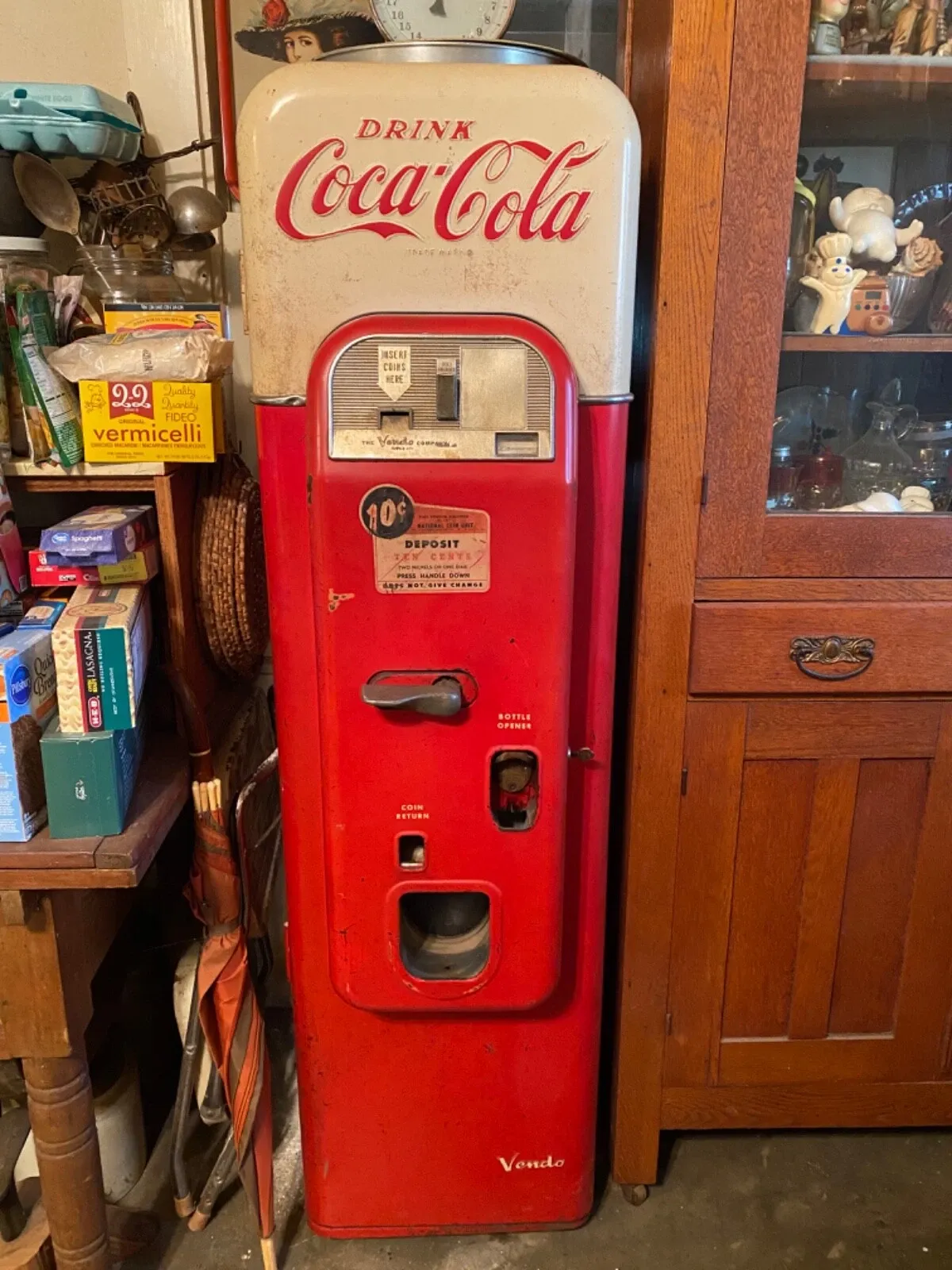
The Vendo Company was a titan in the vending game during the 1950s, churning out sturdy upright bottle machines that became fixtures outside general stores, service stations, and diners across the United States. This particular model, with its visible '10¢' price indicator, firmly plants it in that sweet spot of the early to mid-1950s, when Coke machines transitioned from a nickel to a dime. It’s not just advertising memorabilia; it’s a tangible piece of commercial history, built for daily use, not just showroom fantasy. And let's be real, the 'slim Jim' style, upright bottle machines like this Vendo are often more desirable to collectors than their wider, fridge-sized cousins. They display better, scream 1950s design, and just feel more like a true vending machine.
For the savvy collector, authenticity is everything. A genuine Vendo Coca-Cola machine from this era isn't just about the paint job. You're looking for the tell-tale signs: the original mechanical coin mechanism, the sturdy bottle opener, and the embossed branding that proudly declares 'The Vendo Company' and 'Drink Coca-Cola.' The visible internal rack system is a big clue, too, suggesting this was a working machine, not a later decorative shell. As the appraisal report underscores, 'the visible construction, age wear, original-looking vending internals, and period graphics strongly support authenticity.' Reproductions often miss these crucial details, sporting overly pristine finishes that just don't feel right.
And speaking of 'right,' let's talk condition. While some might chase after a gleaming, fully restored machine, many collectors—myself included—prefer the honest patina of an unrestored survivor. This Vendo, with its visible wear, scratches, paint loss, and age-consistent grime, tells a story. It’s earned its stripes. As one expert insight highlights, 'condition is unrestored and imperfect, which in this category can be a virtue.' This is the 'sweet spot' scenario: an honest, unrestored 1950s Vendo that’s mechanically sound and visually presentable. Collectors often pay a premium for original paint, decals, and that 'earned' wear, especially when the machine still runs or can be put into service with light work. Full cosmetic restorations tend to help only when the starting point is truly rough, or when the restoration is top-tier and meticulously documented.
Every scratch, every faded bit of paint, adds to its unique narrative. Take, for instance, the plausible, though unverified, family provenance linking this machine to a general store in Louisville, Kentucky, in the 1950s, run by a shopkeeper named Silas Wilson. This kind of story, even if it can't be photographically proven, adds an undeniable layer of intrigue and historical weight. It connects the object to a specific time and place, making it more than just a machine; it's a silent witness to countless dimes dropped and cold Cokes enjoyed.
When it comes to market value, several factors come into play. Condition, as we've discussed, is paramount, with unrestored originality often trumping average restorations. Rarity also plays a crucial role; while the exact model number isn't fully legible here, specific Vendo models like the Vendo 81 can command higher prices. Provenance, when verifiable, can certainly boost appeal. For a genuine, original period machine like this, auction estimates typically range from $1,500 to $3,500. However, if it were substantially repainted, rebuilt, or a later decorative reproduction, that estimate drops significantly, to $400-$1,000. The peer review confirms these figures align with comparable sales for unrestored 10-cent Vendo machines from the 1950s, which have seen bids from around $1,125 to $3,500.
Ultimately, these mid-century Vendo Coca-Cola machines are more than just collectibles; they're cultural touchstones. They evoke a simpler time, a roadside America where a cold drink was always within reach. Their enduring appeal lies in that potent mix of nostalgic design, robust engineering, and the tangible history they carry. For collectors, it's about owning a piece of that story, a slice of Americana that still hums with the energy of a bygone era.
So, whether you're a seasoned collector or just starting your journey into vintage Americana, remember: the best finds often come with a little wear, a lot of character, and a story waiting to be told. Comics Lass has spoken.