

Forget the 1950s Atlas, the one that morphed into Marvel. Today, we're diving into the *other* Atlas—the 1970s Atlas/Seaboard, a short-lived but fiercely ambitious venture that burned bright and fast in the Bronze Age. This wasn't just another comic publisher; it was Martin Goodman's audacious, multi-million-dollar challenge to the very empire he helped build. For collectors, these No. 1 issues are more than just comics; they're cult survivors, tangible pieces of a legendary industry grudge match.
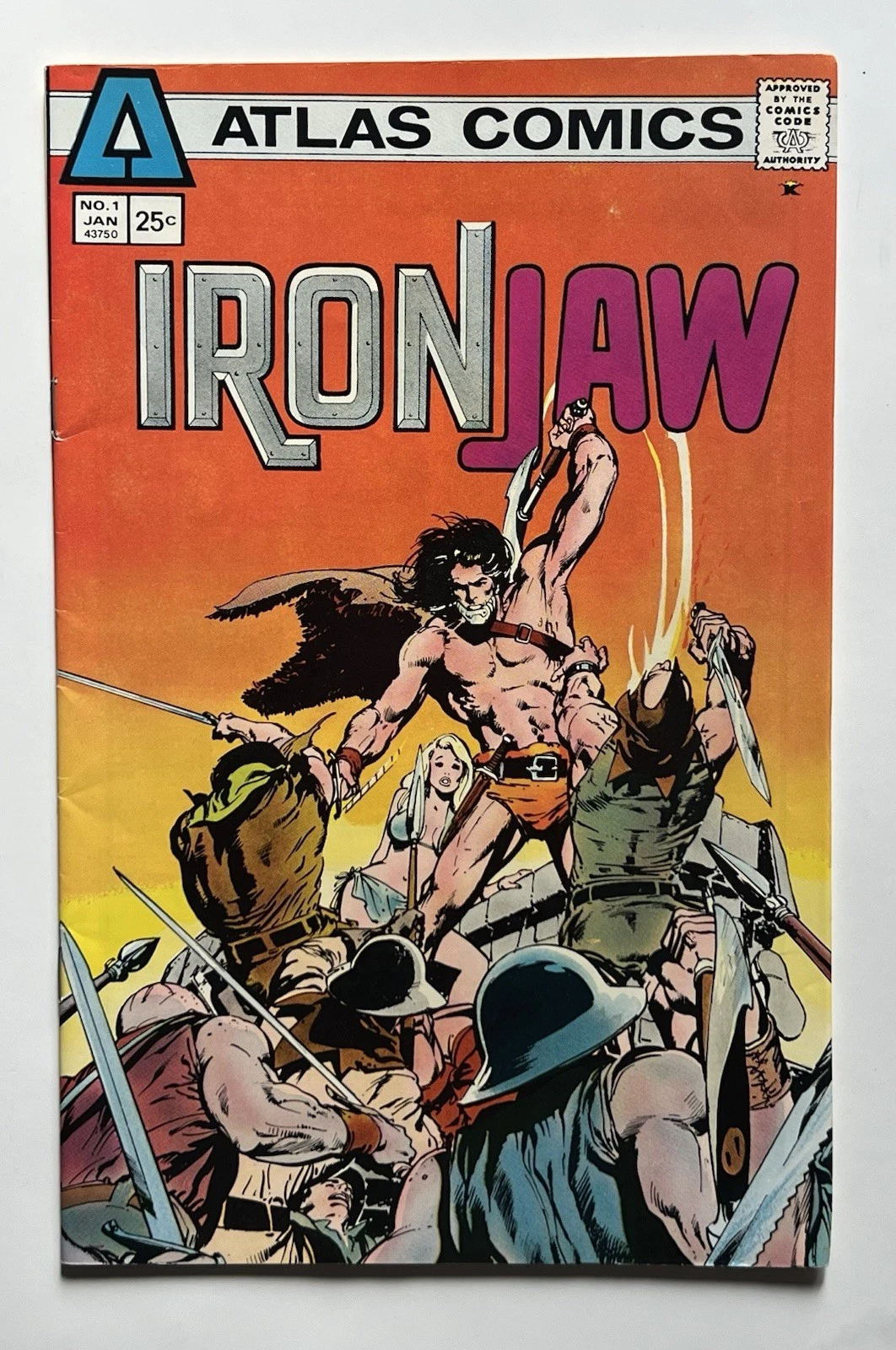
After selling Marvel in 1968 and retiring in 1972, Goodman couldn't stay away. In 1974, he launched Seaboard Periodicals, reviving the Atlas name with a clear goal: to directly compete with Marvel and DC. The motivation? Industry whispers suggest a 'revenge narrative' (as one video transcript puts it), stemming from Marvel's new owners allegedly sidelining his son, Charles 'Chip' Goodman, in favor of Stan Lee. Goodman, flush with cash from the Marvel sale, reportedly bankrolled this 'grudge project' himself, pouring an estimated '$2–3 million' (in mid-1970s money) into the venture, a sum that would ultimately be lost.
To lure top-tier talent from the established giants, Atlas/Seaboard made some genuinely 'smart creator-friendly moves,' offering the 'best page rates in the business' and revolutionary benefits like the return of original artwork and creator rights to characters. This attracted an impressive roster, including industry titans like Neal Adams, Steve Ditko, Wally Wood, Howard Chaykin, Alex Toth, Russ Heath, John Severin, and Rich Buckler. The editorial vision was equally bold: 'edgier, more violent, more adult-oriented' stories designed to stand out on the spinner racks and offer a distinct alternative to mainstream superhero fare.
The resulting lineup of No. 1 issues was a wild ride, featuring titles like *Ironjaw*, *The Grim Ghost*, *Kid Cody Gunfighter*, *The Hands of the Dragon*, *The Cougar*, *Tales of Evil*, *The Destructor*, *Planet of Vampires*, *Vicki*, *Morlock 2001*, and *The Scorpion*. These were standard staple-bound American comics with color covers over newsprint interiors, typically priced at 25c or 50c, complete with the Comics Code Authority stamp. Cover blurbs promised 'Origin Issue!', '1st Fun Filled Issue!', and 'A World Gone Mad! Six Astronauts Return to Earth and Find it Ruled by Vampires!' Yet, despite the talent, the execution was often inconsistent. Editors Jeff Rovin and Larry Lieber (Stan Lee's brother) were reportedly placed in 'opposite roles from what would have made sense,' leading to 'strange decisions' and a line that, as Comic Tropes observed, felt like it was 'trying to be Marvel overnight' rather than forging its own path.
The ambitious experiment quickly hit turbulence. Atlas/Seaboard struggled with critical distribution issues, meaning many regions simply couldn't get the books. Market competition was fierce, and some titles were criticized for being 'obvious attempts to imitate successful Marvel concepts'—think *Ironjaw* echoing Conan, or *The Brute* as a Hulk stand-in. Compounding these problems were radical shifts in direction, often after just two issues. *Scorpion* famously pivoted from a mercenary story to a spandex superhero tale, while *Morlock 2001* killed off its title character to introduce a new team. This constant flux left both readers and retailers bewildered. By the fourth quarter of 1975, less than a year after its launch, Martin Goodman dissolved the company. 'None of the comics lasted more than four issues,' a stark testament to its brief, tumultuous run.
Despite its swift collapse, Atlas/Seaboard left an undeniable mark. Its creator-friendly policies were ahead of their time, influencing later industry standards. Moreover, some concepts found new life: Howard Chaykin's *Scorpion* helped inspire Marvel's *Dominic Fortune*, and Rich Buckler's *Demon Hunter* laid groundwork for *Devil-Slayer*. For today's collectors, these Bronze Age Atlas No. 1s are fascinating artifacts. They're identifiable by their period-correct 25c and 50c cover prices, Comics Code stamps, and distinctive trade dress. While authenticity requires checking interiors and back covers, visible copies often show 'decent eye appeal overall—solid gloss, crisp colors,' with 'honest wear' like light spine stress and minor creases. As the Comic Tropes video notes, 'the artwork actually isn't too bad,' and collecting them 'can be a little bit of fun because there aren't that many titles to collect.'
Atlas/Seaboard stands as a unique, pulpy, and wonderfully ambitious chapter in comic book history. It was a bold gamble, fueled by a mix of business acumen and personal vendetta, that ultimately failed to unseat the giants. Yet, its brief existence showcased groundbreaking creator incentives and a distinct, edgier vision that continues to intrigue collectors and historians alike. These first issues are more than just relics of a bygone era; they're a vibrant reminder of a time when one man dared to challenge the status quo, leaving behind a compelling, if costly, legacy. Comics Lass has spoken.