Darling, few machines command the floor with such undeniable charisma as a Midway Pac-Man upright cabinet. It's not merely a game; it's a bona fide pop-culture monument, a vibrant yellow beacon from the Golden Age of arcades that still winks at us from the early 1980s.
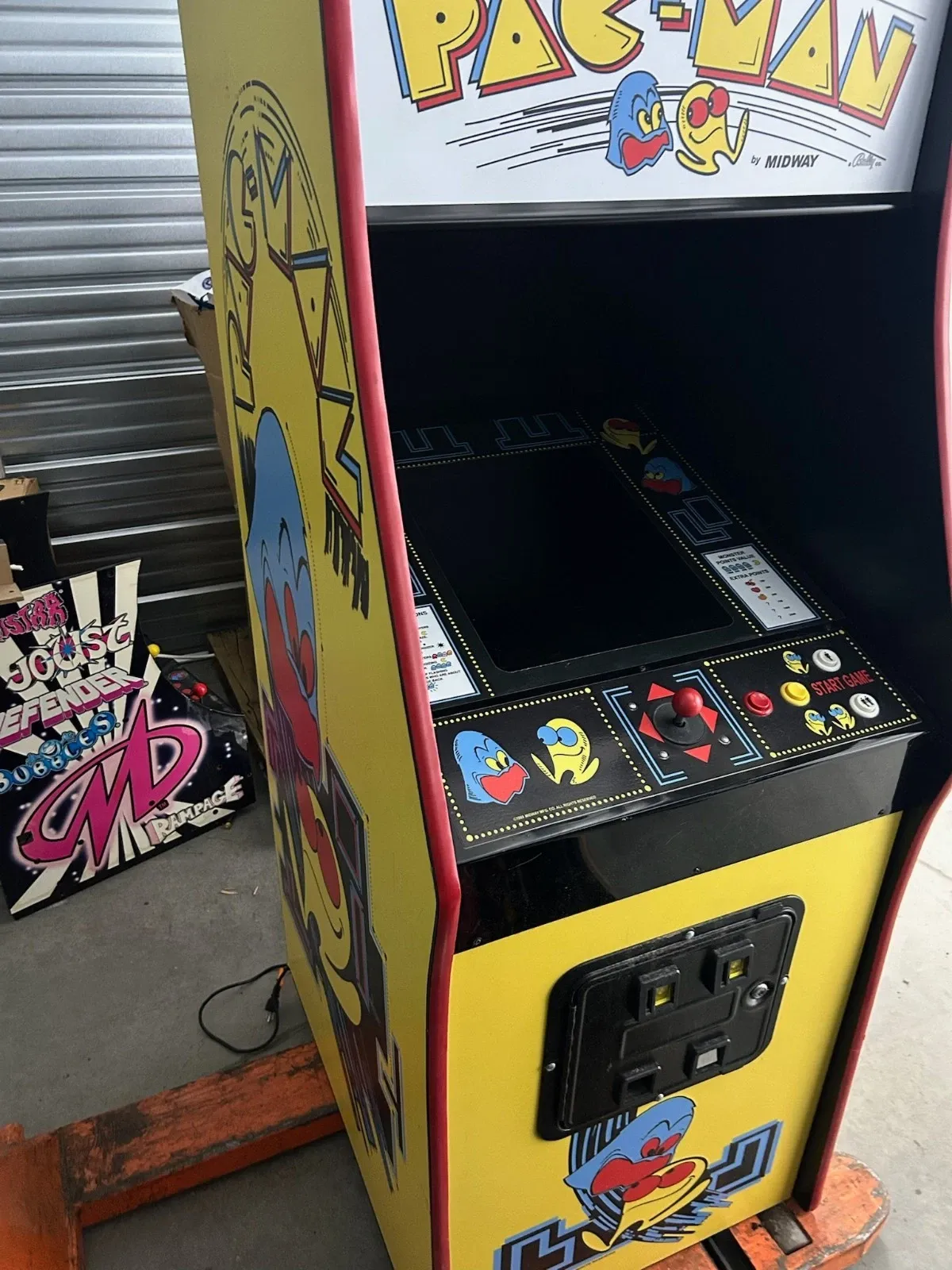
Pac-Man's debut in 1980 wasn't just a launch; it was a cultural seismic event. Its distinctive yellow cabinet, adorned with those playful ghosts and the iconic Pac-Man character art, beckoned players into neon-drenched arcades. What made it truly revolutionary? Its non-violent, character-driven narrative captivated an entirely new audience. As an Artmink article on the era aptly notes, "Pac-Man simply widened the demographic to women and families," transforming arcades from dimly lit dens into bustling family entertainment hubs.
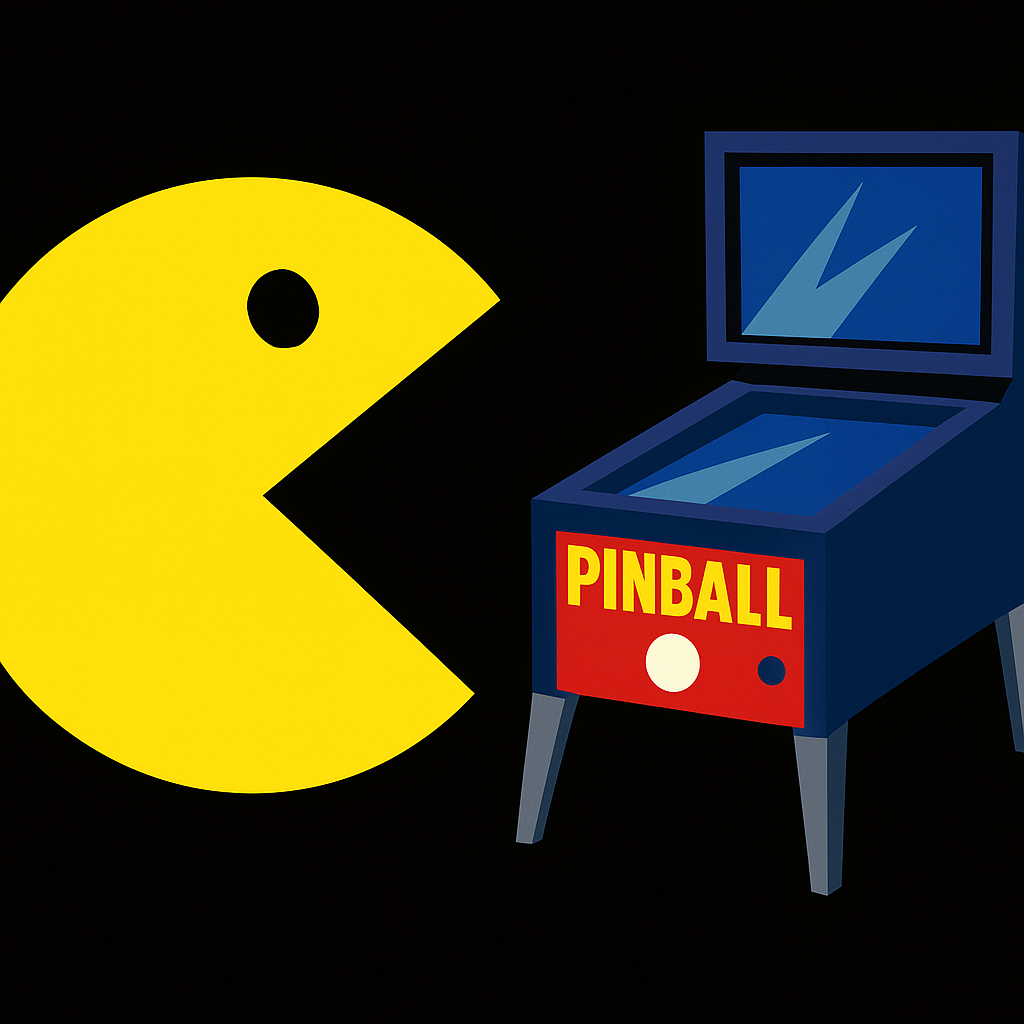
This pixelated phenomenon didn't just expand the audience; it devoured the competition. The transition from pinball to video games was a swift, decisive coup, with Pac-Man leading the charge that saw an astonishing 85% decline in pinball machine sales by the early 1980s. For arcade operators, the choice was clear: video games offered superior profit margins, demanded less floor space, and required significantly less maintenance than their intricate, mechanical pinball predecessors. The groundwork for this shift was laid years earlier; as the same Artmink article shrewdly observes, "Pong was the ultimate Trojan horse," subtly introducing video games into traditional pinball strongholds like bars and taverns.
Now, let's talk about the star of our show: this particular Midway Pac-Man upright cabinet. Its silhouette, the bold 'PAC-MAN by MIDWAY' marquee, and the classic control panel layout all scream authenticity. Constructed from the expected commercial laminated wood composite, complete with a sturdy metal coin door, the exterior profile and artwork are precisely what a collector seeks in a dedicated Pac-Man machine from the period. The side graphics, in particular, present beautifully, retaining their vibrant charm.
However, every vintage beauty has its quirks, and for this cabinet, it's the monitor. The original CRT has been replaced with a modern LCD. While practical for reliability, this modification is a significant point for serious collectors. Why the fuss? Collectors cherish original CRT monitors for their visual authenticity, the unique color saturation, and those nostalgic scanline effects that an LCD simply cannot replicate. This alteration, while understandable for playability, does impact the cabinet's originality, visual integrity, and ultimately, its collector value.
Indeed, our assessment of this cabinet's authenticity stands at 78%. While the exterior strongly suggests a period-correct Pac-Man cabinet, full confirmation as a fully original, dedicated machine remains elusive without interior photos, serial tags, or board documentation. This nuance directly influences its market value: an authentic dedicated Midway Pac-Man cabinet, even with an LCD conversion, might fetch between $1,200 and $2,200 at auction. Should it prove to be a later reproduction or a conversion from another game, that estimate shifts considerably, landing closer to $400 to $900.
Beyond its physical attributes and market dynamics, Pac-Man's legacy is immense. It laid the groundwork for future game mechanics and design trends, influencing how games were perceived and marketed. The game's deterministic algorithms led to legendary exploits, with players discovering patterns to achieve stratospheric scores. As one source vividly recounts, mastering a game of Pac-Man was akin to "stretching a single 25-cent coin into a 20-minute masterclass." It's a testament to the game's enduring appeal and the skill it demanded.
This Midway Pac-Man cabinet isn't just a relic; it's a tangible piece of gaming history, a vibrant reminder of an era when pixels ruled the arcade and a quarter could buy you a masterclass in maze navigation. A very appealing survivor, indeed, but collectors always want to see what's behind the curtain.
Mid-Century Modern Marilyn reporting!